
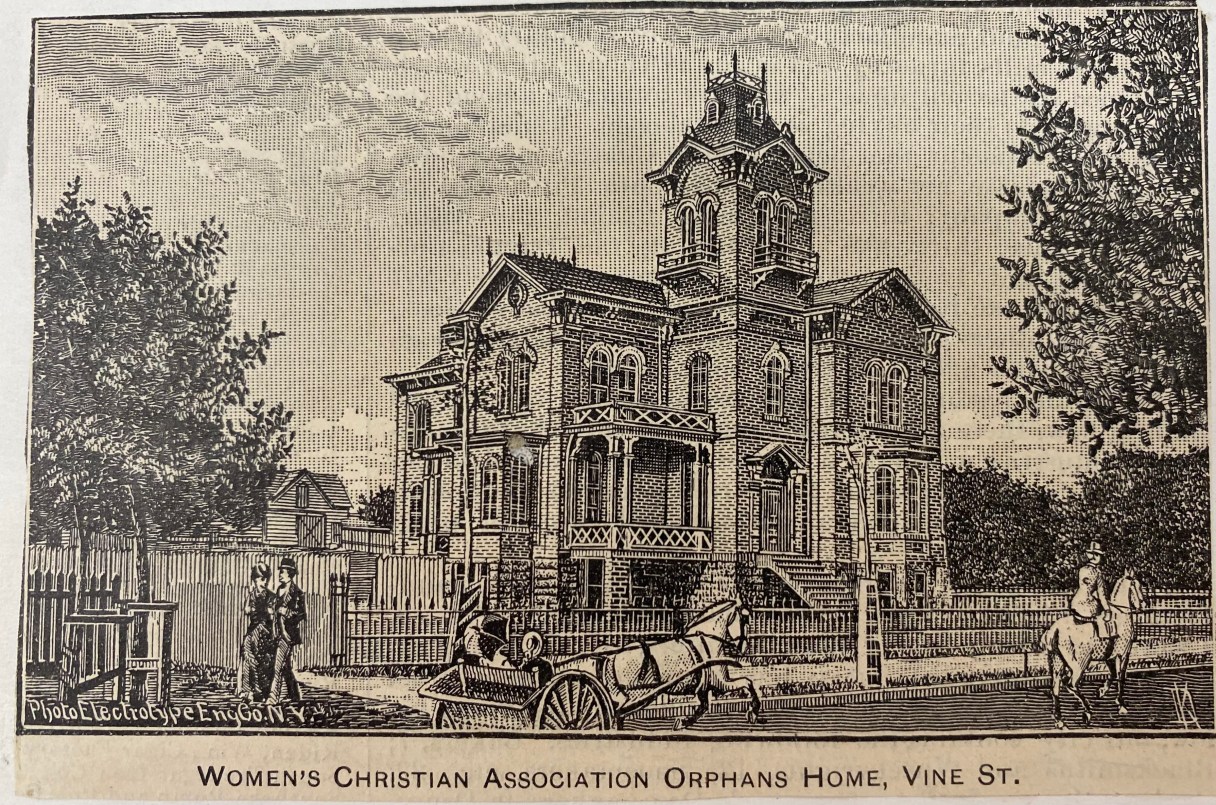
On March 3, 1878, the Chattanooga Weekly Commercial headlined a story, “Save Her,” detailing the life of a “very pretty girl of eleven years – an orphan, whose mother died near Ooltewah, Tennessee, and left her and a sister, a girl of fifteen years, in the cold world alone, the father having died several years ago.”
The story portrayed the sisters’ circumstances, living in a house with “loose” women, where the older sister has been compelled to “leading her life of shame” to provide for the two of them. The printed plea urged a “charitably disposed couple, who has not been blessed with the greatest of all blessings – children” to give this girl “a respectable home.”
Members of the Women’s Christian Association “took the matter in hand.” After first attempting to use persuasion to “rescue” both girls and then threatening to involve the Chattanooga Police, the women were successful in removing “Emma and Lucinda” from the disreputable circumstances. Homes were located, and the Women’s Christian Association had found its mission: providing care for the region’s orphans.
Only one year later, on April 7, 1879, the Women’s Christian Association announced a series of public meetings “to be held at the different churches, that our plans might be fully laid before the public and prove the necessity for a permanent Home in which to carry on our work successfully.”
What were the plans? The Women’s Christian Association had rented a house on Oak Street, between Houston and Douglas streets, and had already begun caring for eight children, with an additional eight girls already placed in homes and a number of young boys awaiting homes and job training. Mrs. S.D. McCorkle, association secretary, spoke about the individual young people needing assistance. In her compassionate appeal for assistance, she noted that several were orphaned while others belonged to “sick and destitute mothers” who could not care for them as they were residing in the “Alms House.”