
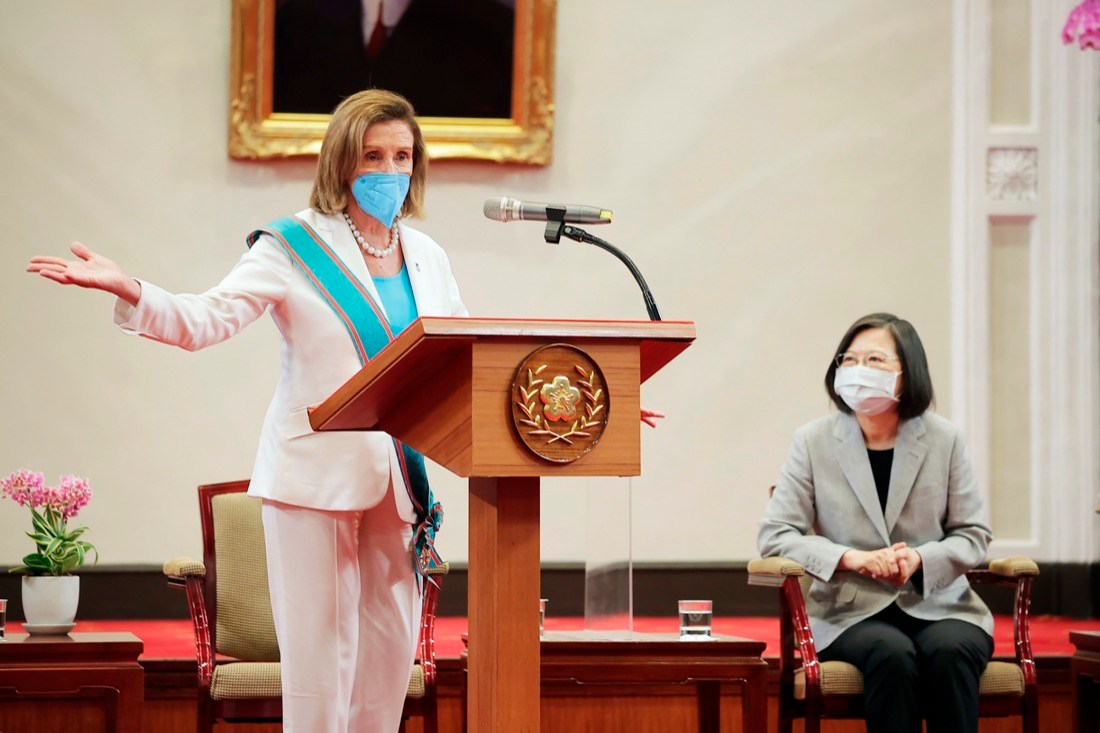
BEIJING (AP) – U.S. House Speaker Nancy Pelosi’s visit to Taiwan has drawn bipartisan support at home and backing among the world’s democracies.
Meanwhile, China, which claims Taiwan as its own territory with no right to an independent identity, has rallied support among fellow authoritarian states. The divided opinions speak both to China’s growing global influence and the backlash that has prompted among the world’s liberal societies.
President Joe Biden’s administration was not openly supportive of Pelosi’s trip, with the president himself saying the military felt it was “not a good idea right now” amid heightened tensions between the sides.
China has responded to the visit by announcing a series of days-long military exercises surrounding Taiwan and issuing a stream of invective aimed at the U.S. and Taiwan governments, accusing them of colluding to undermine Chinese sovereignty and national security. China in 2016 severed contacts with independence-leaning Taiwanese President Tsai Ing-wen over her refusal to endorse its insistence that the island and mainland are part of a single Chinese nation.
“This action is a solemn deterrent against the recent major escalation of the negative actions of the United States on the Taiwan issue, and a serious warning to the ‘Taiwan independence’ forces seeking ‘independence,'” the People’s Liberation Army’s Eastern Theater command said in a statement Tuesday.