
Monday, November 16, 2026Nov 16

‘El Jefe’ the jaguar, famed in US, photographed in Mexico

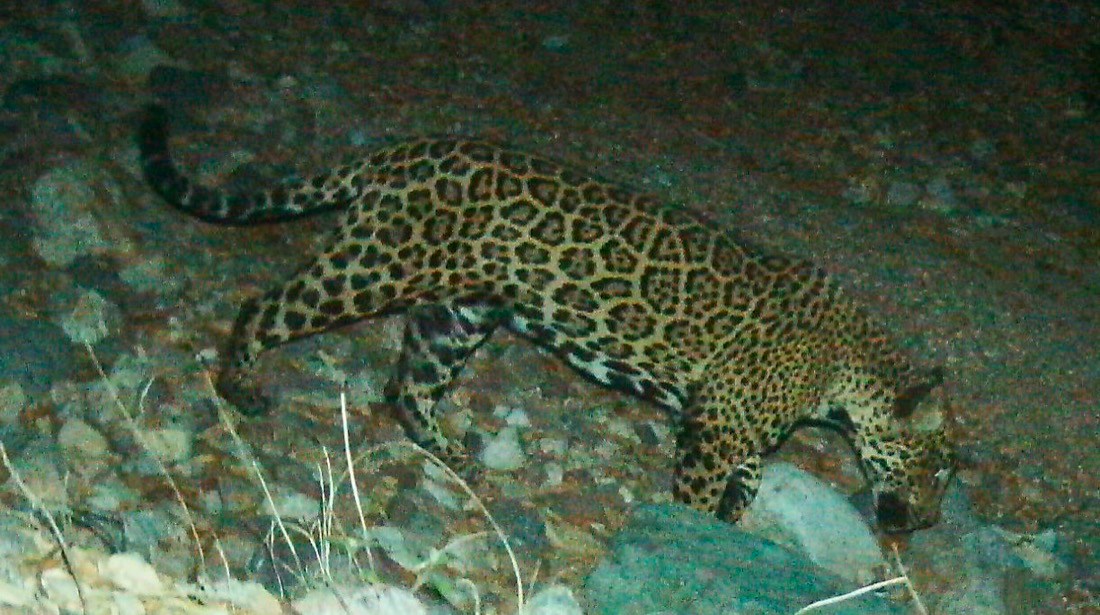
In this photo provided by the University of Arizona and U.S. Fish and Wildlife Service shows a male jaguar photographed by motion-detection wildlife cameras in the Santa Rita Mountains in Arizona on April 30, 2015 as part of a Citizen Science jaguar monitoring project conducted by the University of Arizona, in coordination with U.S. Fish and Wildlife Service. According to Borderlands Linkages, a binational collaboration of eight conservation groups, this cat is known as "El Jefe," or "The Boss," is one of the oldest jaguars on record along the border and one of few known to have crossed the border. (University of Arizona and U.S. Fish and Wildlife Service via AP)

MEXICO CITY (AP) – They call him “El Jefe,” he is at least 12 years old and his crossing of the heavily guarded U.S.-Mexico border has sparked celebrations on both sides.

“El Jefe” – or “The Boss” – is one of the oldest jaguars on record along the frontier, one of few known to have crossed a border partly lined by a wall and other infrastructure to stop drug traffickers and migrants, and the one believed to have traveled the farthest, say ecologists of the Borderlands Linkages Initiative, a binational collaboration of eight conservation groups.

That assessment is based on photographs taken over the years. Jaguars can be identified by their spots, which serve as a kind of unique fingerprint.

The rare northern jaguar’s ability to cross the border suggests that despite increased impediments, there are still open corridors and if they are kept open “it is feasible (to conserve) the jaguar population in the long term,” said Juan Carlos Bravo of the Wildlands Network, one of those groups in the initiative.

But some fear for the jaguars’ future. Although it was the government of President Donald Trump that reinforced and expanded the border wall with Mexico, the Biden administration has announced plans for closing four gaps between the U.S. state of Arizona and the Mexican state of Sonora – the two states the jaguars traverse.