
Friday, October 30, 2026Oct 30

This story is free to read.

Native groups seek to repair lands damaged by colonization

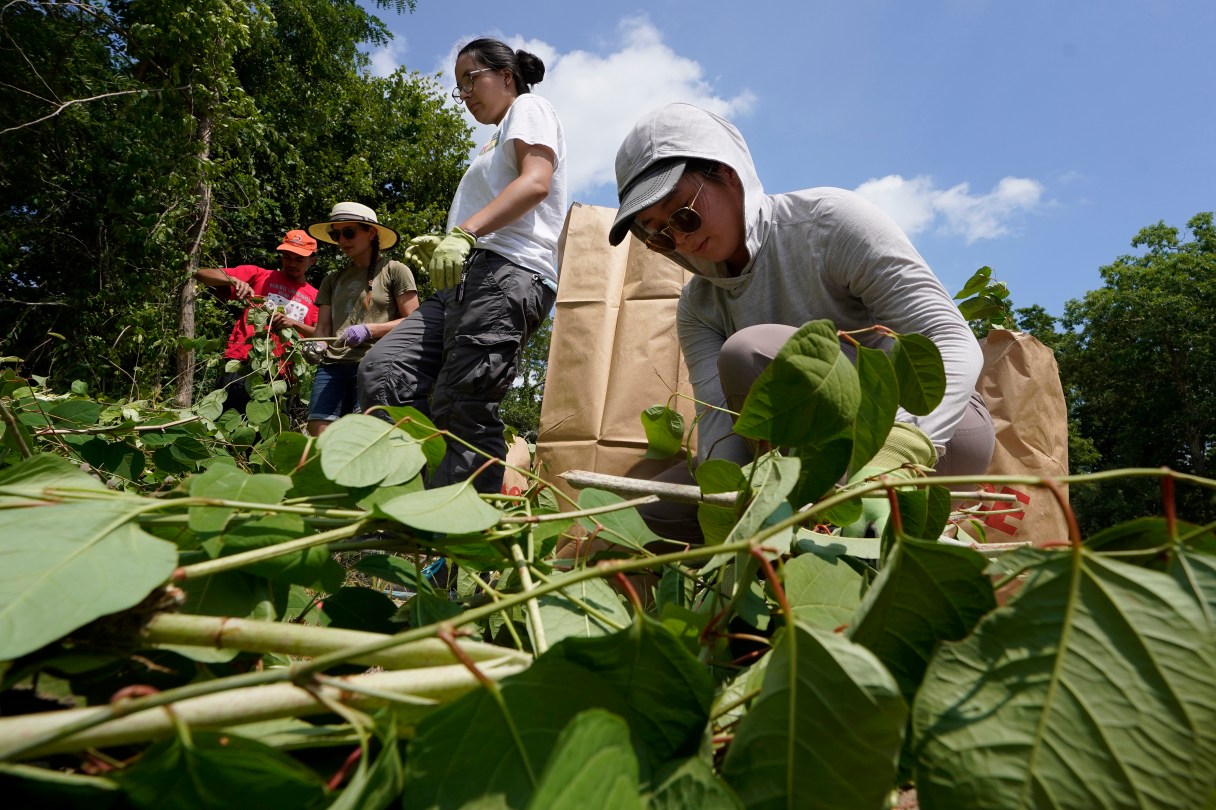
Fin Jones, of Falmouth, Mass., a member of the Mashpee Wampanoag tribe, top center, and Jessica Tran, right, of St. Paul, Minn., work to remove invasive plant species at the Wampanoag Common Lands project, in Kingston, Mass., Tuesday, Aug. 2, 2022. The project by the Native Land Conservancy is among efforts by tribes and other Native groups nationwide to reclaim and repair lands altered by western civilization. (AP Photo/Steven Senne)
Fin Jones, of Falmouth, Mass., a member of the Mashpee Wampanoag tribe, top center, and Jessica Tran, right, of St. Paul, Minn., work to remove invasive plant species at the Wampanoag Common Lands project, in Kingston, Mass., Tuesday, Aug. 2, 2022. The project by the Native Land Conservancy is among efforts by tribes and other Native groups nationwide to reclaim and repair lands altered by western civilization. (AP Photo/Steven Senne) Fin Jones, of Falmouth, Mass., a member of the Mashpee Wampanoag tribe, top center, and Jessica Tran, right, of St. Paul, Minn., work to remove invasive plant species at the Wampanoag Common Lands project, in Kingston, Mass., Tuesday, Aug. 2, 2022. The project by the Native Land Conservancy is among efforts by tribes and other Native groups nationwide to reclaim and repair lands altered by western civilization. (AP Photo/Steven Senne)

KINGSTON, Mass. (AP) — Asa Peters marched into a thicket of Japanese knotweed in the woods of coastal Massachusetts this month and began steadily hacking the towering, dense vegetation down to size.

The 24-year-old member of the Mashpee Wampanoag tribe was among a cadre of volunteers rooting out invasive species and tending to recently planted native vegetation on a wide swath of forest acquired on behalf of his federally recognized tribe and other Wampanoag communities.

“It’s hard. You got to keep pulling and pulling. Starting to really sweat, but it’s cool,” he said as he took a quick break in the sweltering August heat. “We’re in the early stages, putting in the work to create a special place where we can do all kinds of great things.”

The Wampanoag Common Lands, as the project is called, seeks to restore a 32-acre (13-hectare) former Catholic summer camp on the banks of the Muddy Pond in Kingston to something closer to what it might have looked like before European colonization transformed it.

The Native Land Conservancy, the local Native group that received the donated land this year, envisions a natural environment filled with indigenous plants and animals where Wampanoags can practice cultural ceremonies and educate new generations in traditional ways.