
Monday, November 16, 2026Nov 16

Sick dolphin calf improves with tube-fed milk, helping hands

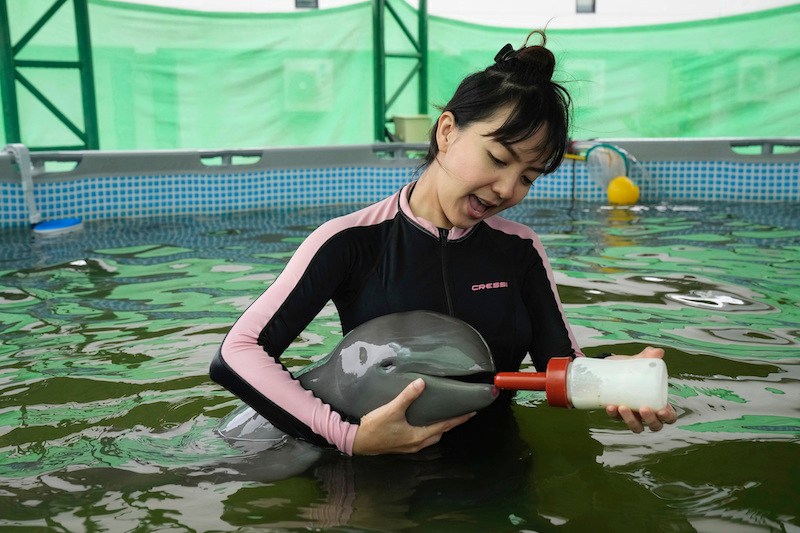
Volunteer Thippunyar Thipjuntar feeds a baby dolphin named Paradon with milk at the Marine and Coastal Resources Research and Development Center in Rayong province in eastern Thailand, Friday, Aug. 26, 2022. The Irrawaddy dolphin calf was drowning in a tidal pool on Thailand’s shore when fishermen found him last month. The calf was nicknamed Paradon, roughly translated as “brotherly burden,” because those involved knew from day one that saving his life would be no easy task. But the baby seems to be on the road to recovery. (AP Photo/Sakchai Lalit)

RAYONG, Thailand (AP) — The Irrawaddy dolphin calf — sick and too weak to swim — was drowning in a tidal pool on Thailand’s shore when fishermen found him.

The fishermen quickly alerted marine conservationists, who advised them how to provide emergency care until a rescue team could transport the baby to Thailand’s Marine and Coastal Resources Research and Development Center for veterinary attention.

The baby was nicknamed Paradon, roughly translated as “brotherly burden,” because those involved knew from day one that saving his life would be no easy task.

Irrawaddy dolphins, considered a vulnerable species by International Union for Conservation of Nature, are found in the shallow coastal waters of South and Southeast Asia and in three rivers in Myanmar, Cambodia and Indonesia. Their survival is threatened by habitat loss, pollution and illegal fishing.

Officials from the marine research center believe around 400 Irrawaddy dolphins remain along the country’s eastern coast, bordering Cambodia.