
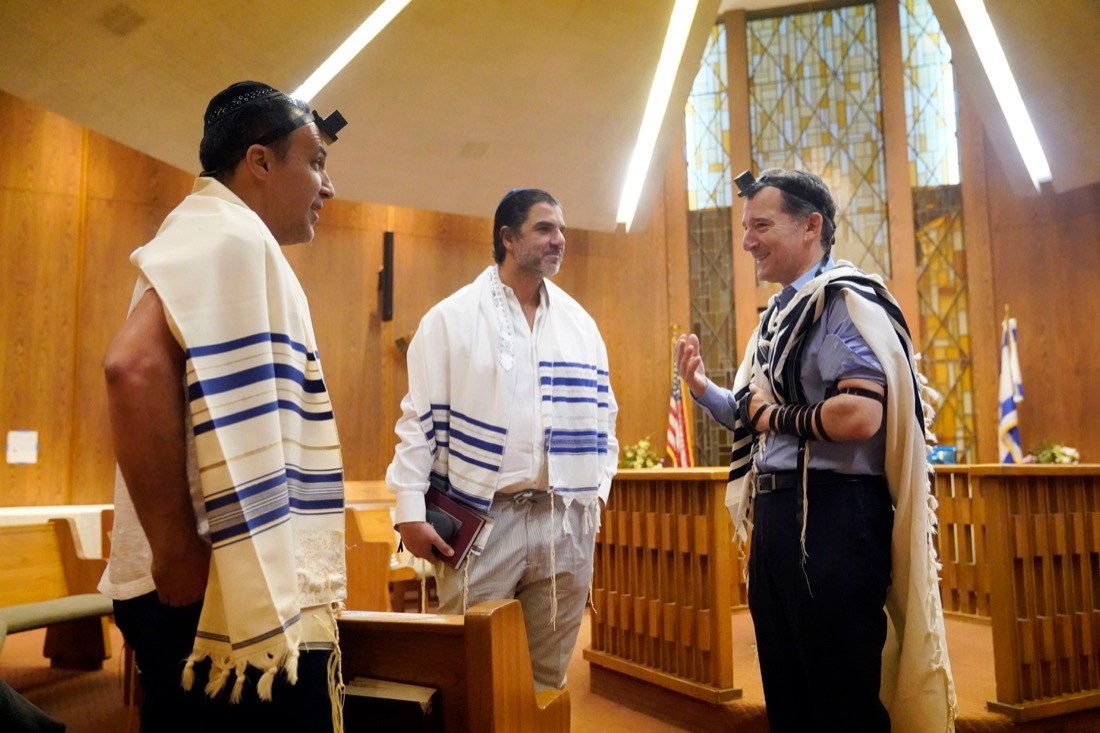
One member of Rabbi David Wolpe’s diverse congregation left because Wolpe would not preach sermons criticizing Donald Trump. Scores of others left over resentment with the synagogue’s rules for combating COVID-19. But Wolpe remains steadfast in his resolve to avoid politics when he preaches at Sinai Temple in Los Angeles.
“It is not easy to keep people comfortable with each other and as part of one community,” he said. “A great failing of modern American society is that people get to know each other’s politics before they get to know their humanity.”
Wolpe — whose congregation includes liberal Democrats and hundreds of conservative Iranian Americans — is far from alone in facing such challenges. Though many congregations in the U.S. are relatively homogeneous, others are sharply divided. In some cases, divisions are becoming more pronounced as midterm election season heats up, leaving clergy to keep the peace while still meeting the spiritual needs of all of their members.
A Black pastor in Columbus, Ohio — Bishop Timothy Clarke of the First Church of God — says there are “deep divides” in his predominantly African American congregation of more than 2,000. He cited abortion as a particularly divisive topic in the wake of the Supreme Court ruling in June allowing states to ban the procedure.
“There are good people on both sides,” said Clarke, who addressed the congregation’s differences in a recent sermon.