
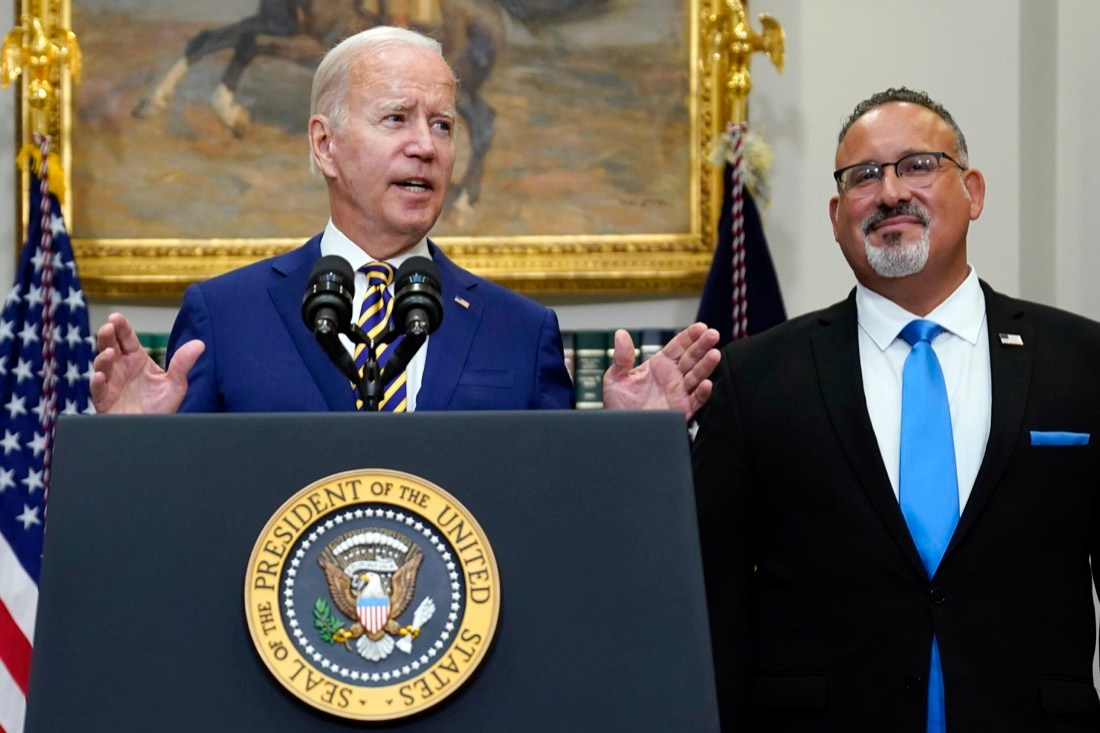
President Joe Biden says he hopes his proposal to forgive federal student loans will narrow the nation’s racial wealth gap. But a generation of Black and Hispanic Americans was disproportionately shut out of one of the keys to Biden’s plan: the Pell Grant program.
As part of the “war on drugs” — a consequential, anti-crime legislative agenda that Biden championed as a U.S. senator — an estimated hundreds of thousands of convicted drug offenders had their access to federal financial aid delayed or denied, including Pell Grants and student loans. If they wanted to go to college after their prison terms ended, these offenders had to take on larger, often predatory, private student loans.
Some were discouraged from seeking federal aid by a requirement to disclose their drug record on financial aid applications, while others put off attending college or dropped out entirely.
The people most harmed by these policies: Black and Latino men, thanks to drug laws in the 1990s with harsh punishments for crack cocaine and marijuana offenses. Incarceration rates for men of color skyrocketed. The policies remained in place for 25 years, until Congress repealed the Pell Grant ban in 2020.
America’s student loan debt burden, which now tops $1.6 trillion, “is especially heavy on Black and Hispanic borrowers, who on average have less family wealth to pay for it,” Biden said last week as he announced the forgiveness plan.