
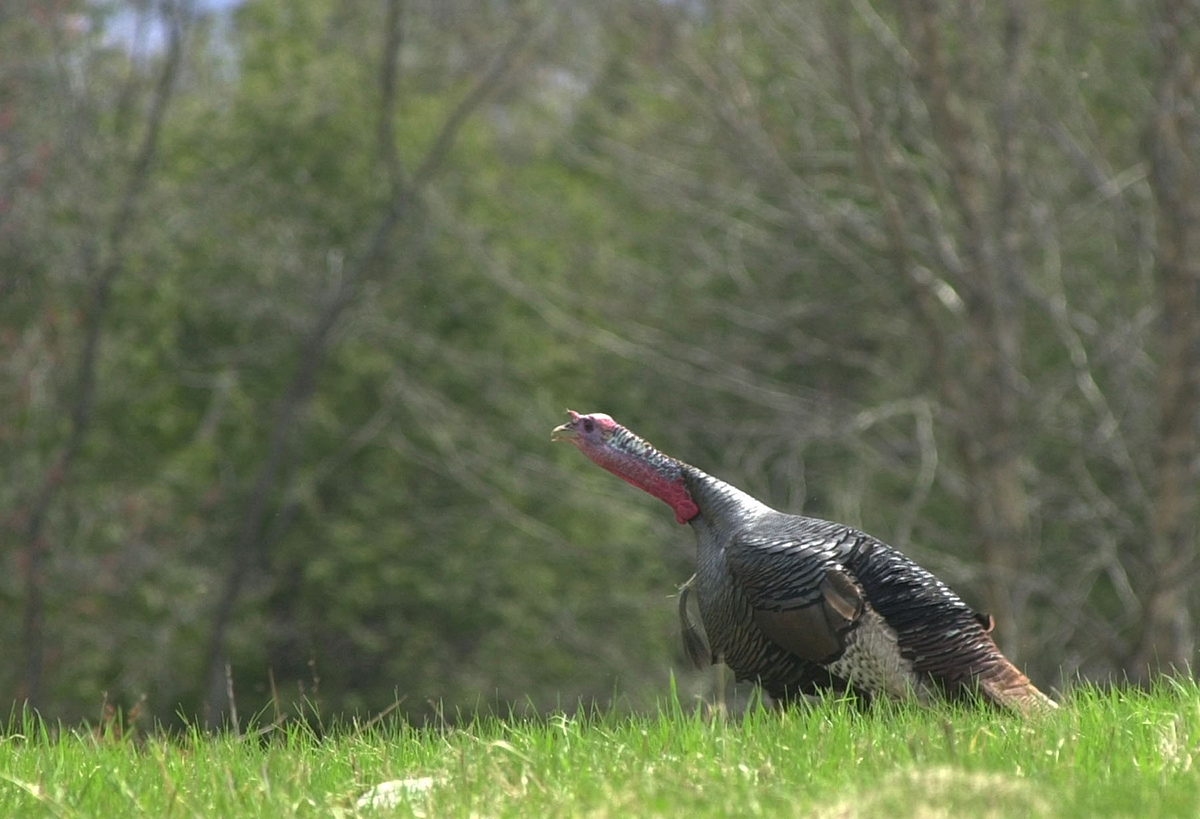
 AP file photo by Jon-Pierre Lasseigne / Although the spring gobbler season dominates the turkey hunting scene these days, the fall season is an old tradition, and one recommended by “Guns & Cornbread” columnist Larry Case. But before you head to the woods, Case advises looking into a new .410 shotgun to go after the birds.
Yes, my brothers and sisters in camo, I know we are not going into the spring gobbler season, but we are looking down the barrel at a thing called the fall turkey season. Hopefully some of you will be taking part in this old traditional season (a much older tradition in hunting than the spring season, I must tell you).
So, because we are soon to be in a turkey season, I thought we could talk about some turkey shotguns and the phenomenon of using the .410 bore (it’s not a gauge, remember) for America’s greatest game bird, the wild turkey. Not so long ago, the .410 was maybe thought of as a young hunter’s shotgun for small game at close range, the squirrel hunter’s first shotgun. Times change, and now the .410 is being used by turkey hunters big and small, thanks to a little thing called TSS, or tungsten super shot.
The trend of smaller or sub-gauge shotguns for turkeys has become, as they say, a “thing.”
All of this happened really fast. A few years ago, turkey shotgun geeks would be more likely to argue the merits of 3 1/2-inch Magnums versus 3-inch instead of what is the best load for a dainty .410. This transformation was brought on by basically one thing: the mysterious metal called wolfram, or tungsten.
A secretive, almost cultlike group of turkey slayers handloaded tungsten shot for years and reported incredible and often unbelievable results. Someone from this movement coined TSS for tungsten super shot, and the rest is history.