
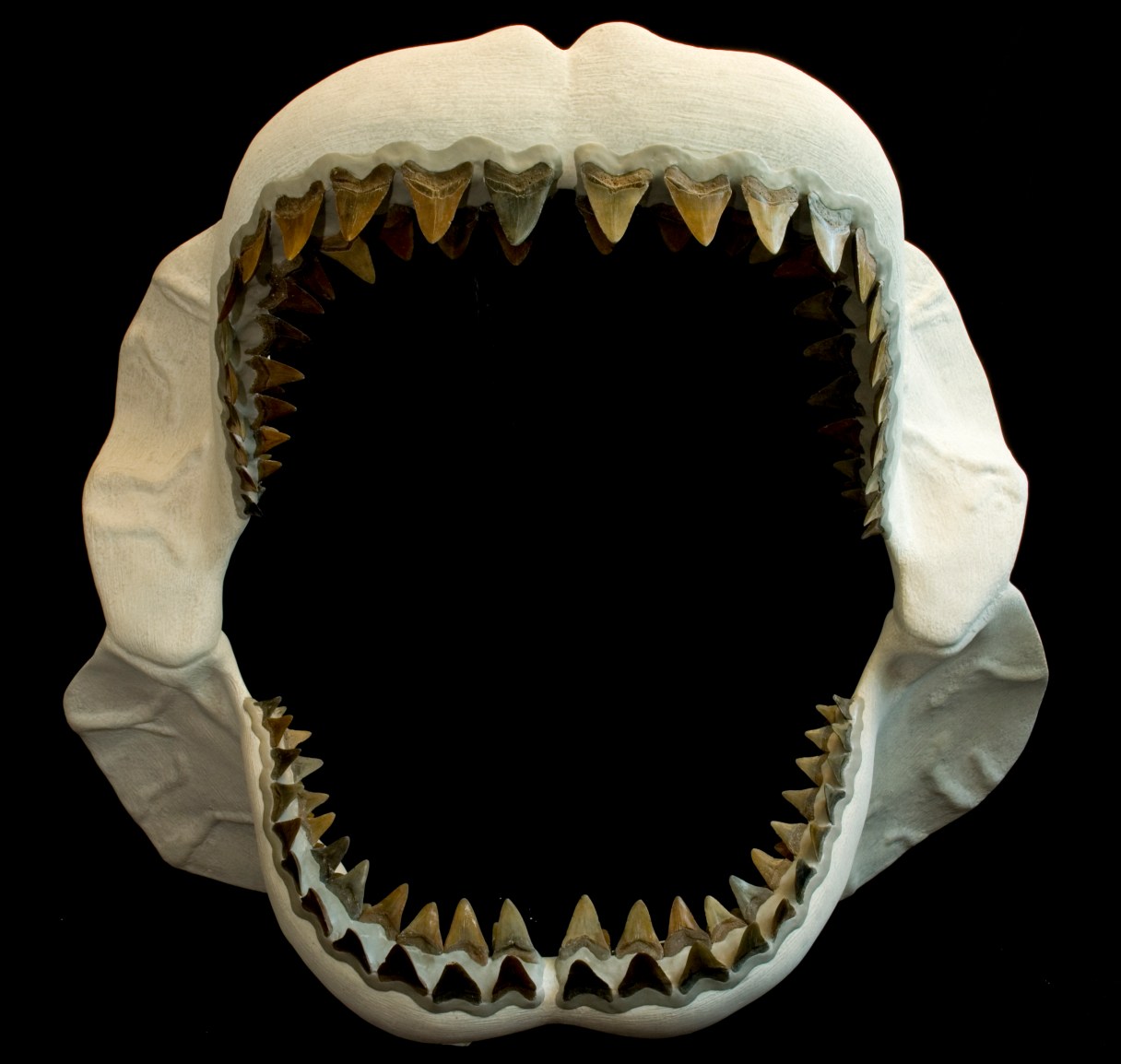
NEW YORK (AP) — Today’s sharks have nothing on their ancient cousins. A giant shark that roamed the oceans millions of years ago could have devoured a creature the size of a killer whale in just five bites, new research suggests.
For their study published Wednesday, researchers used fossil evidence to create a 3D model of the megalodon — one of the biggest predatory fish of all time — and find clues about its life.
At around 50 feet (16 meters) from nose to tail, the megalodon was bigger than a school bus, according to the study in the journal Science Advances. That’s about two to three times the size of today’s great white shark. The megalodon’s gaping jaw allowed it to feed on other big creatures. Once it filled its massive stomach, it could roam the oceans for months at a time, the researchers suggest.
The megalodon was a strong swimmer, too: Its average cruising speed was faster than sharks today and it could have migrated across multiple oceans with ease, they calculated.
“It would be a superpredator just dominating its ecosystem,” said co-author John Hutchinson, who studies the evolution of animal movement at England’s Royal Veterinary College. “There is nothing really matching it.”