
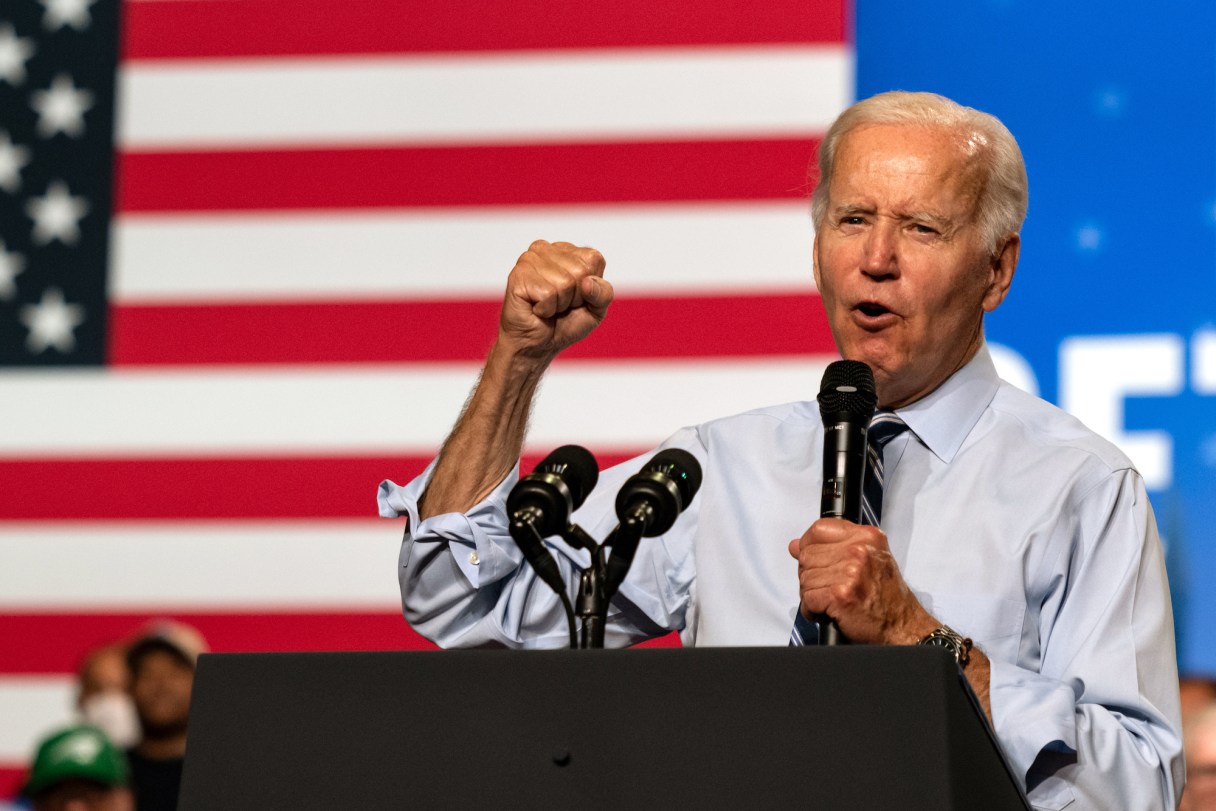
Jolting as it was, President Joe Biden’s description last week of the “extreme MAGA philosophy” as being “like semi-fascism” was somewhat mild compared to the routinely heated rhetoric from the right calling any Democratic policy they don’t like “socialist” or “communist.” Republicans have nonetheless come unglued over the comment — even as they continue saying things that make Biden’s case.
Sen. Lindsey Graham of South Carolina suggested, for example, that any attempt to hold former President Donald Trump accountable for his mishandling of classified documents would result in “riots in the streets.” Trump himself posted a screed in which he demanded a do-over of the 2020 election.
Don’t look now, but threats of societal violence, the elevation of one leader above the rule of law and rejection of free and fair elections in service to that leader are all close to dictionary-definition characteristics of fascism.
It’s not entirely unreasonable for Biden’s critics to point out that he campaigned in 2020 on a vow to bring Americans back together. Suggesting now that some of those Americans harbor urges toward fascism (or “semi-fascism”) perhaps does not serve that goal.
But consider what happened immediately after that 2020 campaign: Trump refused, and still refuses, to acknowledge his loss, the first time any sitting American president has ever done that. He followed up by inciting a mob of his followers to attack the U.S. Capitol on Jan. 6, 2021, in hopes of preventing the peaceful transfer of power. Again, this was unprecedented in America — but not in authoritarian regimes elsewhere.