
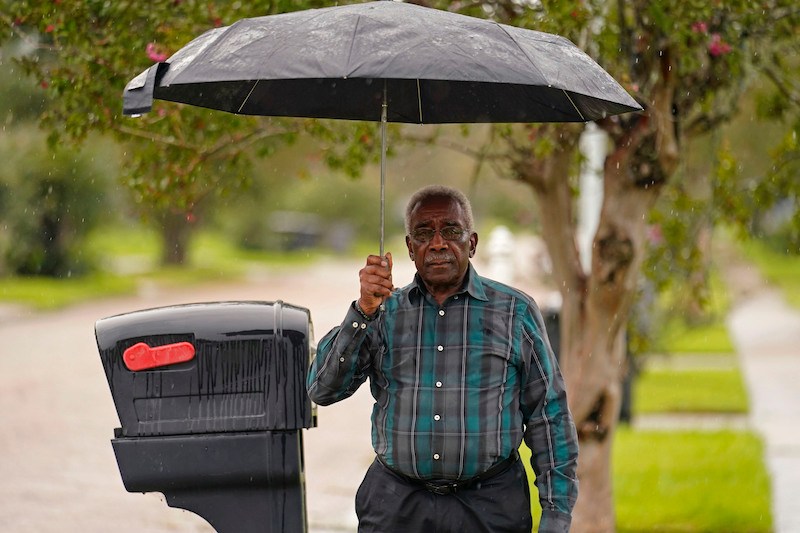
BATON ROUGE, La. (AP) — When Press Robinson registered to vote in South Carolina in 1963, he was handed a copy of the U.S. Constitution and told to read it aloud and interpret it.
Robinson, then a college sophomore, wasn’t surprised. He heard stories from others in the South’s Black community who faced Jim Crow-era methods to suppress Black votes – from literacy tests to poll taxes to the infamous “jellybean test” that required prospective voters to guess how many of the small candies were in a jar.
As Robinson began reading, he thought about the woman behind him who was also registering to vote for the first time: his 43-year-old mother, who had never fulfilled her constitutional right, partly out of fear that she would encounter this exact situation.
In 1965, the Voting Rights Act outlawed the discriminatory voting practices of many states in the South, where Jim Crow laws also restricted how and where Black people could live, work, eat and study.