
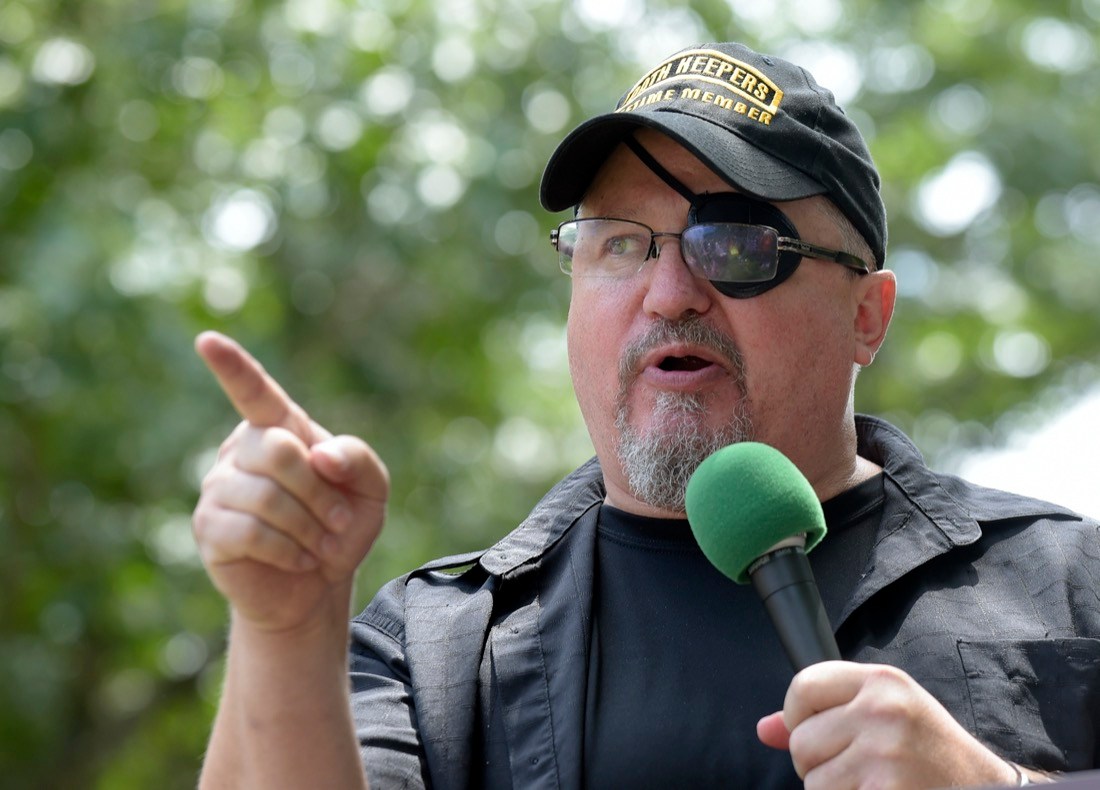
WASHINGTON (AP) — Federal prosecutors rested their case Thursday against Oath Keepers founder Stewart Rhodes and four associates charged in the U.S. Capitol attack after presenting nearly five weeks of testimony, videos and text messages they say prove the defendants were behind a violent plot to stop the transfer of presidential power.
The case will now turn to the defense, which is preparing to put Rhodes on the witness stand — an enormously risky move that the extremist group leader may see as his only way to escape conviction. Rhodes’ lawyers have signaled that they will rely on an unusual defense strategy with former President Donald Trump at the center.
Defense attorneys typically advise their clients to keep their mouths shut at trial, but Rhodes’ lawyers have said the Oath Keepers leader, who pressed his far-right ideas in fiery speeches and writings before the insurrection, has been insistent since his arrest that his voice be heard in the seditious conspiracy case against him.
In doing so, Rhodes will open himself up to aggressive questioning on cross examination from prosecutors, who will try to provoke him into saying something that will hurt his case or catch him in a lie on the stand.
“There’s always a risk and something to lose when you take the stand,” said Jeffrey Jacobovitz, a white-collar criminal defense attorney in Washington not involved in the Oath Keepers case. But “if you feel like there’s no alternative, that the government has presented an air-tight case or a very strong case, and you don’t have other witnesses that would be helpful, then you have to.”