
Monday, November 16, 2026Nov 16

Conflict, crisis fuel cholera surge across Mideast hot spots

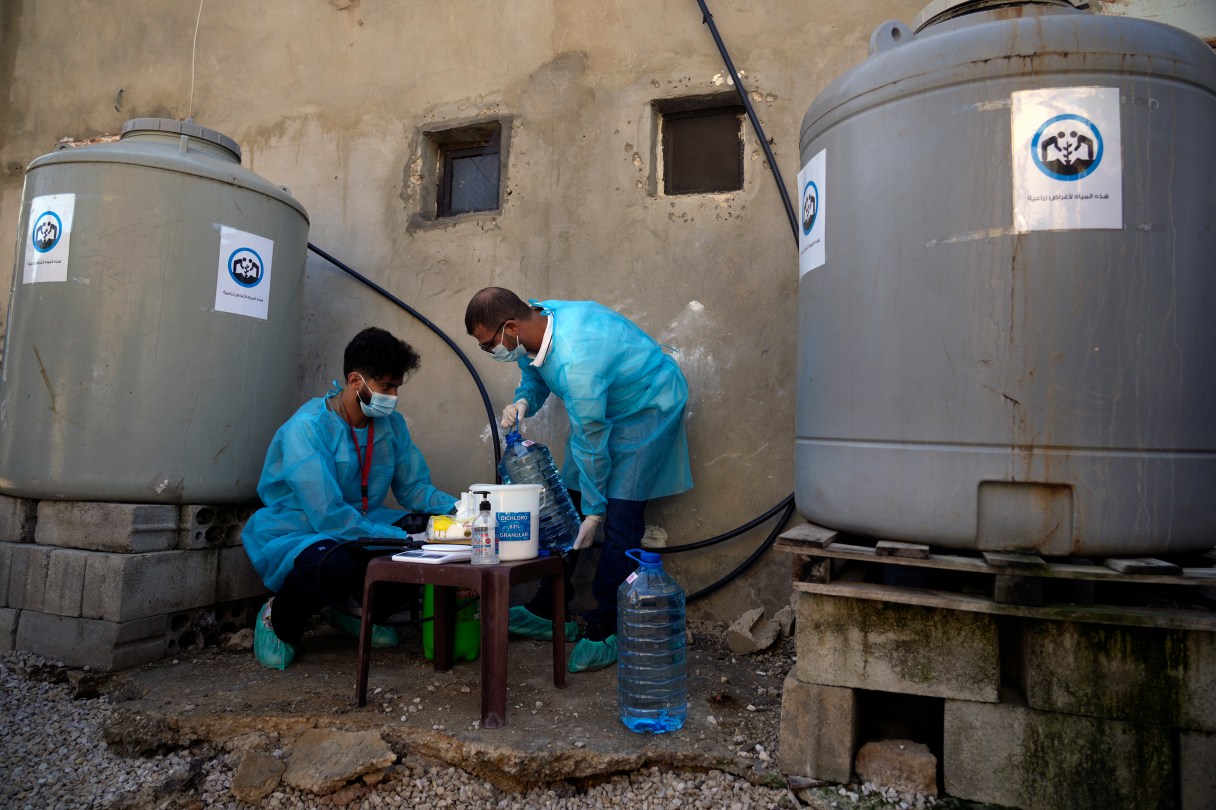
UNICEF health workers mix chlorine and fresh water to sanitize tents and bathrooms at Syrian refugee camp in response to a cholera outbreak in Bhanine village, in the northern Akkar province, Lebanon, Tuesday, Oct. 18, 2022. In recent weeks, thousands of cholera cases have swept across the crisis-stricken countries of Lebanon, Syria, and Iraq. The three nations are struggling with depleted health care and water infrastructure, political and economic turmoil, and large populations of refugees and displaced people who live in overcrowded camps. (AP Photo/Bilal Hussein)

BHANINE, Lebanon (AP) — Shadia Ahmed panicked as rainwater flooded her shack one night, drenching her seven children. The next morning, the kids were seized by vomiting, diarrhea and other symptoms.

After an aid group administered tests for cholera in Ahmed’s Syrian refugee encampment in the northern Lebanese town of Bhanine, her youngest, 4-year-old Assil, tested positive.

Cholera has swept across Lebanon, Syria, and Iraq as the countries struggle with devastated infrastructure, turmoil and housing large populations of people who have been displaced by conflict. Lebanon last month reported the first cholera case in nearly 30 years.

The bacterial infection has surged globally across dozens of countries this year, with outbreaks in Haiti and across the Horn of Africa as well as the Mideast. The outbreaks of hundreds of thousands of cases driven by conflict, poverty, and climate change are a major setback for global efforts to eradicate the disease.

“Cholera thrives in poverty and conflict but is now turbocharged by climate change,” said Inas Hamam, a regional spokeswoman for the World Health Organization. “Regional and global health security is in jeopardy.”