
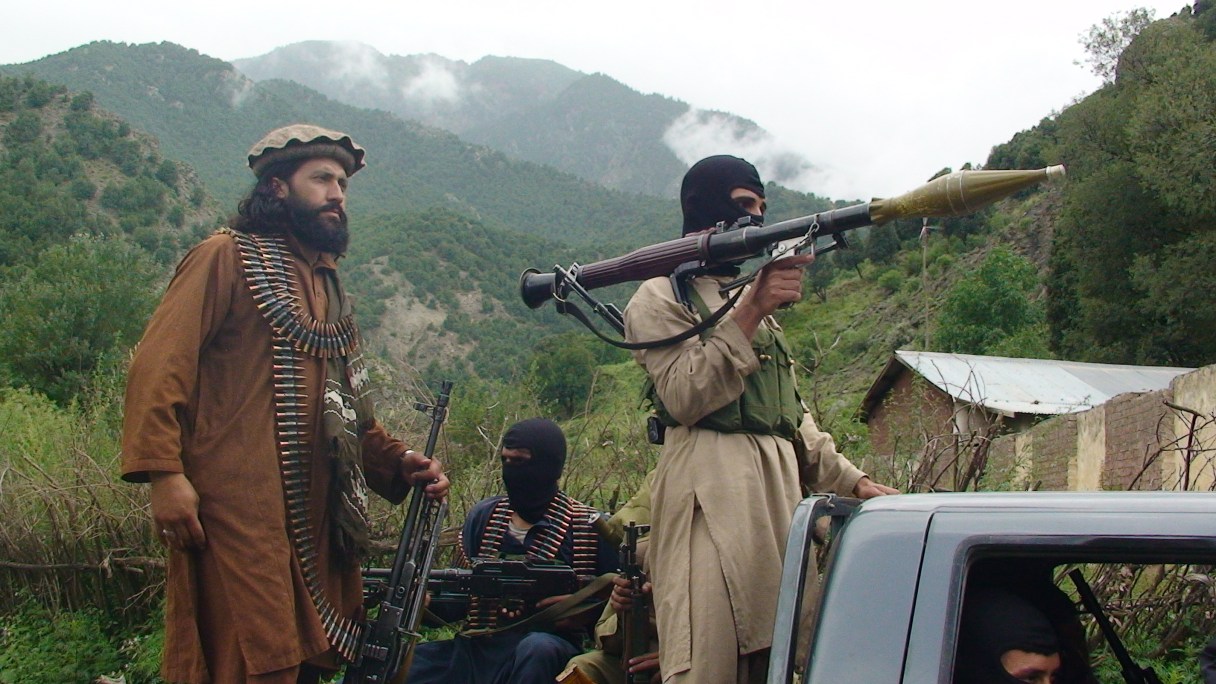
CAMP SHORABAK, Afghanistan (AP) – Afghanistan and Pakistan, home to al-Qaida and Taliban militants and the focus of the longest war in U.S. history, face a new, emerging threat from the Islamic State group, officials have told The Associated Press.
Disenchanted extremists from the Taliban and other organizations, impressed by the Islamic State group’s territorial gains and slick online propaganda, have begun raising its black flag in extremist-dominated areas of both countries.
In Pakistan, an online video purportedly shows militants beheading a man while pledging their allegiance to the IS. In Afghanistan, there have even been reports of militant rivalries, with clashes erupting between Taliban fighters and Islamic State militants.
Analysts and officials say the number of IS supporters in the Afghan-Pakistan region remains small and that the group faces resistance from militants with strong tribal links. However, the rise of even a small Islamic State affiliate could further destabilize the region and complicate U.S. and NATO efforts to end the 13-year Afghan war.
The Taliban remain the region’s pre-eminent insurgency, with nearly 20 years of experience battling Afghan warlords and international troops. But the Taliban are “not a particularly sexy ideology or military force, and the risk lies in the Taliban looking increasingly out of date,” said a Western diplomat, speaking on condition of anonymity to discuss intelligence matters.