
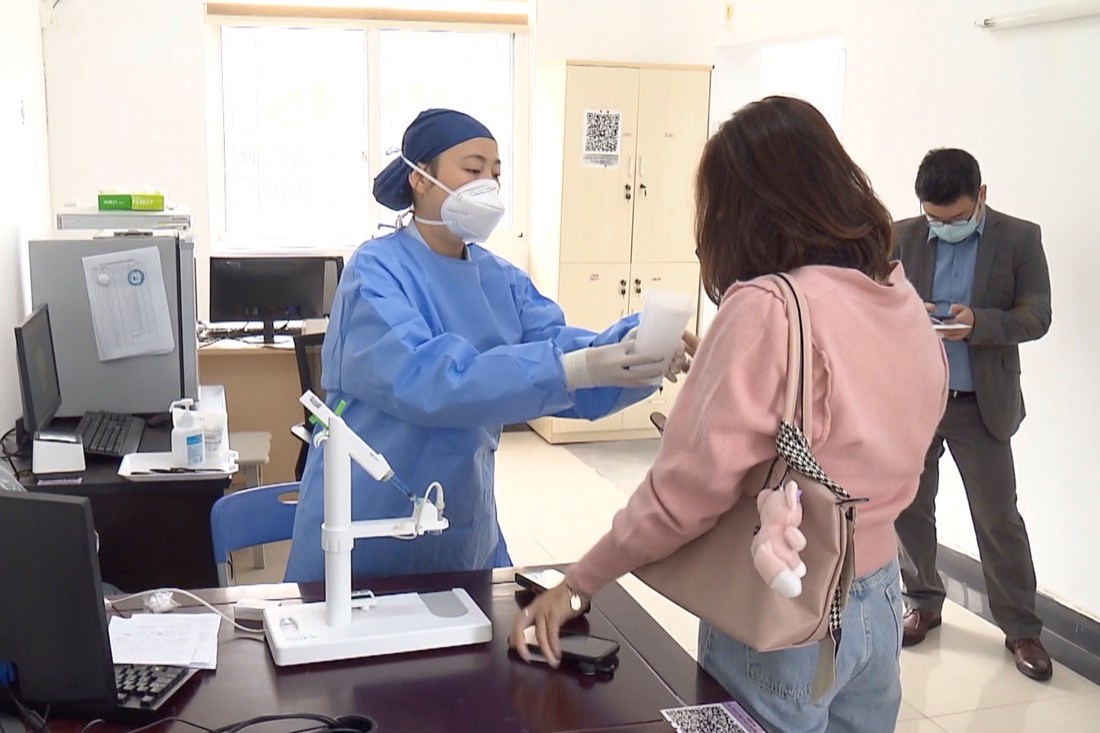
BEIJING (AP) — The Chinese city of Shanghai started administering an inhalable COVID-19 vaccine on Wednesday in what appears to be a world first.
The vaccine, a mist that is sucked in through the mouth, is being offered for free as a booster dose for previously vaccinated people, according to an announcement on an official city social media account.
Scientists hope that such “needle-free” vaccines will make vaccination more accessible in countries with fragile health systems because they are easier to administer. They also may persuade people who don’t like getting a shot in the arm to get inoculated.
China wants more people to get booster shots before it relaxes strict pandemic restrictions that are holding back the economy and are increasingly out of sync with the rest of the world. As of mid-October, 90% of Chinese were fully vaccinated and 57% had received a booster shot.
A video posted by an online Chinese state media outlet showed people at a community health center sticking the short nozzle of a translucent white cup into their mouths. The accompanying text said that after slowly inhaling, people hold their breath for five seconds, with the entire procedure completed in 20 seconds.