
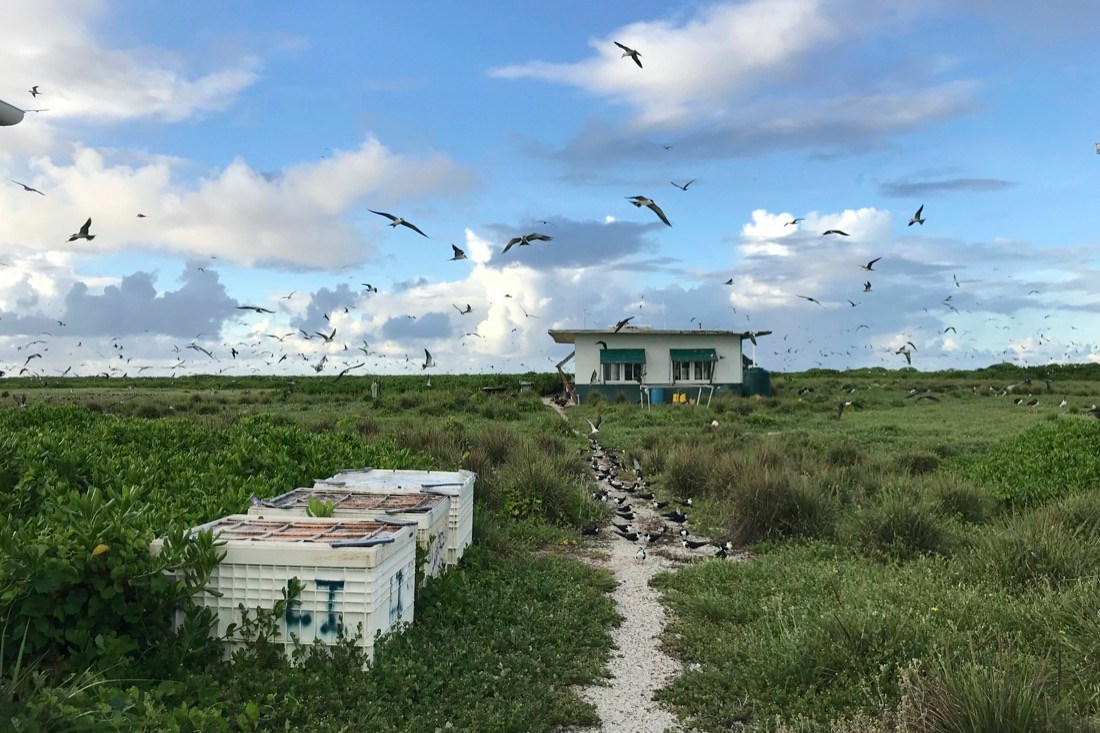
HONOLULU (AP) – Just as the coronavirus pandemic began to take hold, in February, four people set sail for one of the most remote places on Earth – a small camp on Kure Atoll, at the edge of the uninhabited Northwestern Hawaiian Islands.
There, more than 1,400 miles from Honolulu, they lived in isolation for eight months while working to restore the island’s environment. Cut off from the rest of the planet, their world was limited to a tiny patch of sand halfway between the U.S. mainland and Asia. With no television or internet access, their only information came from satellite text messages and occasional emails.
Now they are back, re-emerging into a changed society that might feel as foreign today as island isolation did in March. They must adjust to wearing face masks, staying indoors and seeing friends without giving hugs or hearty handshakes.
“I’ve never seen anything like this, but I started reading the book “The Stand” by Stephen King, which is about a disease outbreak, and I was thinking, ‘Oh my goodness, is this what it’s going to be like to go home?'” said Charlie Thomas, one of the four island workers. “All these precautions, these things, people sick everywhere. It was very strange to think about.”
The group was part of an effort by the state of Hawaii to maintain the fragile island ecosystem on Kure, which is part of the Papahanaumokuakea Marine National Monument, the nation’s largest contiguous protected environment. The public is not allowed to land anywhere in the Northwestern Hawaiian Islands.