
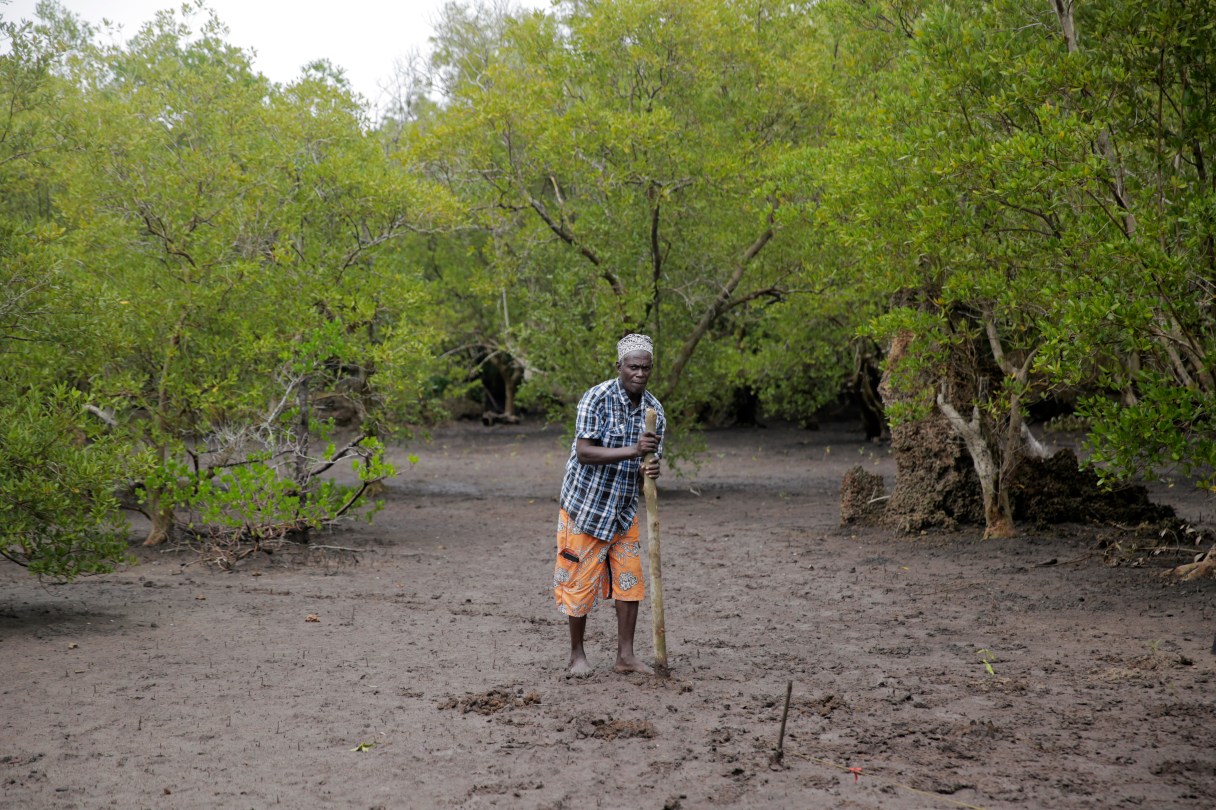
SHARM EL-SHEIKH (AP) — African nations want to increase how much money they receive from schemes that offset greenhouse gas emissions and are looking for ways to address the issue at U.N. climate talks currently underway in Egypt.
Carbon offsets, where polluters can effectively cancel out their emissions by paying into initiatives such as tree-planting, are currently cheaper to purchase in Africa than in many other parts of the world where schemes are more strictly regulated. African nations are looking to the climate talks to get a better price on the ‘carbon market’ to help achieve their own emissions reductions targets and move toward clean energy. The schemes have come under scrutiny by environmental groups who are concerned they are a free pass to keep polluting.
“We should look at carbon trading as an income tool for our developmental agenda,” Zambian environment minister Collins Nzovu told The Associated Press. “If we hurry into this market, we may lose our national heritage and give away at a low price that we will regret in future.”
In carbon trading, one credit issued equals one ton of carbon dioxide or another greenhouse gas equivalent removed from the atmosphere. The voluntary carbon market, which remains dominant in Africa, has been plagued by integrity and transparency concerns. Africa’s market currently sees the continent earning less than $10 per ton of carbon. Other regions can secure over $100 for the same amount in some instances.