
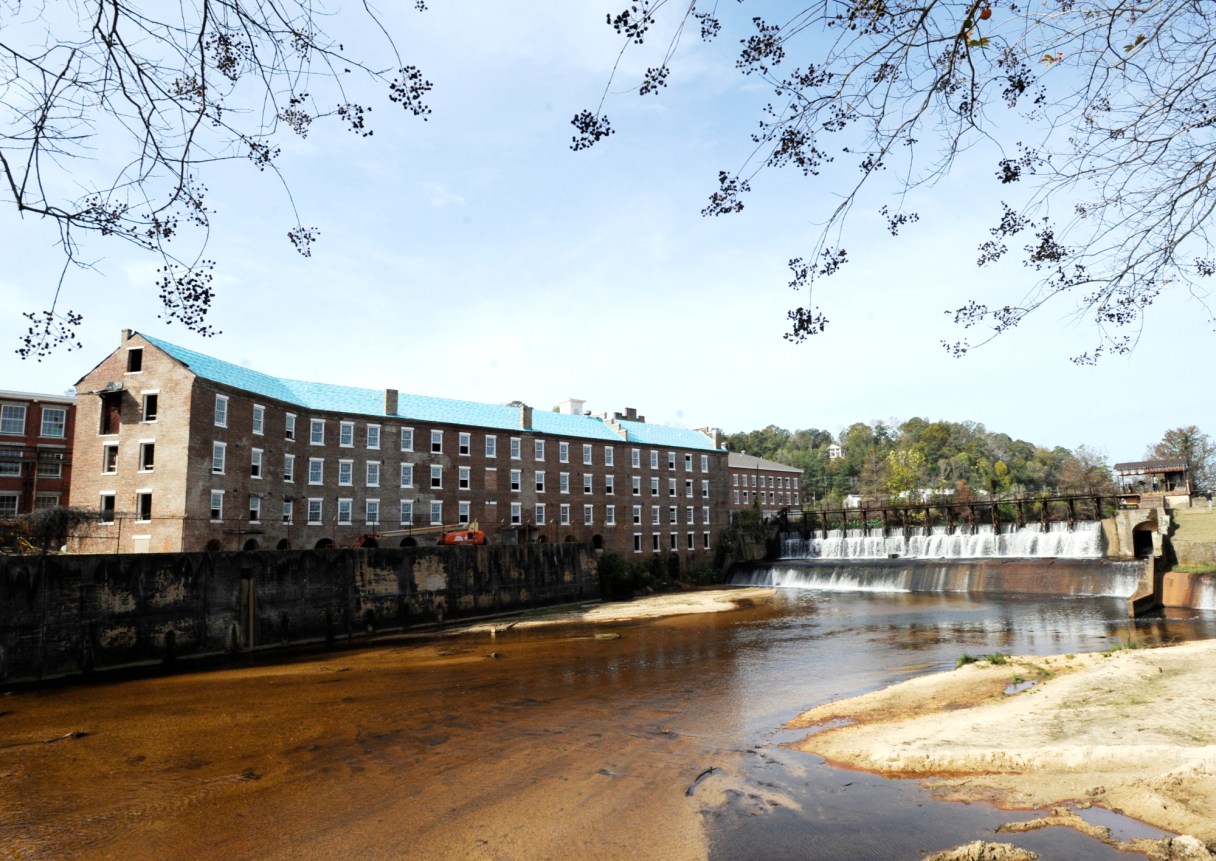
PRATTVILLE, Ala. (AP) — There’s no painless way to explain the history of a massive brick structure being renovated into apartments in this central Alabama city — a factory that played a key role in the expansion of slavery before the Civil War.
Dating back to the 1830s, the labor of enslaved Black people helped make it the world’s largest manufacturer of cotton gins, an innovation that boosted demand for many more enslaved people to pick cotton that could be quickly processed in much higher quantities than ever before, historians say.
The project to transform the factory’s five historic buildings into 127 upscale homes has many in the city of nearly 40,000 excited that a local landmark will be saved from demolition. New residents moving in early next year will only help Main Street’s shops and restaurants.
But with the nation debating how to teach history, the multimillion-dollar project also demonstrates the difficulty of telling the complicated story of a place in a way that both honors the past and doesn’t raise hackles over “wokeness” in a deeply conservative community.
___