
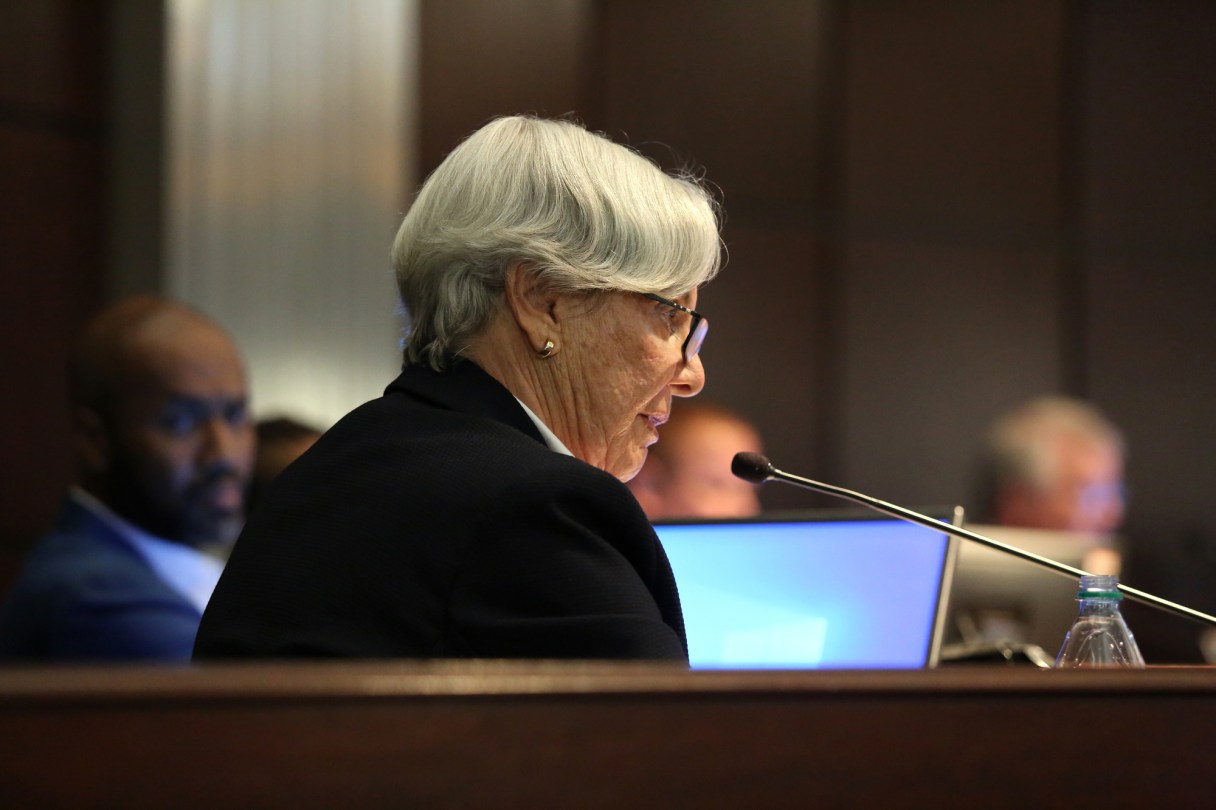

“When I tell you this is the most kosher thing that’s ever happened,” Chattanooga Councilwoman Carol Berz said of the city’s redistricting process following the 2020 census, “it is.”
“Kosher,” according to Chabad.org, literally means “fit” and is said to refer more broadly today as anything that is above board or legitimate.
Whatever the city’s redistricting process was, and it has been called many things since its results were revealed on March 1 of this year, it was not above board.
That’s the reason this newspaper filed suit against the city earlier this month, alleging that City Council members and staff members of Chattanooga Mayor Tim Kelly violated open meeting laws by redrawing city voting districts at meetings with no public access or notice.
The suit asks that the Council follow Tennessee’s Open Meetings Act in future proceedings.
In an era when more and more news is disseminated through social media and without proper context, it is important newspapers continue to be a watchdog for the community, that newspapers act as an advocate for the people when some government bodies don’t feel the need to do so.
Following the 2020 census, the Hamilton County Commission set an example as to how redistricting should be handled, with everything done in public, with public comment available at every meeting, with some requested changes made in real time as the public watched. In one meeting, a phone line was held open with a sick commissioner so she could request and make changes to the commission map.
It was, one commissioner said, the most open process the board had ever had.
The city had much less to do — its growth wasn’t near that of the county — and much more time to do it. The city’s new boundaries only had to be in place before the city’s 2025 city elections, and the city charter stipulated that no less than six months could be spent on redistricting. Easy peasy.
In late summer of 2021, four council members, with Berz the senior member, were assigned to be an ad hoc redistricting committee.
On Nov. 10, Berz told this newspaper there would be no drastic changes, that the process would be public and peaceful, and no redistricting would be undertaken until further data was collected.
“What we’re going to be doing is massaging the districts’ lines that already exist,” Berz said.
Four months later, what had been done behind closed doors was presented to the public. The presentation noted that — in spite of the promises of Berz — public input was not required by state law or the city charter. Chris Anderson, the mayor’s senior legislative adviser, said it had been decided to work out the plan without public participation, then to have individual council members meet with their constituents.
If the districts had stayed the same, he said, the council would have had two instead of three majority minority districts.
Given that and given the fact that entire neighborhoods were shifted between districts, it’s clear the changes were more than tweaks.
And although Anderson and council members may have wanted to avoid pitched battles over individual streets, the public should have been able to have its say.
Two weeks after the presentation, the Hamilton County Voters Coalition said in a letter to the City Council it was concerned about the process and did not have enough information even to have an opinion on the recommendations.
Deborah Fisher, executive director of the Tennessee Coalition for Open Government, said at the time the process was very likely a violation of the open meetings act and maintains that today.
“The redistricting committee meets the definition of a governing body because it is made up of members of the City Council,” she wrote to this page. “From what I can tell … all the other City Council committees abide by the open meetings law … . Why would the City Council’s redistricting committee be different from any other City Council committee?”
Berz, acknowledging the changes took place without public notice or access, continued to insist the boundaries only were massaged and that the process was procedural.
Nevertheless, several neighborhoods did get shifted around again from the March 1 map before the final process was approved in May.
Before that vote, calls came to restart the process, and Councilwoman Demetrus Coonrod said neighborhoods had been “destroyed, totally.” Others cited a “lack of transparency” and declared “public confidence in government has suffered.”
What did occur did not change the number of council districts, did not shift the number of majority minority districts and did not involve the number of people the county shift did. To us, those reasons are why it made even more sense to keep the process public, as the Council did following the 2010 census.
And we’re surprised Berz, a credentialed mediator and trainer in a private dispute resolution service, wouldn’t have insisted on such a process.
Sadly, the city’s response to the newspaper’s lawsuit was not to say that it was wrong not to take more transparent steps in redistricting but to say the newspaper had partnered with an “activist group” in “a brazen attempt” to restrict City Council members and administration staff members from getting “help for their constituents in a timely manner.”
If less transparency instead of more is a part of the administration’s “One Chattanooga” plan, we think it ought to rethink the plan.