
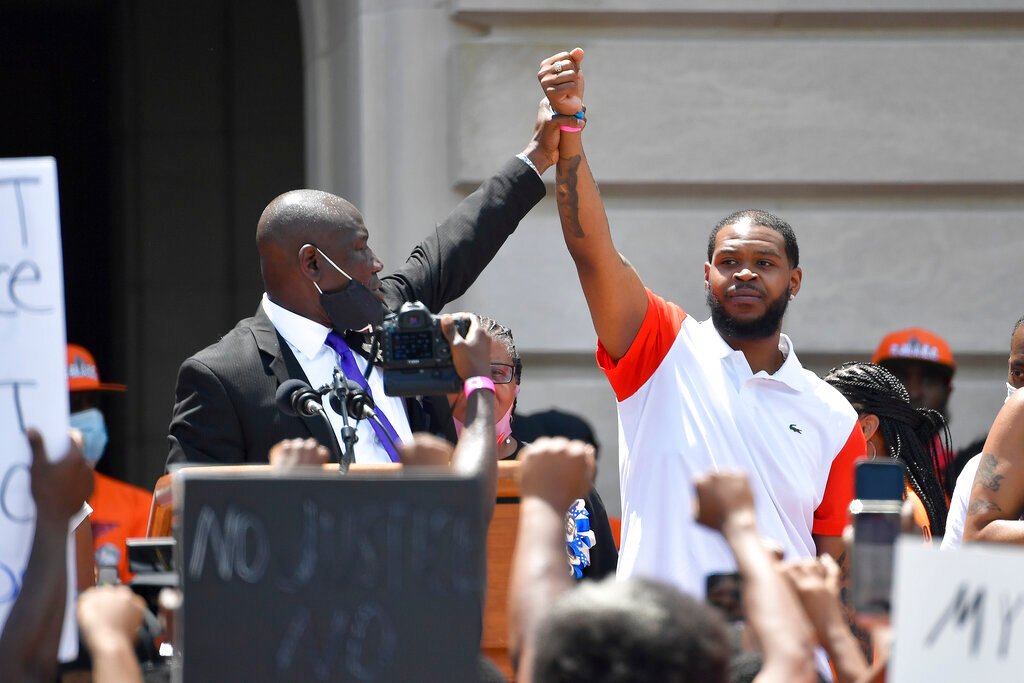
LOUISVILLE, Ky. (AP) — The boyfriend of Breonna Taylor who fired a shot at police as they burst through Taylor’s door the night she was killed has settled two lawsuits against the city of Louisville, his attorneys said Monday.
The city agreed to pay $2 million to settle lawsuits filed by Kenneth Walker in federal and state court, one of his attorneys, Steve Romines, said in a statement. He added that Taylor’s death “will haunt Kenny for the rest of his life.”
“He will live with the effects of being put in harm’s way due to a falsified warrant, to being a victim of a hailstorm of gunfire and to suffering the unimaginable and horrific death of Breonna Taylor,” Romines said.
Walker and Taylor were settled in bed for the night when they were roused by banging on her apartment door around midnight on March 13, 2020. Police were outside with a drug warrant, and they used a battering ram to knock down the door. Walker fired a single shot from a handgun, striking Sgt. John Mattingly in the leg. Mattingly and two other officers then opened fire, killing Taylor.
The case highlighted the issue of “no-knock” warrants — which allow law enforcement agents to enter a home without announcing their presence – and led to a reexamination of the practice.