
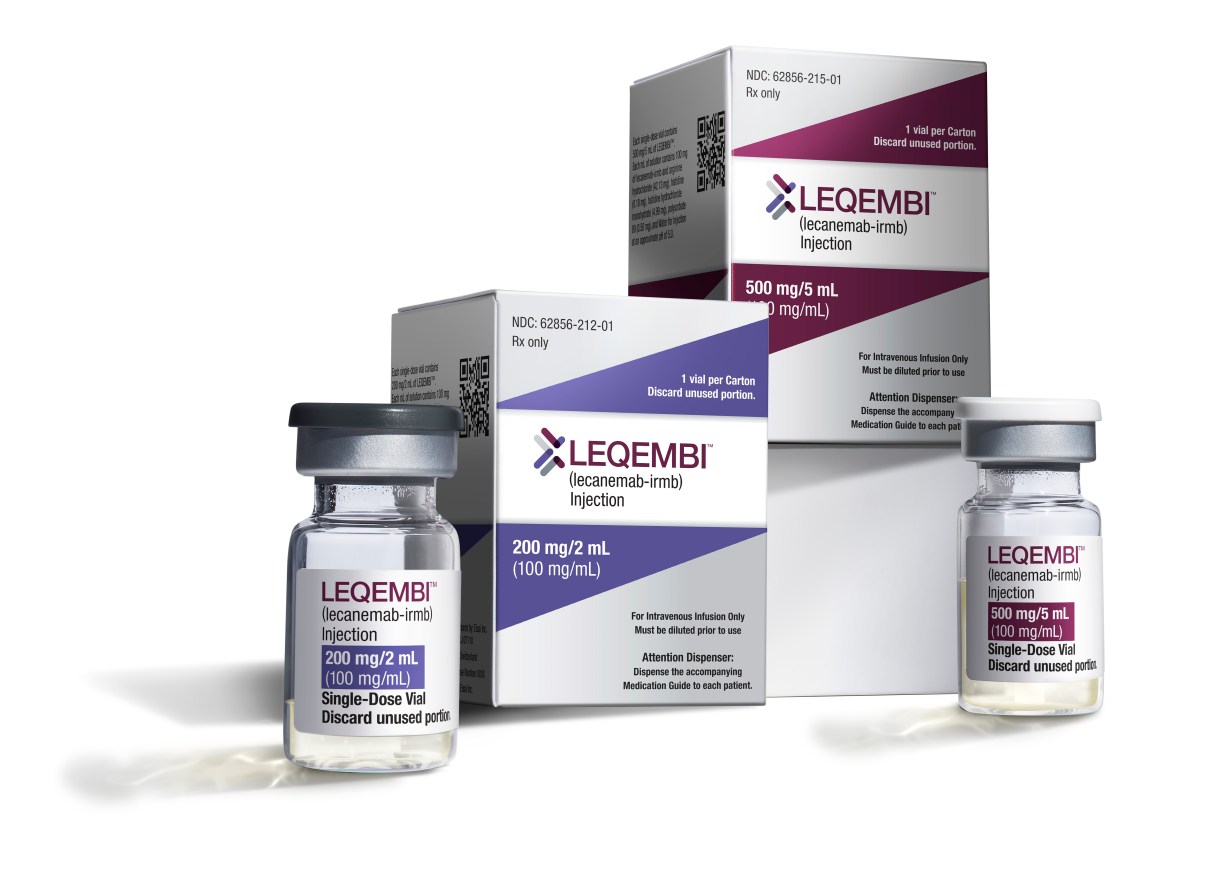
WASHINGTON (AP) — U.S. health officials on Friday approved a closely watched Alzheimer’s drug that’s been shown to modestly slow the early stages of the brain-robbing disease, albeit with potential safety risks that doctors and patients will have to carefully weigh.
The drug, Leqembi, is the first that’s been convincingly shown to slow the decline in memory and thinking that defines Alzheimer’s by targeting the disease’s underlying biology. The Food and Drug Administration approved it specifically for patients with mild or early cases of dementia.
Leqembi, from Japan’s Eisai and its U.S. partner Biogen, is a rare success in a field accustomed to failed experimental treatments for the incurable condition. The delay in cognitive decline brought about by the drug likely amounts to just several months, but some experts say it could still meaningfully improve people’s lives.
“This drug is not a cure. It doesn’t stop people from getting worse, but it does measurably slow the progression of the disease,” said Dr. Joy Snider, a neurologist at Washington University in St. Louis. “That might mean someone could have an extra six months to a year of being able to drive.”
Snider stressed that the medicine, pronounced “leh-KEM-bee,” comes with downsides, including the need for twice-a-month infusions and possible side effects like brain swelling and bleeding.