
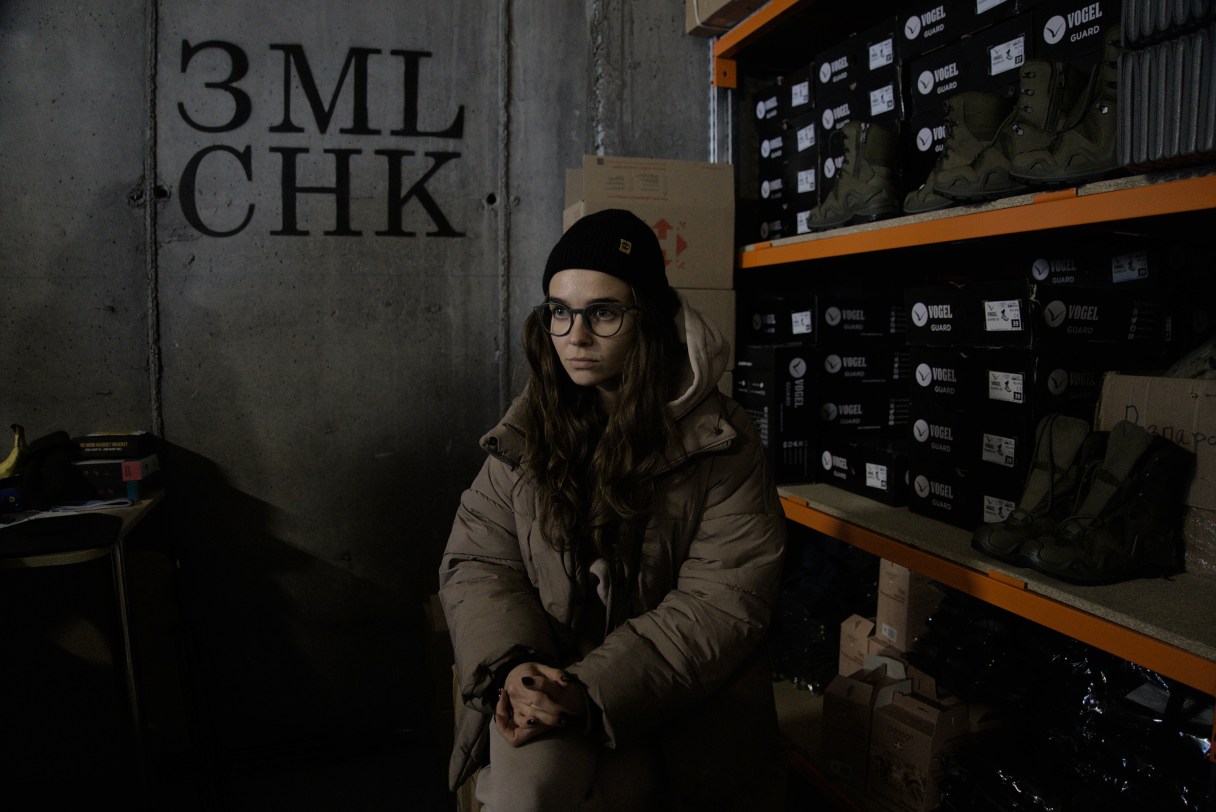
KYIV, Ukraine (AP) — When 25-year-old Anastasia Mokhina donned fatigues and rushed off with her husband to help Ukraine defend itself as Russia invaded on Feb. 24, she quickly realized the military wasn’t well prepared for an influx of women volunteers.
So her elder half-brother Andrii Kolesnyk, who was prevented from doing military service by a childhood disability, and his wife, Kseniia Drahaniuk, mobilized at home to ship her needed items. Word spread fast inside the ranks that amateur quartermasters were focusing on women’s particular needs, and a home-grown supply operation for female soldiers was born.
Now, a volunteer group called “Zemliachky” — roughly translated as “women compatriots” — is serving many of the 57,000 women in the Ukrainian military with boots, uniforms, stand-to-pee tubes, wireless bras, thermal underwear, medicines, right-sized bulletproof plates for their flak jackets, and care packages with items like lotions, shampoo, toothpaste, and feminine hygiene products.
In short, the group fill unanticipated gaps in the Ukrainian military’s own supply operation.
“Our army was not prepared for the fact that so many women would appear in the army,” said Drahaniuk, a 26-year-old journalist from Yalta, in now-occupied Crimea, sitting in front of metal shelves stocked with army boots and uniforms.