
Will Republicans once again nominate Donald Trump for president? Or will they turn to Ron DeSantis instead? I have no idea.
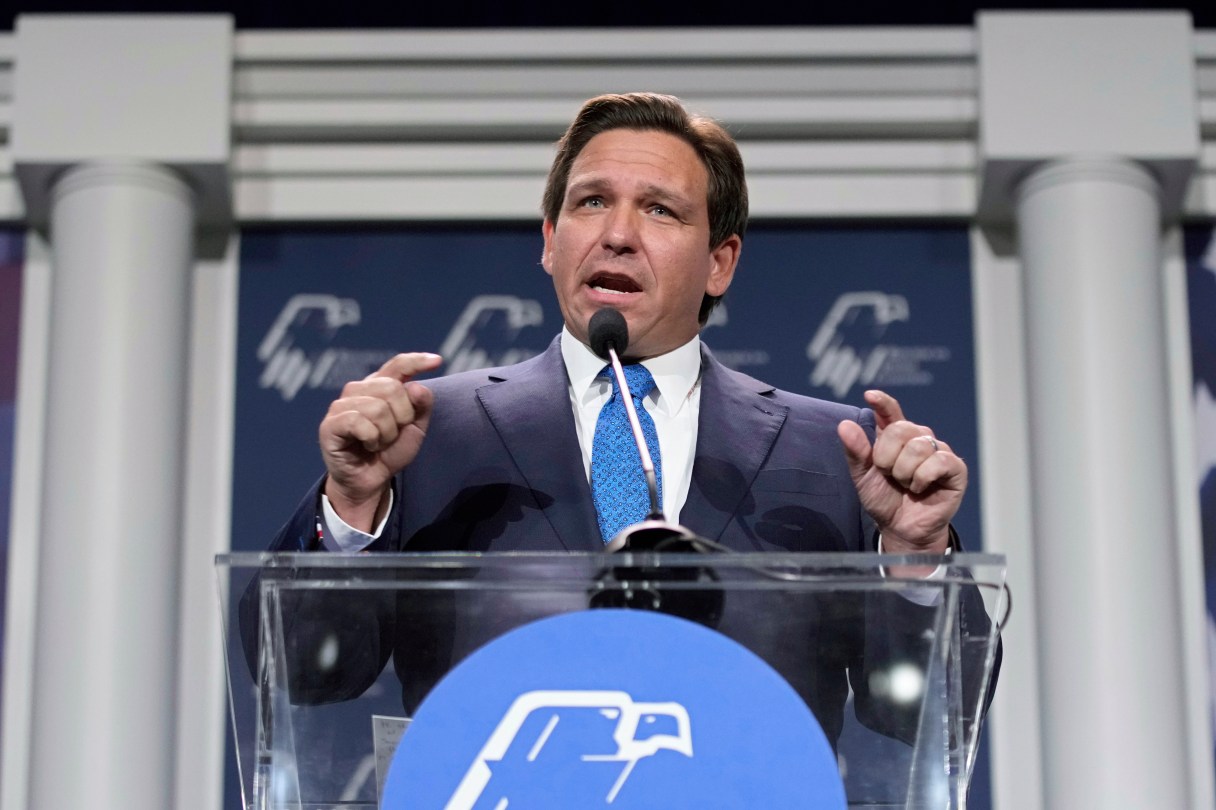
What I do know is that anyone imagining the Florida governor as a more sensible, saner figure than Trump — a right-wing populist without the reality-denying paranoia — is delusional. DeSantis hasn’t gone down all the same rabbit holes as Trump, but he has gone down some of his own, and his descent has been just as deep.
Above all, DeSantis is increasingly making himself the face of vaccine conspiracy theories, which have turned a medical miracle into a source of bitter partisan division and contributed to thousands of unnecessary deaths.
In spring 2020, the U.S. government initiated Operation Warp Speed, a public-private partnership intended to develop effective vaccines against the coronavirus as quickly as possible. The effort succeeded: By December 2020, far sooner than almost anyone had imagined possible, vaccinations were underway. And yes, this was a success for the Trump administration.
Have the vaccines worked? And how. Look at the correlation across U.S. counties between vaccination rates and COVID death rates. Between May 2021, when two-dose vaccinations first became widespread, and September, the least-vaccinated 10% of counties suffered a death rate more than three times as high as the most-vaccinated.
Now, you may have heard that at this point, deaths among vaccinated Americans are exceeding those among the unvaccinated, which is true. But that’s partly because most deaths are among the elderly, who are overwhelmingly vaccinated; very few Americans have received no shots; and not enough vaccinated people are getting booster shots.
But why are some U.S. counties so much less vaccinated than others? Partisanship: There’s a startlingly close relationship between the share of a county’s voters who supported Trump in 2020 and the percentage of that county’s residents who haven’t received their shots — and the percentage who have died from COVID.
Why should vaccination be a partisan issue?
Right-wing opposition to lockdowns, social distancing and masks involved requiring that people make some sacrifices to protect other people’s lives. (Some might say that such trade-offs are what civilization is all about, but whatever.)
But getting vaccinated is mainly about protecting yourself. Why wouldn’t you want to do that?
The immediate answer is the widespread belief on the right that the vaccines have terrible side effects. If it were true, shouldn’t there be a lot of evidence for such claims, given that more than 13 billion doses have been administered worldwide?
The usual suspects claim sinister elites are suppressing the evidence. Which brings us back to DeSantis, who announced Tuesday that he was forming a state committee to counter federal health policy recommendations — and asking for a grand jury investigation into unspecified “crimes and misdemeanors” related to coronavirus vaccines.
What he’s doing is catering to a Republican base that equates listening to experts, on public health or anything else, with “wokeness,” and demonizes anyone saying things it doesn’t want to hear.
Will DeSantis’ attempt to position himself as the leader of the anti-vax movement and give at least tacit approval to conspiracy theories actually endear him to the Republican base? I don’t know. Even if it does, I suspect it will hurt him in the general election if he becomes the nominee: Vaccine paranoia and Fauci hatred are still niche positions in the electorate at large.
But anyone who imagines that replacing Trump with DeSantis as the GOP’s leader would signal a party on its way to becoming sane again is in for a rude shock.
The New York Times