
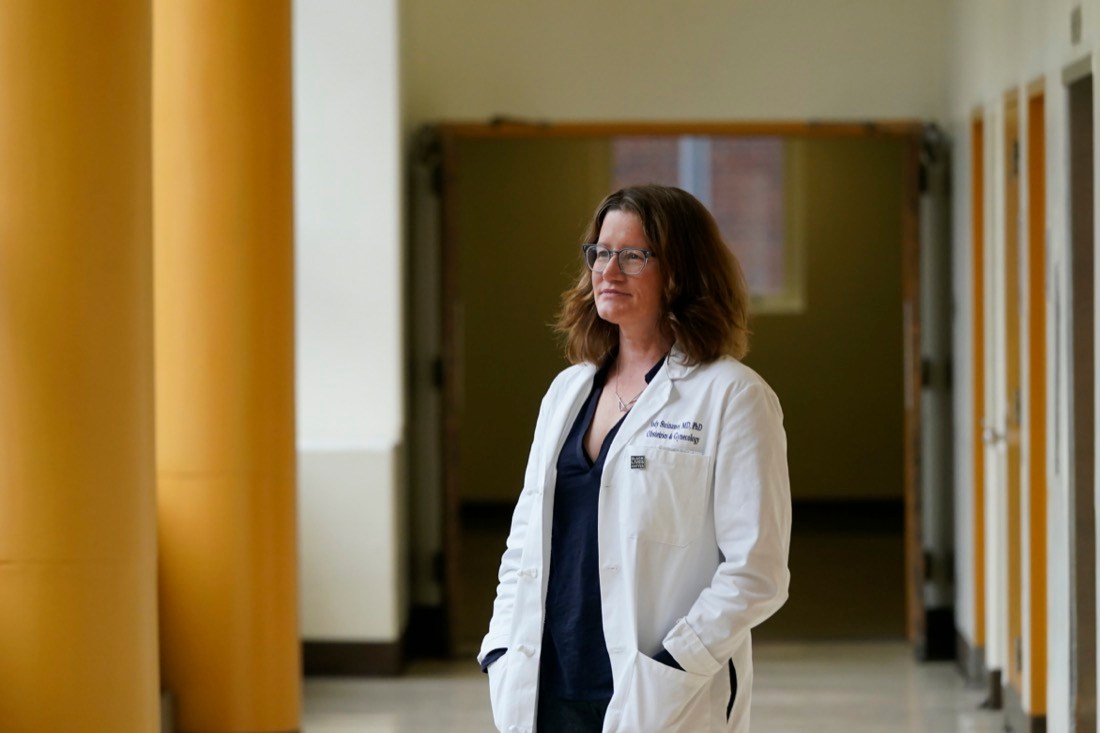
NASHVILLE, Tenn. (AP) – As the Supreme Court mulls whether to uphold Mississippi’s 15-week abortion ban, the American College of Obstetricians and Gynecologists filed a brief against the state law, calling it “fundamentally at odds with the provision of safe and essential healthcare.”
But the organization’s support for abortion hasn’t always been unequivocal. After the 1973 Roe v. Wade decision guaranteed the right to abortion, American OB-GYNs remained divided on the issue. Many declined to perform elective abortions either out of moral opposition or because they wanted to avoid the “butcher” stigma that still clung to abortion doctors from the pre-Roe days.
That helped keep abortion on the margins of mainstream medicine and separate from other OB-GYN care – both physically and in the minds of many Americans. It also made abortion and the clinics where it was performed easy targets for those who opposed it.
“I think we’d be in a very different place today if right from the get-go abortion training was established and more OB-GYNs had taken it up. If family medicine had taken it up,” said Carole Joffe, a sociologist with the Bixby Center for Global Reproductive Health who has researched and written extensively on abortion.
Shortly before Roe, a group of 100 OB-GYN professors from around the country published a paper calling on their fellow specialists to begin teaching and providing abortions. But their vision of integrating abortion care into routine OB-GYN practice never materialized, despite abortion quickly becoming the most sought-after elective surgery in the U.S.