
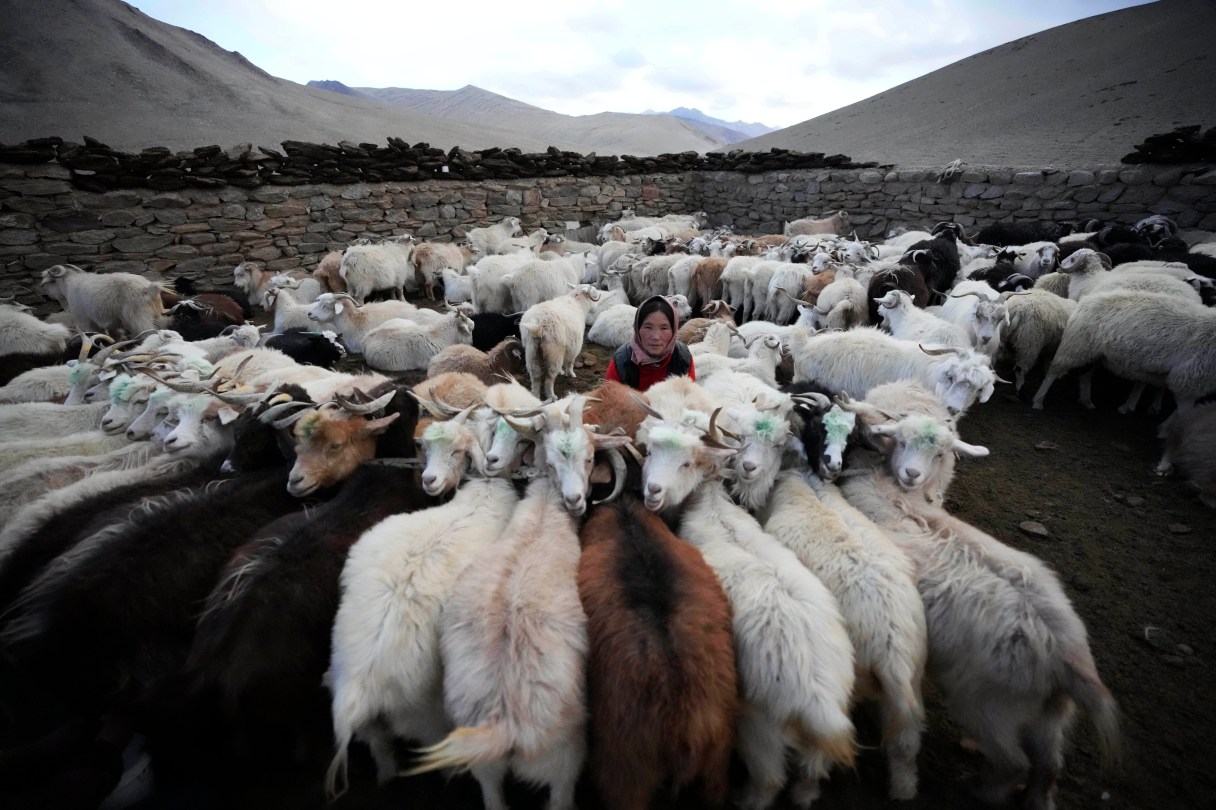
KHARNAK, India (AP) — Nomad Tsering Angchuk vows to stay put in his remote village in India’s Ladakh region.
His two sons and most of his fellow villagers have migrated to a nearby urban settlement but Angchuk is determined to herd his flock of fine cashmere-producing goats in the treeless Kharnak village, a hauntingly beautiful but unforgiving, cold mountainous desert.
The 47-year-old herds 800 sheep and goats and a flock of 50 Himalayan yaks in Kharnak. In 2013, he migrated to Kharnakling, an urban settlement in the outskirts of a regional town called Leh but returned a year later, not because his old home had become any better, he said, “but because the urban centers are getting worse and there are only menial jobs for people like us.”
Nestled between India, Pakistan and China, Ladakh has faced both territorial disputes and the stark effects of climate change. The region’s sparsely populated villages have witnessed shifting weather patterns that have already altered people’s lives through floods, landslides and droughts.