
Thursday, October 29, 2026Oct 29

This story is free to read.

In Jimmy Carter’s Plains, Georgia, Christmas tree tradition lives on

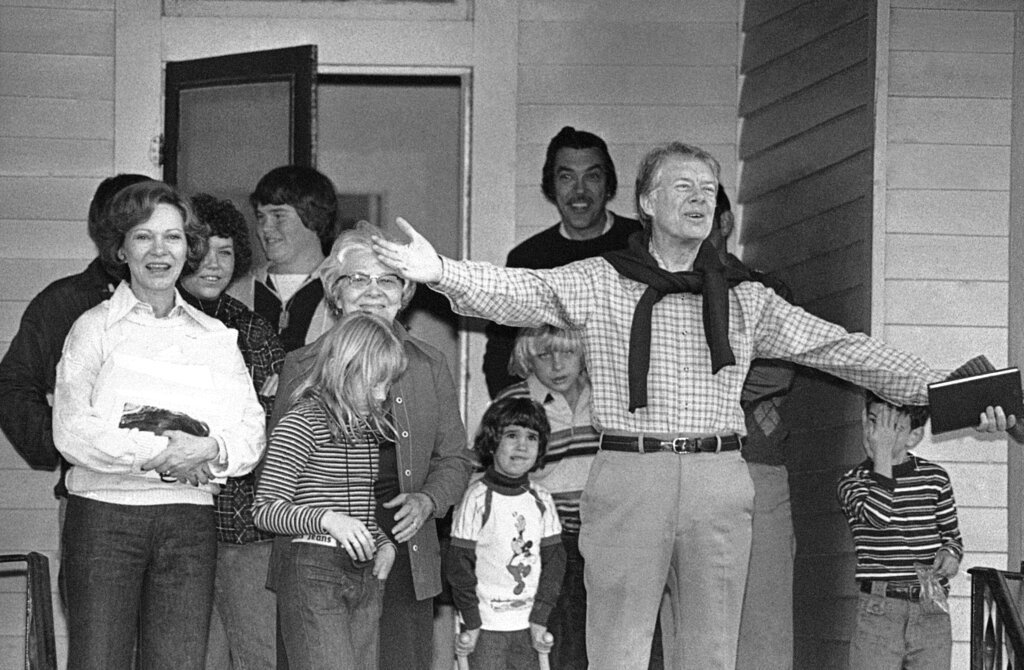
President Jimmy Carter wishes everybody a Merry Christmas as he leaves the home of his mother-in-law in Plains, Georgia on Dec. 25, 1978. From left: Rosalynn Carter, Amy Carter, Mrs. Allie Smith, his mother-in-law, wearing glasses, and president. Others in the background are unidentified family members and friends. (AP Photo/Charles Tasnadi)
President Jimmy Carter wishes everybody a Merry Christmas as he leaves the home of his mother-in-law in Plains, Georgia on Dec. 25, 1978. From left: Rosalynn Carter, Amy Carter, Mrs. Allie Smith, his mother-in-law, wearing glasses, and president. Others in the background are unidentified family members and friends. (AP Photo/Charles Tasnadi) President Jimmy Carter wishes everybody a Merry Christmas as he leaves the home of his mother-in-law in Plains, Georgia on Dec. 25, 1978. From left: Rosalynn Carter, Amy Carter, Mrs. Allie Smith, his mother-in-law, wearing glasses, and president. Others in the background are unidentified family members and friends. (AP Photo/Charles Tasnadi)

PLAINS, Ga. — Early Tuesday morning, Ron Hobkirk, Brennan Morris and Henry Smith ventured out of the woods behind the old Jimmy Carter Boyhood Home carrying what would soon be a Christmas tree.

It wasn’t perfect. Few are.

So they drilled holes in it and stuck branches from other trees in it to fill it out. It was part of a tradition that dates back nearly a century.

“Throughout the year, Daddy and I were on the lookout in our woods for a relatively rare wild red cedar that would make a good Christmas tree, one that was perfect in size and shape,” Carter wrote in his 2001 memoir, “Christmas in Plains.” “My father was meticulous about its quality, and if there were unsightly gaps anywhere in the foliage, we would drill a small hole into the tree trunk and insert an extra limb or two.”

“They wanted the tree to be perfect so they looked all year long for that perfect cedar tree,” said Jill Stuckey, the superintendent of the Jimmy Carter National Historical Park. “If it was not perfect, they would make it perfect.”