
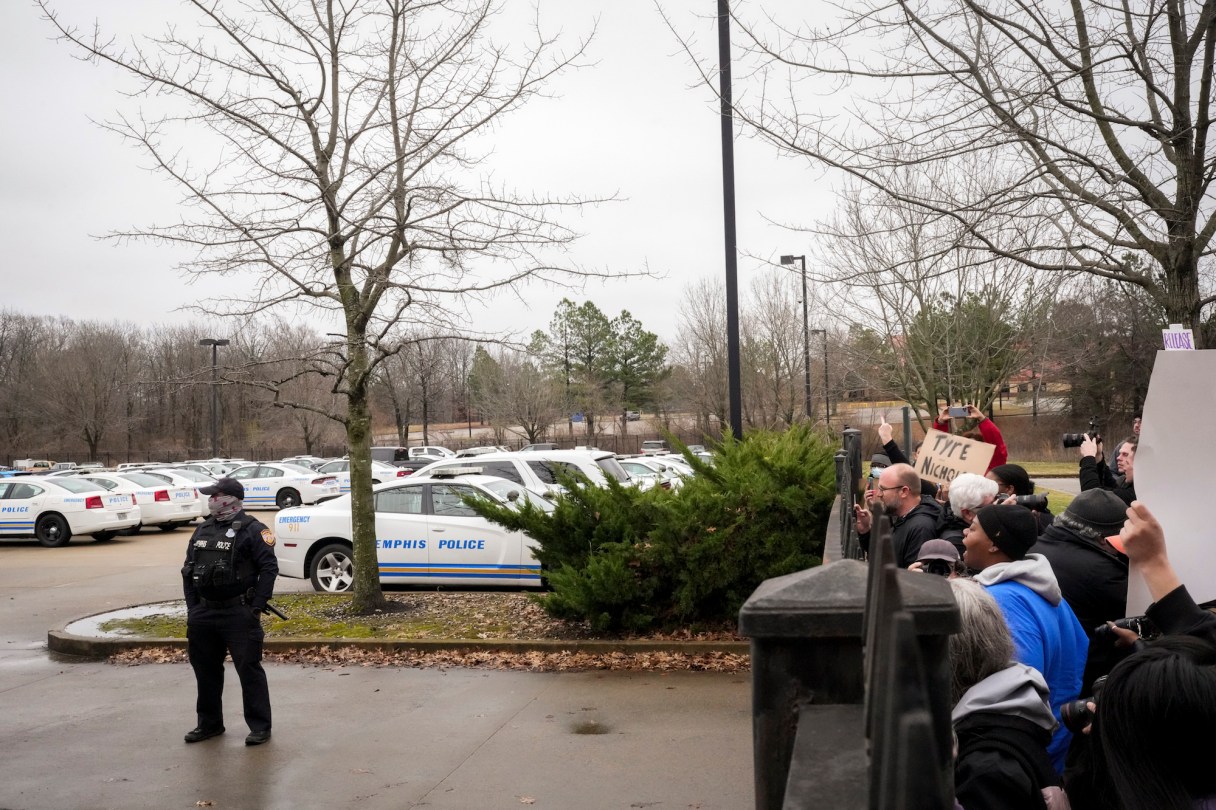
You will not believe the video that was released Friday night showing Memphis police officers beating — ultimately to death — a young Black man.
I don’t really mean that, of course. If you live in the U.S., and participate in society, you likely have no difficulty believing that a gang of violent police officers fatally pummeled Tyre Nichols in what the city’s police chief accurately described as a “heinous” attack. Indeed, if you have an internet connection or a television, you have probably seen similar videos of police officers killing Black men, and women too, in other American cities.
Occasionally, videos surface of police killing or beating a white man. Statistically, those attacks are less common. But they’re just as real. Since 2015, police officers have fatally shot more than 1,000 people per year in the U.S., according to a database maintained by The Washington Post. That’s nearly three deaths per day.
America has a police problem. And its police problem is rooted in (though not exclusive to) its race problem, which is a problem, in turn, rooted so deep in our national character that it was written into the Constitution. Martin Luther King Jr. wasn’t arrested and thrown in jail by the Ku Klux Klan. Police did that. John Lewis was not beaten bloody in Selma by the Proud Boys of 20th century Alabama. The attackers were men wearing badges, wielding clubs, earning paychecks from the public treasury.
Things have changed. Except in all the ways that they haven’t.