
Thursday, October 29, 2026Oct 29

This story is free to read.

Glass act: Scientists reveal secrets of frog transparency

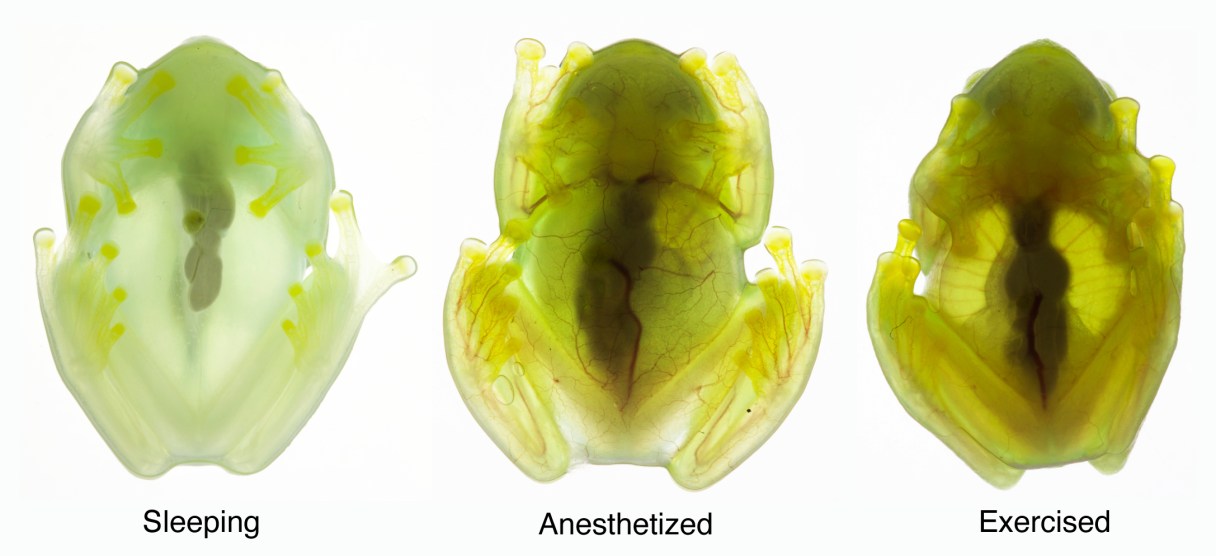
This combination of photos provided by researchers in December 2022 shows the same glass frog photographed during sleep, under anesthesia, and while active (in transmitted light), showing the difference in red blood cells within the circulatory system. Some frogs found in South and Central America have the rare ability to turn on and off their nearly transparent appearance, researchers report Thursday, Dec. 22, 2022, in the journal Science. (Jesse Delia/AMNH via AP)
This combination of photos provided by researchers in December 2022 shows the same glass frog photographed during sleep, under anesthesia, and while active (in transmitted light), showing the difference in red blood cells within the circulatory system. Some frogs found in South and Central America have the rare ability to turn on and off their nearly transparent appearance, researchers report Thursday, Dec. 22, 2022, in the journal Science. (Jesse Delia/AMNH via AP) This combination of photos provided by researchers in December 2022 shows the same glass frog photographed during sleep, under anesthesia, and while active (in transmitted light), showing the difference in red blood cells within the circulatory system. Some frogs found in South and Central America have the rare ability to turn on and off their nearly transparent appearance, researchers report Thursday, Dec. 22, 2022, in the journal Science. (Jesse Delia/AMNH via AP)

WASHINGTON (AP) — Now you see them, now you don’t.

Some frogs found in South and Central America have the rare ability to turn on and off their nearly transparent appearance, researchers report Thursday in the journal Science.

During the day, these nocturnal frogs sleep by hanging underneath tree leaves. Their delicate, greenish transparent forms don’t cast shadows, rendering them almost invisible to birds and other predators passing overhead or underneath.

But when northern glass frogs wake up and hop around in search of insects and mates, they take on an opaque reddish-brown color.

“When they’re transparent, it’s for their safety,” said Junjie Yao, a Duke University biomedical engineer and study co-author. When they’re awake, they can actively evade predators, but when they’re sleeping and most vulnerable, “they have adapted to remain hidden.”