
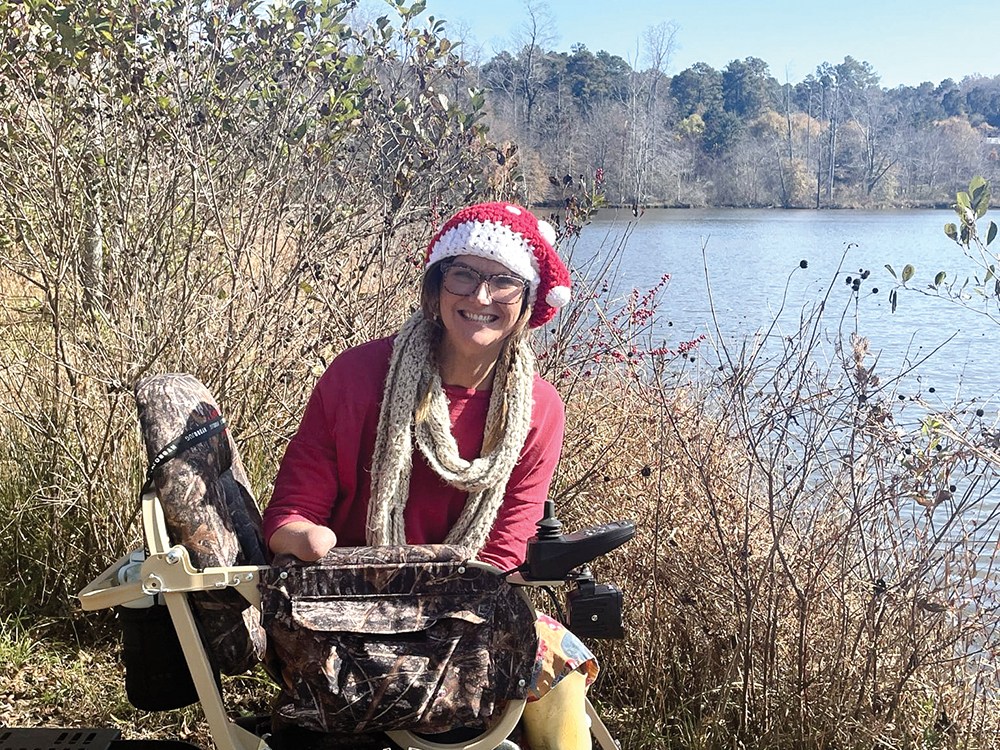
The first time Melanie Dunn climbed into an Action Trakchair, it felt as if she was running. A double amputee, she hadn’t experienced that exhilarating sensation in 10 years.
Dunn had been at a wedding in Washington, D.C., and had changed out of her dress shoes into flip-flops following the ceremony. As she stepped into the taxi to take her back to the airport, she happened to step in a puddle. By the time she got home, her toe, which had sported a small cracked callous beforehand, resembled a tomato. She thought it was a spider bite, but 65 surgeries later, she had lost her right foot and left leg to necrotizing fasciitis due to a waterborne staph infection.
Dunn fell into a deep depression. The only thing that really brought her peace was feeling the sunshine — which is how she describes Aimee Copeland Mercier.
In a strikingly similar twist of fate, years before Dunn’s accident, Copeland Mercier had contracted necrotizing fasciitis following a ziplining accident, which ultimately claimed her right foot, left leg and both hands.
In an effort to lift Dunn’s spirits, her mom suggested she reach out to Copeland Mercier. An avid outdoorswoman, both before and after her accident, Copeland Mercier was doing therapeutic work with other amputees, and Dunn had been following her story. As she lay confined to her hospital bed, Copeland Mercier had dreamed of creating a park for people with disabilities, but now wanted to give them the tools to explore the world.