
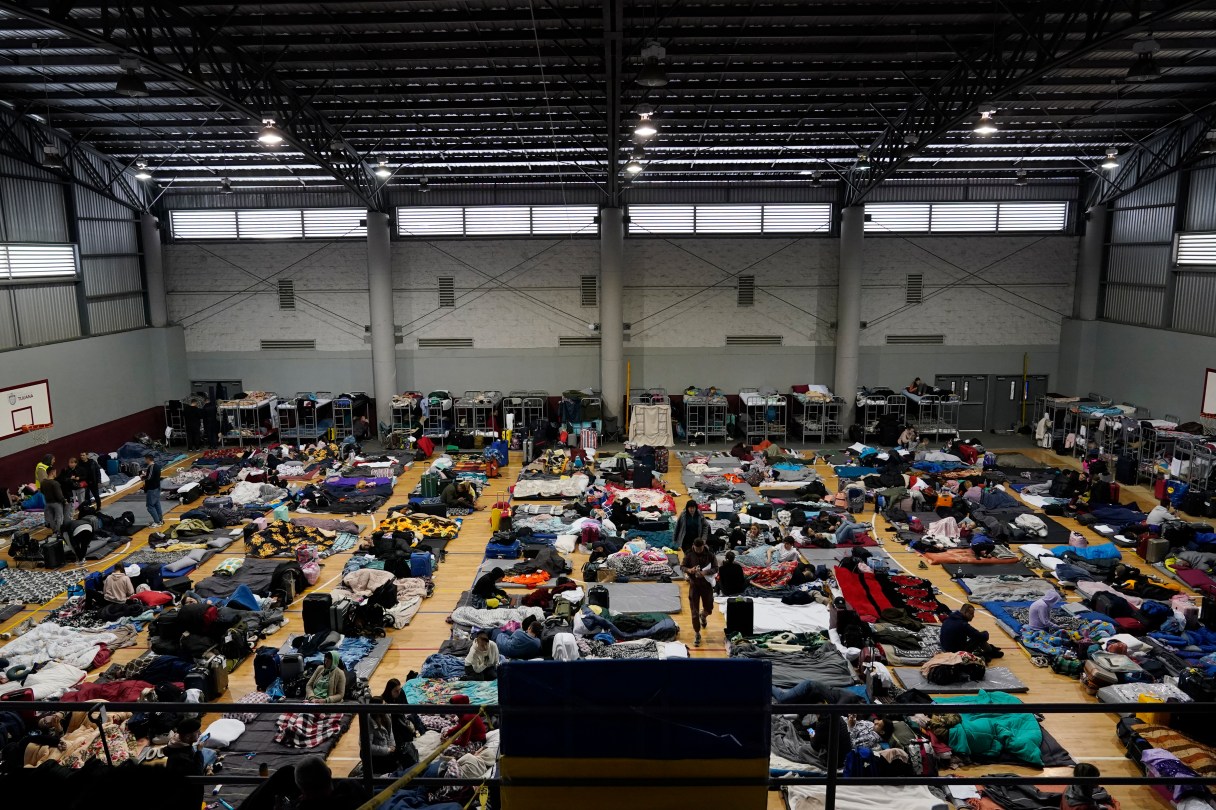
SAN DIEGO (AP) — When U.S. officials at the U.S.-Mexico border stamped the Ukrainian passports of Mariia and her daughter last April and gave them permission to stay for a year, she figured she would return home within months.
Now with that year almost up and the war that caused them to flee still raging, their permission to stay in the U.S. — known as humanitarian parole — is set to expire April 23.
“The word `worry’ doesn’t capture what I’m feeling,” said Mariia, who spoke through an interpreter and asked that only her first name be used over concerns that speaking publicly would hurt their immigration case. “This is something that frightens me, mainly because of my daughter and my daughter’s future.”
The 46-year-old woman and her daughter, now 13, are among 20,000 Ukrainians in a similar situation, according to resettlement agencies. Most arrived to the United States at its southern border after fleeing to Mexico, where it was easier and faster to get a visa to enter the country in the first months following Russia’s invasion of Ukraine.
Mariia’s parole is tied to her work permit, enabling her to earn a living as a nanny, and makes her eligible for food stamps and other public assistance. Her husband flew to the U.S. to join them in July and received humanitarian parole for two years.