
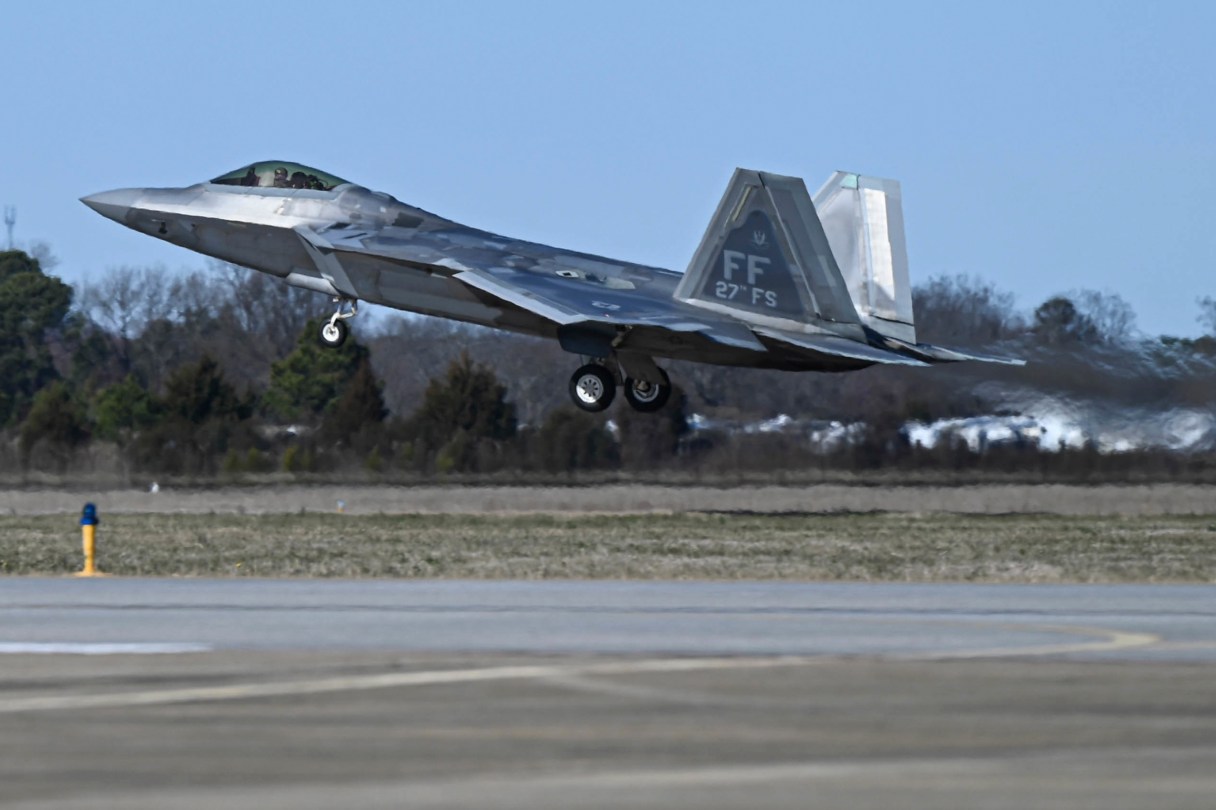
WASHINGTON (AP) — The extraordinary scene of U.S. fighter jets getting ready to strike a Chinese balloon had many people along the Carolina coast straining their necks and pointing their smartphones to the sky to capture the moment of impact.
But a group of aviation enthusiasts was, instead, intently scanning radio frequencies for the exchanges between the pilots who would follow as Huntress, NORAD’s eastern air defense sector controller, tracked the exact distance as two Air Force F-22 fighter jets closed in on the target.
The pilots had to balance striking the balloon when it was at least six miles (10 kilometers) offshore — the distance NASA had advised the military allow to keep debris from falling on land — with ensuring it was still in U.S. territorial airspace.
“Five miles offshore,” Huntress advises in a transmission that was captured by aviation hobbyist Ken Harrell, in a recording that was authenticated by NORAD.
“Frank One is switches hot,” the first F-22 reports. The call sign “Frank” was given to both aircraft to honor 2nd Lt. Frank Luke, who earned the Medal of Honor in World War I for downing multiple balloons and aircraft.