
RENO, Nev. (AP) — Don’t feed the bears!
Wildlife biologists and forest rangers have preached the mantra for nearly a century at national parks like Yellowstone and Yosemite, and for decades in areas where urban development increasingly invaded native wildlife habitat.
But don’t feed the birds? That may be a different story — at least for one bird species at Lake Tahoe.
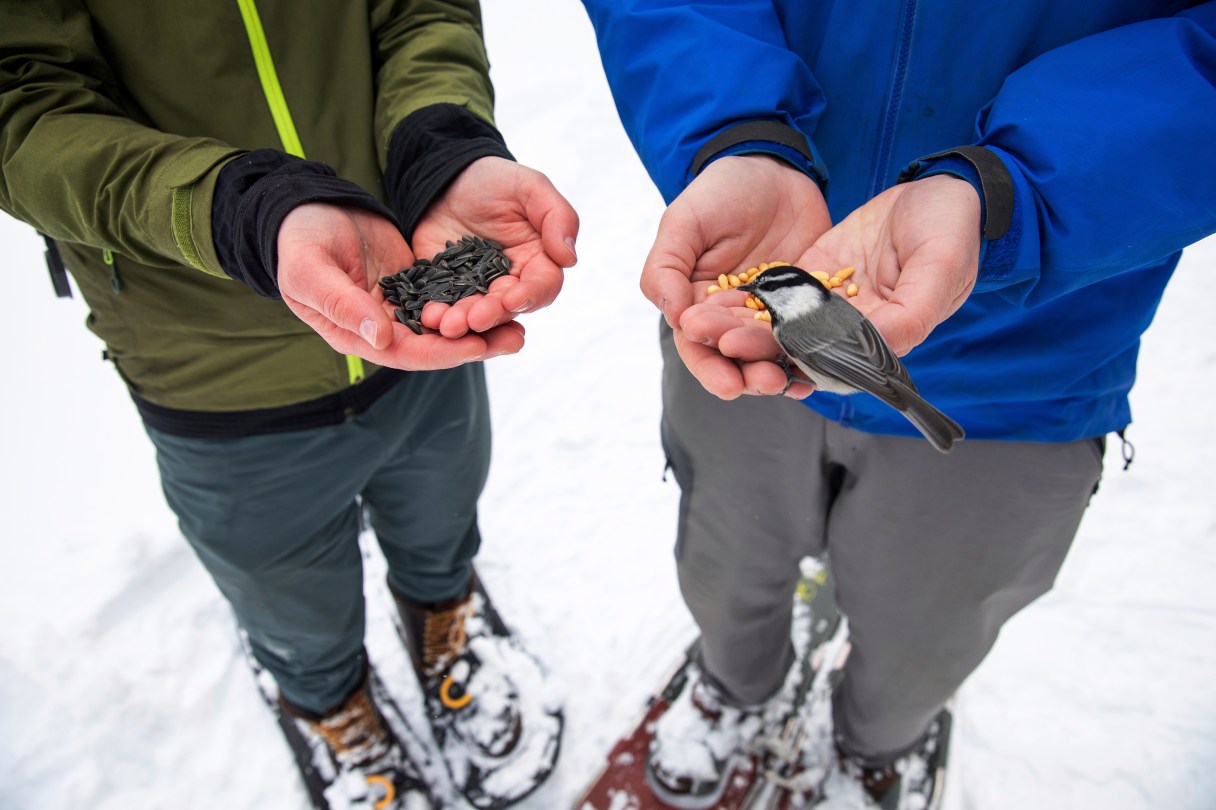
Snowshoe and cross-country ski enthusiasts routinely feed the tiny mountain chickadees high above the north shore of the alpine lake on the California-Nevada border. The black-capped birds of Chickadee Ridge will even perch on extended hands to snatch offered seeds.
New research from University of Nevada scientists found that supplementing the chickadees’ natural food sources with food provided in feeders or by hand did not negatively impact them, as long as proper food is used and certain rules are followed.