
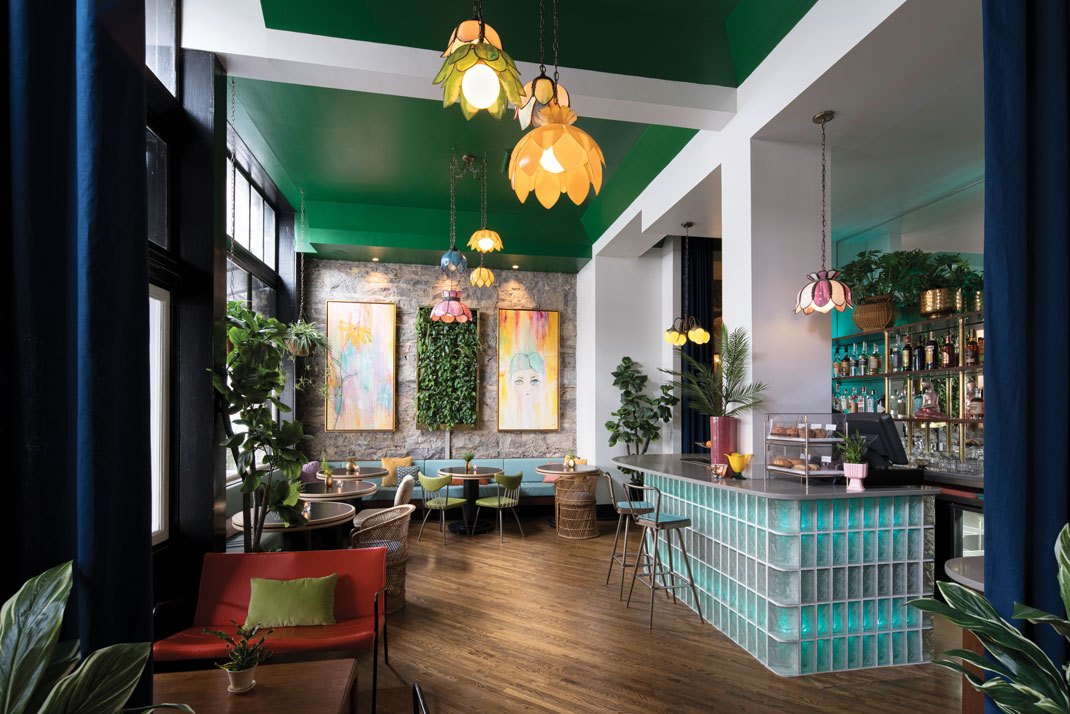
What exactly makes a boutique hotel a boutique hotel? That depends on who you ask. Webster’s dictionary defines “boutique hotel” as “small and stylish, typically one situated in a fashionable urban location.”
But according to Hotel Tech Report (HTR), an online industry publication, there’s more to it than that. The number of rooms is a factor (they typically have fewer than 100), but it’s also about style and local culture, staff who are trained to provide personalized experience, and on-site amenities.
Typically, boutique hotels are independently-owned, but not always. And as they continue to become more popular, larger brands and chains are are getting in on the trend.
“(Boutique hotels) typically communicate a true sense of place, highlighting and showcasing the culture of the city they’re in,” says Barry White, president and CEO of the Chattanooga Tourism Co. “That can be done through things like interior design with local art, or references to the brand of the community.”
On an average day, he says, Chattanooga has about 43,000 visitors. Of those, about 15,000 spend the night in hotels. Overall, travelers spend an average of $4.1 million per day in lodging, dining, entertainment, shopping and more.