
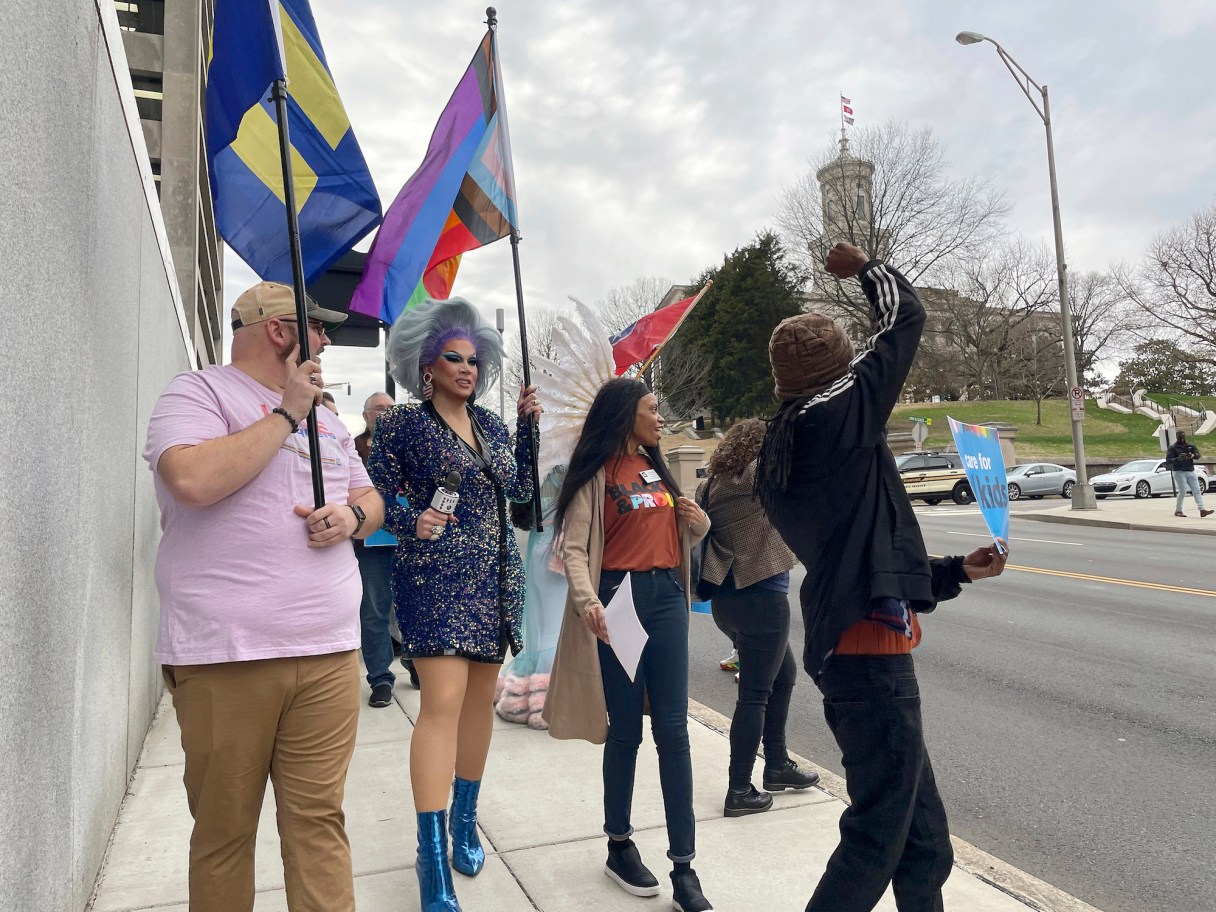
Tennessee has passed a law aimed at restricting drag performances, an art form that often involves exaggerated gender performance and cross-dressing. Similar bills have been introduced in 14 other states as part of the revived culture war against LGBTQ people. The Tennessee law was written to survive judicial scrutiny by presenting itself as designed to protect minors. But the law is nevertheless unconstitutional, violating the First Amendment in several ways.
The most important First Amendment violation is also the most obvious: The Tennessee law discriminates based on viewpoint. Viewpoint determination violates the core of free speech as understood by the Supreme Court.
The Tennessee law extends an existing ban on “adult cabaret performances” in places where minors might see them to include “male or female impersonators.” The other adult cabaret performances mentioned in the law are “topless dancers, go-go dancers, exotic dancers, [and] strippers.”
It’s almost certainly constitutional for a state to say that sexualized performances can only be performed in places where there are no minors. To be clear, the First Amendment would not allow a state to ban those performances outright. Dancing, including nude or sexy dancing, is expressive conduct that the courts consider to be a form of speech. It’s therefore protected by the Constitution. Restricting those performances to adults-only spaces is a time and place regulation that the courts consider reasonable.
That’s why the Tennessee law, instead of banning drag performances outright, purports to restrict them like adult entertainment. The law’s drafters want the courts to say that there is no difference between protecting minors from seeing strippers and protecting them from seeing drag.