
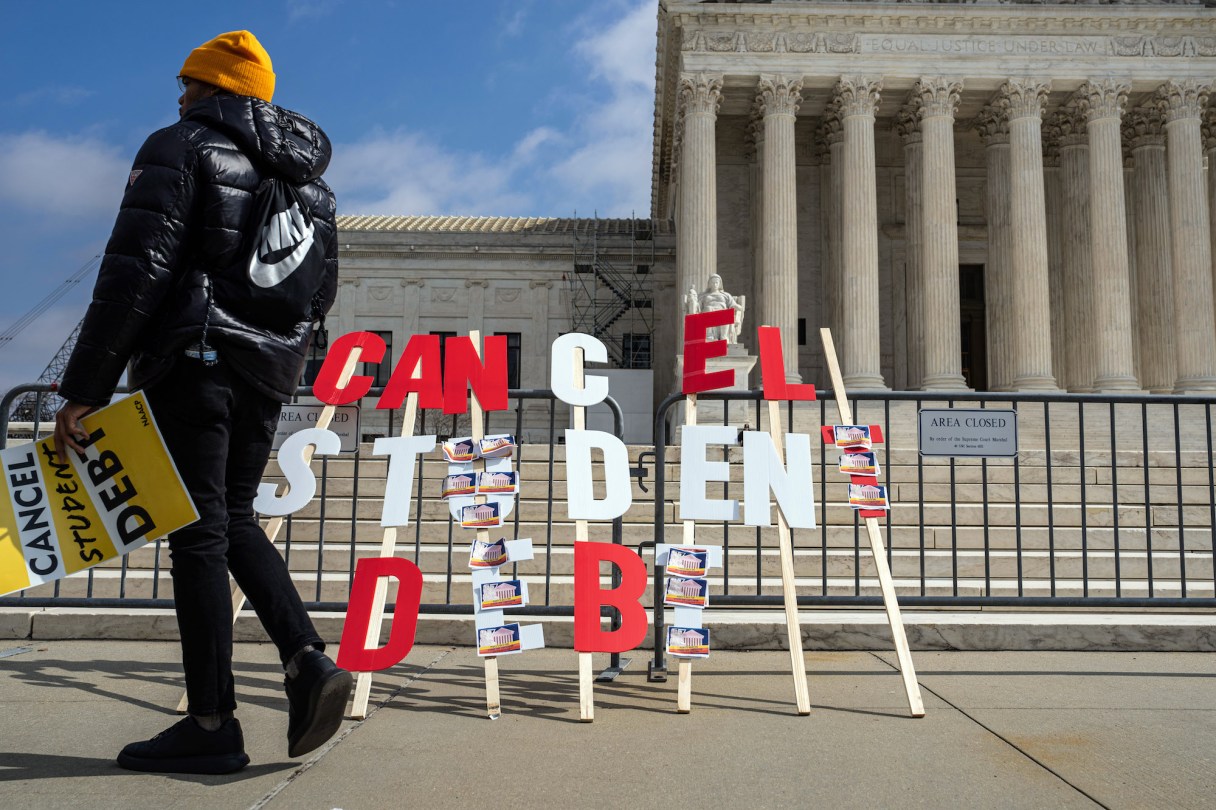
It was obvious at Tuesday’s oral arguments at the Supreme Court that several justices have problems with the Biden administration’s plan to provide more than $400 billion in student loan forgiveness. For example, Chief Justice John G. Roberts Jr. asked why it was fair to make the owner of a lawn care service, who took out a loan to start his business, pay taxes that subsidize debt forgiveness for a better-paid college graduate.
But the question before the court in two lawsuits challenging the plan isn’t whether the administration is pursuing a wise or just policy, though we believe there is a compelling case for targeted relief for Americans burdened by college debt. It is whether President Biden’s plan was authorized by an act of Congress, the Higher Education Relief Opportunities for Students (HEROES) Act of 2003, that empowers the secretary of education to waive or modify loan provisions in response to a national emergency. The answer is yes, or at least it should be.
In this case, the emergency is the COVID-19 pandemic, which, as Solicitor General Elizabeth B. Prelogar explained to the justices, has “caused enormous disruption and economic distress.” She added that over the past three years “millions of Americans have struggled to pay rent, utilities, food, and many have been unable to pay their debts.”
In response to that harm, Education Secretary Miguel Cardona announced a plan to forgive loans of up to $10,000 for some eligible borrowers and up to $20,000 for recipients of Pell Grants, who tend to have smaller incomes. That relief is far less generous than proposals for a blanket forgiveness of student debt up to $50,000 per borrower. It also is only one example of the government forgiving loans in connection with the pandemic.
Student loans have mired millions of Americans in debt. Many of them would be struggling even in the absence of a pandemic, but COVID has made their situations worse. Forcing them into default is harmful not only to them but also to the economy. And while addressing the problem of student debt in the future will involve measures other than loan forgiveness — including reducing the costs of higher education and putting more emphasis on non-college opportunities — debt relief is an indispensable part of the solution.