
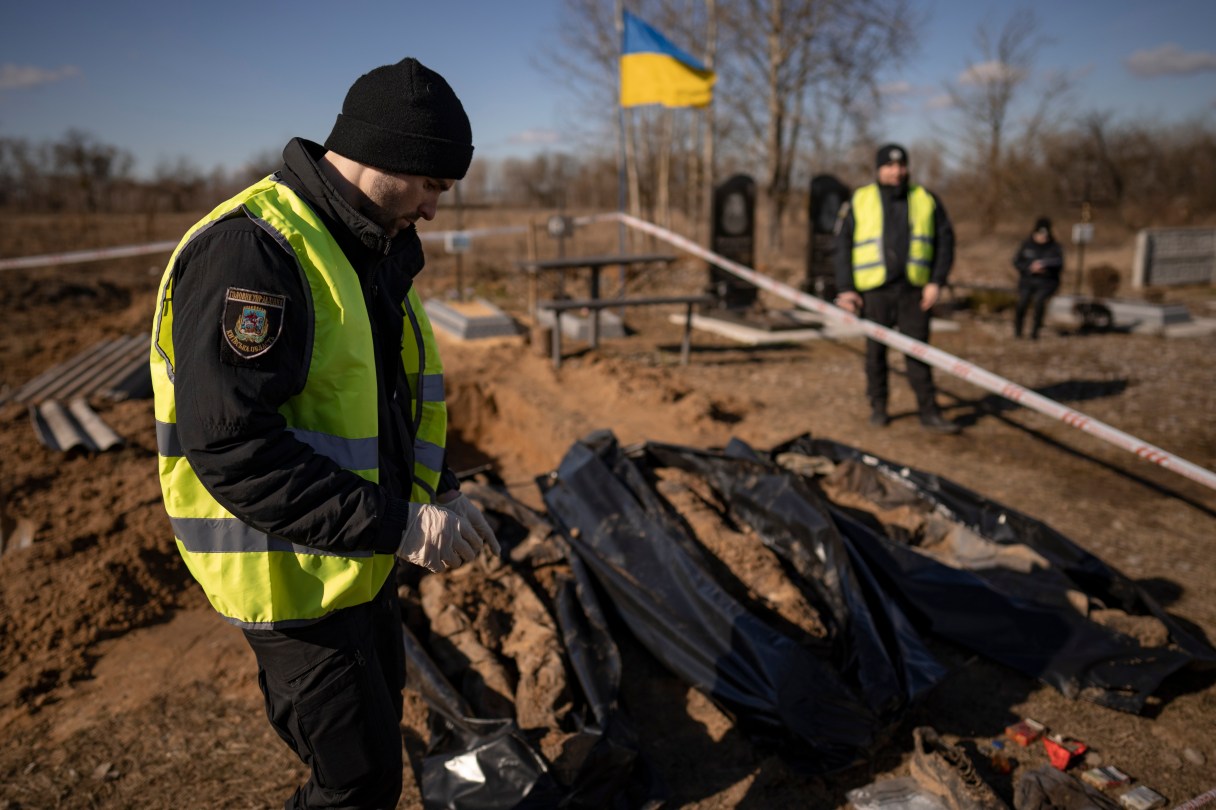
BORODYANKA, Ukraine (AP) — The freshly exhumed remains of three men lie in black body bags on the edge of the small cemetery in a town not far from Ukraine’s capital, waiting to be taken to a morgue. None has yet been identified.
Ukrainian authorities are still unearthing people who were hastily buried in makeshift graves during Russia’s brief but brutal occupation of villages and towns near Kyiv. Almost 200 bodies remain unidentified, while 280 people are listed as missing.
Oleksander Pinchuk’s mother, Halyna, is among them. They never found her body in the wreckage of her apartment building, which took a direct hit from an airstrike a year ago. Pinchuk had walked out of the building just eight hours earlier, and has not seen his mother since, he said.
On Thursday, Pinchuk stood in the winter chill, grim-faced among a small group of mourners who gathered for a religious service to commemorate the anniversary of the strike in the town of Borodyanka.
“Just look at what the Russians brought to us and what they did to our beautiful town,” said Dmytro Koshka, the priest conducting the service at the former site of the residential building. “How could we ever forget and forgive?”