
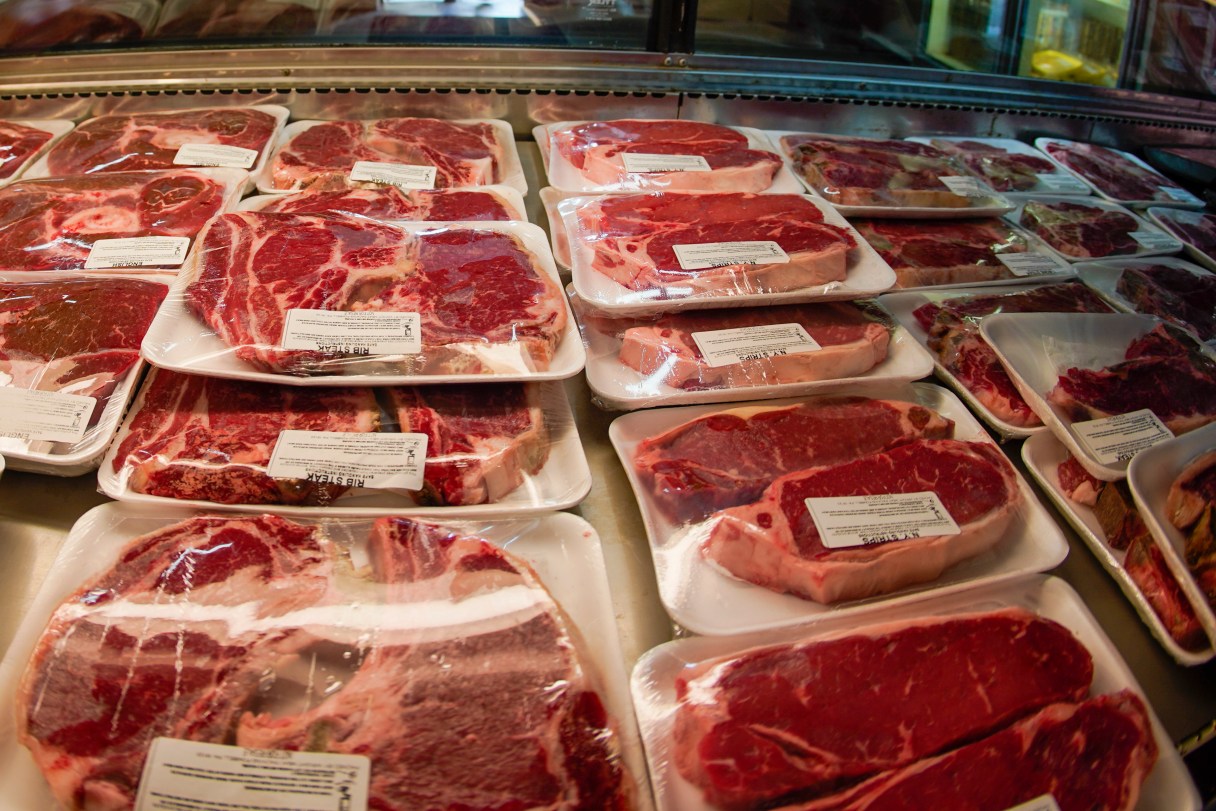
Shoppers could soon find it easier to tell if those grocery store steaks or pork chops were really “Made in the USA.”
Federal agriculture officials on Monday released new requirements that would allow labels on meat, poultry or eggs to use that phrase — or “Product of USA” — only if they come from animals “born, raised, slaughtered and processed in the United States.” That’s a sharp change from current policy, which allows voluntary use of such labels on products from animals that have been imported from a foreign country and slaughtered in the U.S., but also on meat that’s been imported and repackaged or further processed.
Imports of beef from countries including Australia, Canada and Brazil, for instance, account for about 12% of the total consumed in the U.S. Overall, imports of red meat and poultry account for less than 6%, while imports of eggs account for less than half of 1%.
U.S. Department of Agriculture Secretary Tom Vilsack said the proposed rule would better align the labels with consumers’ views. A survey commissioned by the USDA found that nearly two-thirds of shoppers believed that a “Product of USA” label meant that most or all meat production steps occurred in the U.S.