
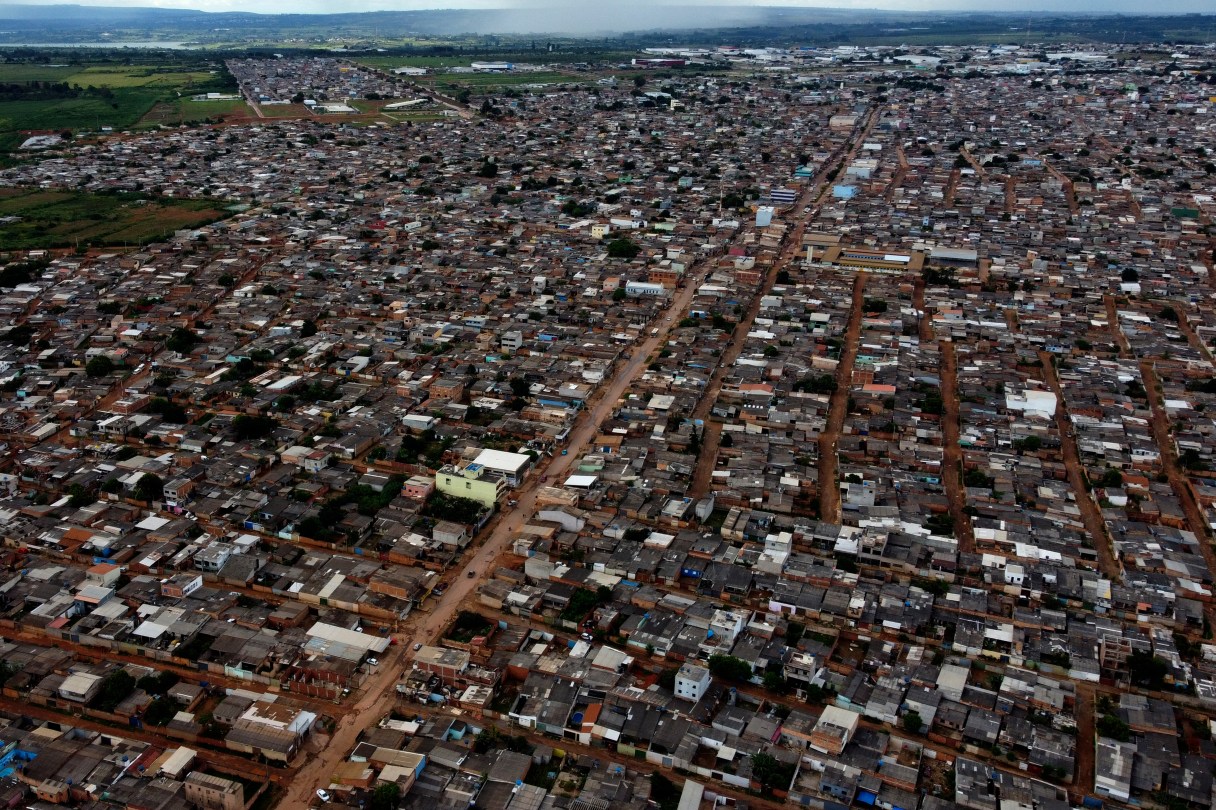
SOL NASCENTE, Brazil (AP) — The buzzing main avenue of this poor Brazilian neighborhood is filled with people popping off buses after work or grabbing a bite. Teens attend an open-air rap battle and gymnastics class. Hymns and prayers from tiny church services spill into the night.
It’s an ordinary Wednesday in Brazil’s biggest favela, or low-income neighborhood. And for the first time since poverty, lack of opportunity and economic inequality caused favelas to mushroom across many of the nation’s cities, that superlative doesn’t belong to a favela in Rio de Janeiro.
Sol Nascente (Rising Sun, in English) is just 21 miles (34 kilometers) from capital Brasilia in the Federal District, whose GDP per capita is by far higher than any Brazilian state, underscoring the inequality between affluent public servants’ neighborhoods and the district’s outskirts.
The number of households in Sol Nascente has swelled 31% since 2010 to more than 32,000, surpassing Rio’s hillside Rocinha favela that had been Brazil’s most populous, according to preliminary data from the ongoing census. Rocinha has almost 31,000 households, the data show.
Along Sol Nascente’s unpaved dirt roads of self-built homes and inside the main strip’s busy stores and restaurants, no one The Associated Press spoke welcomed the new ranking,