
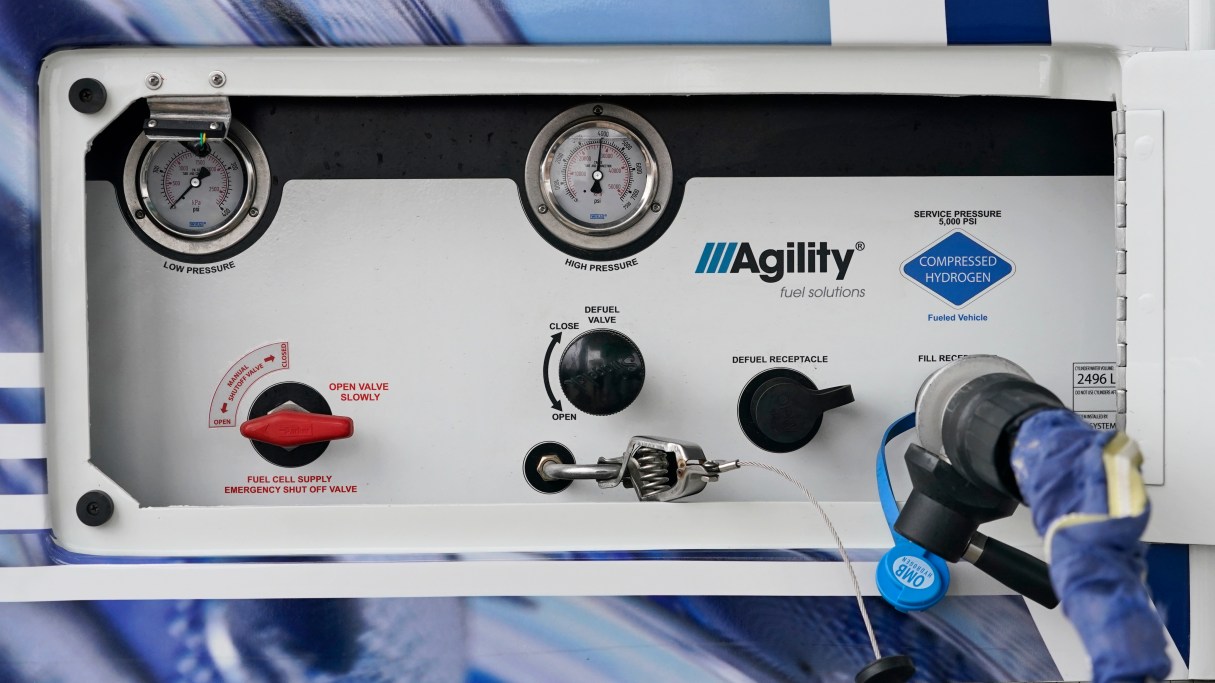
As fossil fuel emissions continue warming Earth’s atmosphere, the Biden administration is turning to hydrogen as an energy source for vehicles, manufacturing and generating electricity.
It’s offering $8 billion to entice the nation’s industries, engineers and planners to figure out how to produce and deliver clean hydrogen. States and businesses are making final pitches Friday as they compete for a new program that will create regional networks, or “hubs,” of hydrogen producers, consumers and infrastructure. The aim is to accelerate the availability and use of the colorless, odorless gas that already powers some vehicles and trains.
How can enough hydrogen be produced to meet demand — in ways that don’t worsen global warming? And how can it be moved efficiently to where users can get it? Such questions will be tackled by the hubs.
Nearly every state has joined at least one proposed hub and many are working together, hoping to reap the economic development and jobs they would bring. The governors of Arkansas, Louisiana and Oklahoma came up with the “HALO Hydrogen Hub” to compete for funding, for example.
Big fossil fuel companies like Chevron and EQT Corporation, renewable energy developers such as Obsidian, and researchers in university and government labs are involved, too.