
(Editor’s note: Second of three parts)
Elizabeth Patten, longtime leader in historical preservation and beautification, described in “A History of Summertown on Walden’s Ridge” the early travails of Chattanooga and the flight of families to Walden’s Ridge during the cholera and yellow fever epidemics of the 1870s.
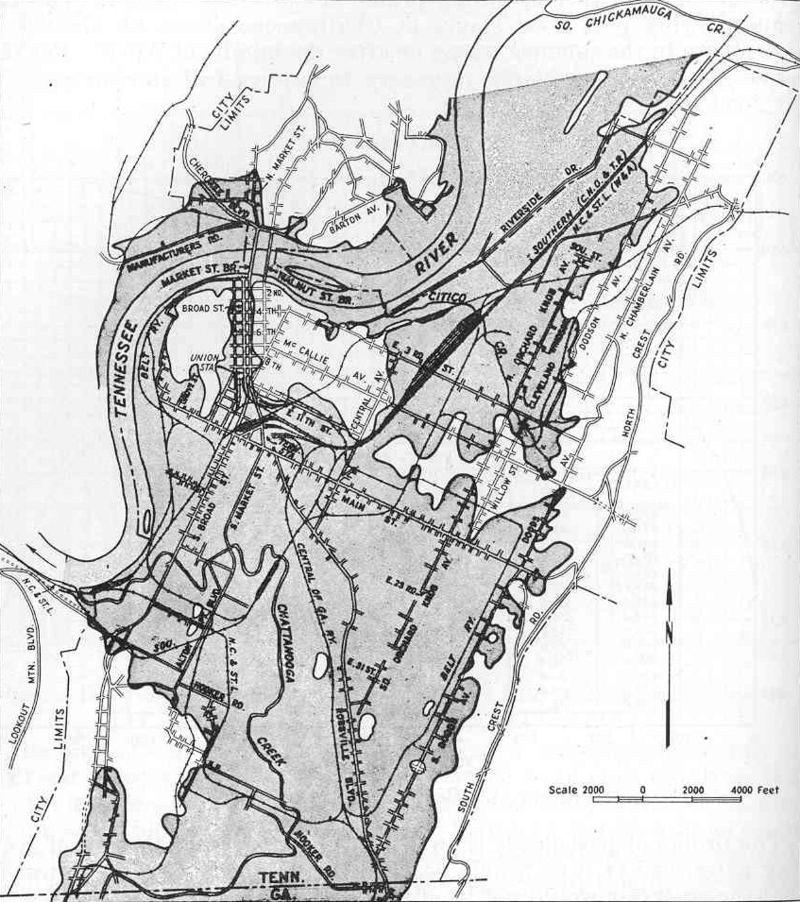
“The war ended in 1865. The great flood came quite suddenly on the night of March 8, 1867, and the Tennessee River reached out of its banks to Ninth Street and beyond and from Cherry Street to Pine Street. The guests at the Crutchfield House (where the Read House now stands) awoke to find water five feet in the first floor. The river reached its crest at 58.6 feet and Captain Woods White came to Fifth and Market in his steamboat, ‘Cherokee,’ where he was asked to turn back lest the back wash from his boats should further weaken tottering houses. The bridge across the river near the foot of Market Street that was given to the town by the Federal Army was washed away. Heavy winter snows followed by heavy thawing rains had caused this flood of all floods.
“Unbeaten, the people cleared away the debris and the driftwood. The city fathers ordered the sale of an unidentified and unclaimed house that the receding river left stranded on Chestnut Street, between Sixth and Seventh. A ferry took the place of the lost bridge and men pulled the heavy barges from shore to shore with ropes and cables and pulleys. Fire ravaged the Crutchfield House the same year and volunteers manned the fire department.
“Small-pox was a constant menace. In 1871 twenty-one business establishments on Market Street burned. In 1873 the cholera struck.