
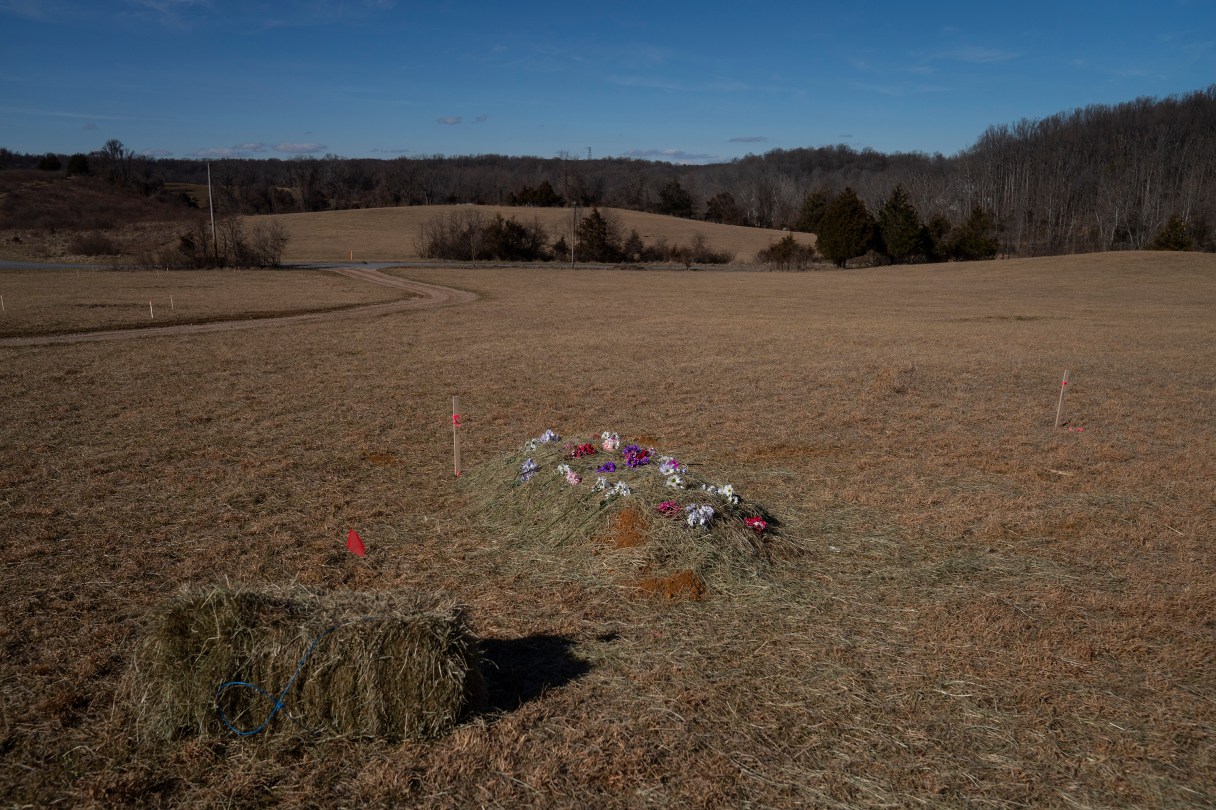
WINDSOR MILL, Md. (AP) — Mia Zinn was a member of her middle school ecology club, had planted a reflection garden and had implored public officials to preserve a local woods, and when she became terminally ill, she wanted to become a tree. So, the day after she died, her father, Chris Zinn, visited Serenity Ridge Natural Burial Cemetery and Arboretum in Baltimore County, a 45-minute drive from the family’s home in Abingdon, Md. He was drawn to a wooded area that opened up to a wedge of western sky.
“That was the perfect spot,” he said. “It reminded me a lot of an area that we hiked many, many times near here.”
Mia died at 17 of Ewing’s sarcoma, a rare bone cancer, and became the third person interred at Serenity Ridge. The site is one of a growing number of cemeteries in the United States offering natural, or green, burials in response to demand from the environmentally conscious.
Such burials eschew the embalming, expensive caskets and concrete vaults or metal grave liners standard in U.S. cemeteries, replacing them with simple materials that decompose along with the body. Mia was laid to rest in a bamboo casket with a cotton sheath, a burial her parents said was simple and elegant and surprised some of the attendees.
“A lot of people said, ‘Oh my gosh, I didn’t know this was even a thing,'” said her mother, Aubrey Zinn.