
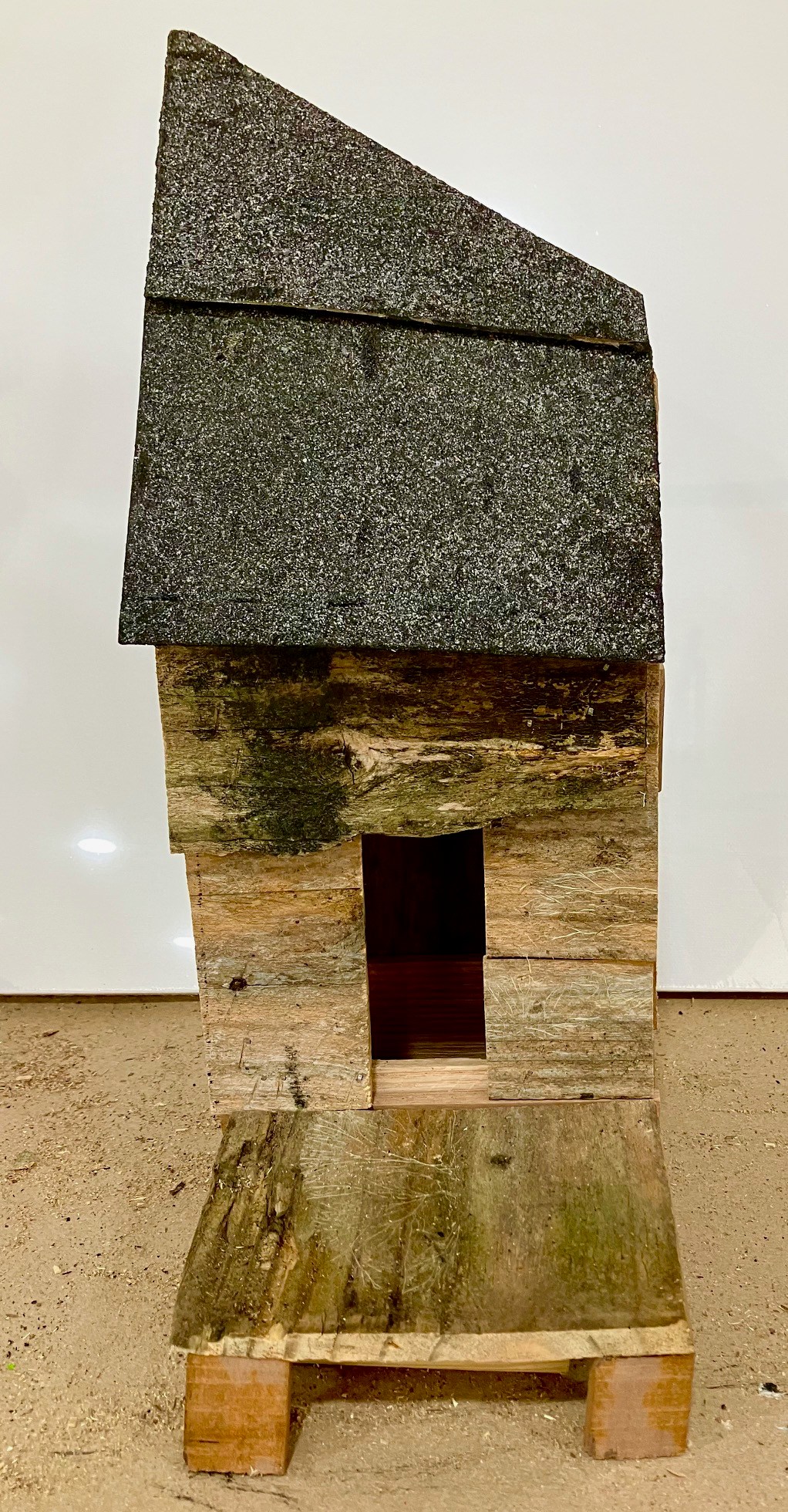
If you follow me on Facebook, you might have noticed I’ve become a builder of tiny houses. Not the kind of tiny houses environmentally conscious people move into, houses so small their owners must divest themselves of everything but a pan and a phone charger, houses so small, flies can’t change directions. No, the houses I’m building are not inhabitable. Rather than sitting on a tiny foundation, they are made to sit on a mantel.
I have been infatuated with houses ever since I was a teenager. One day, I was sulking in the back seat of my parents’ car, hostage to one of their “Let’s go look at houses” trips. I hated these outings and only went when all other entertainment options were closed to me. I just couldn’t fathom what kind of perverse joy my parents got from scoping out real estate they were never going to purchase. It was the equivalent of going to a restaurant just to browse the menu. What was the point, except torture themselves over the unattainable?
That fateful afternoon, however, I finally got it. Maybe my brain suddenly matured beyond its teenage, commodity-driven mentality and was newly able to see beauty in the abstract and the unpossessable. Maybe this was the beginning of what would be my later forays into writing and art, including the building of tiny houses. I’m not sure. But I do know that, in the way you can go from having zero appreciation of a thing to a fanatical obsession with it, I went from “Why houses?” to “Oh my God, houses!
That day, as I watched house after house flit by, I began to have some sense of their contents. I envisioned how they might be decorated, how many bedrooms they might have, whether they were warm, cozy places with low lighting and farm kitchens or cold, formal structures with unbroken square footage and too much light of the wrong kind. I saw myself in their kitchens with pots hanging overhead; in snug bedrooms with high beds and quilts; in drawing rooms with shelves lined with books; and in front of blazing fireplaces stacked with wood.
Like the Barbie doll houses of my childhood friends, every house I saw offered an imaginary refuge for an imaginary life. In this one I was a rock star; in that one I baked bread to sell at my all-soup café; in another one I was a farmer with a big garden out back; in yet another I was a writer, scribbling beneath a halo of light in the corner of the living room with a dog at my feet. This, I saw, was my parents’ architecture, a private envisioning of a life not their own.