
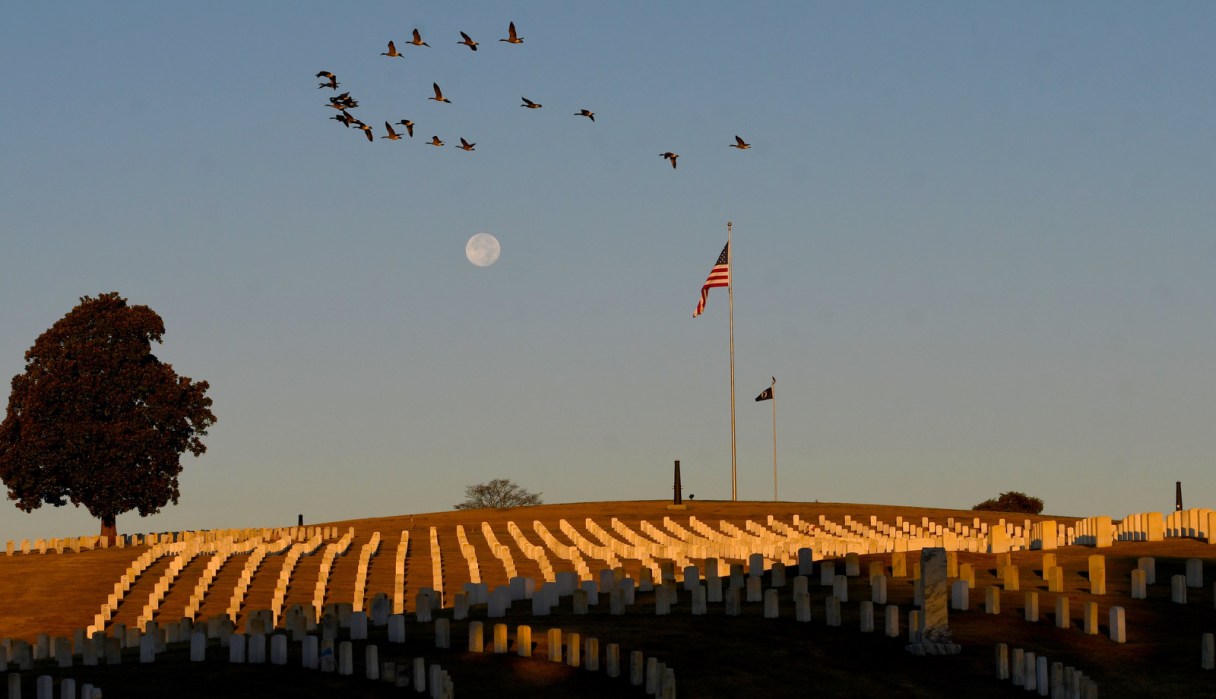

The first Black superintendent of the Chattanooga National Cemetery wasn’t appointed in the post-civil rights era as a progressive symbol, or even any time in the last 50 years.
No, the first Black superintendent of what was once the nation’s second largest national cemetery, according to numerous online histories, was appointed on Nov. 9, 1878, a scant few years after many people of his race in the South had been enslaved.
But you won’t be able to find the grave of George W. Ford among the cemetery’s rocky 120 acres on this Memorial Day weekend, when each of its more than 50,000 plots are decorated with tiny American flags. He was here only a short time before being transferred to Beaufort National Cemetery in South Carolina.
Yet, Ford is part of the often untold stories of Blacks in the history of the august grounds, which were appropriated and later purchased during the Civil War that was fought in part over slavery.
Many people who are somewhat familiar with the history of the cemetery know it is the burial site of members of Andrews Raiders, whose 1862 military raid commandeered a Confederate train and took it northward from Marietta, Georgia, back toward Chattanooga and attempted to damage the Confederate-held Western and Atlantic Railroad line as they went.