
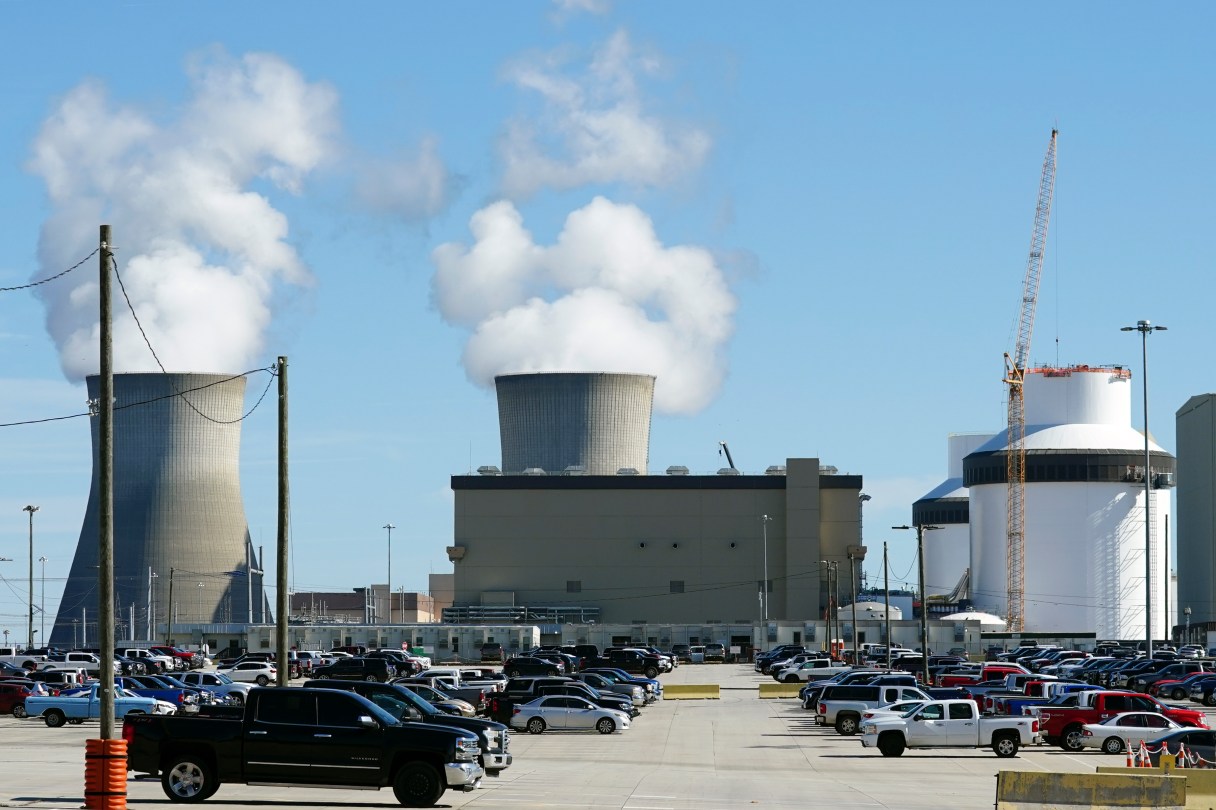
WAYNESBORO, Ga. (AP) — Two nuclear reactors in Georgia were supposed to herald a nuclear power revival in the United States. But the project is seven years late and $17 billion over budget as Georgia Power Co. announced the first new reactor at its Plant Vogtle could reach full electrical output by Saturday.
They’re the first U.S. reactors built from scratch in decades — and maybe the most expensive power plant ever. Georgia electric customers have already paid billions, and state regulators will ultimately decide if they’re on the hook for billions more.
Some of the key promises of Vogtle — like building modules offsite and shipping them for cheaper on-site assembly — did not pan out. Construction delays drove Westinghouse Electric Co., a titan of American industrial history, into bankruptcy when the company couldn’t absorb overruns.
And the lessons could be important because government officials and some utilities are again looking to nuclear power to alleviate climate change by generating electricity without burning natural gas, coal and oil.
Vogtle’s new Unit 3 began generating power in March and is scheduled to reach commercial operation by June. Unit 4 is next door on the same rural Burke County site 25 miles (40 kilometers) southeast of Augusta, along with two older reactors. It’s supposed to be finished by early 2024.