
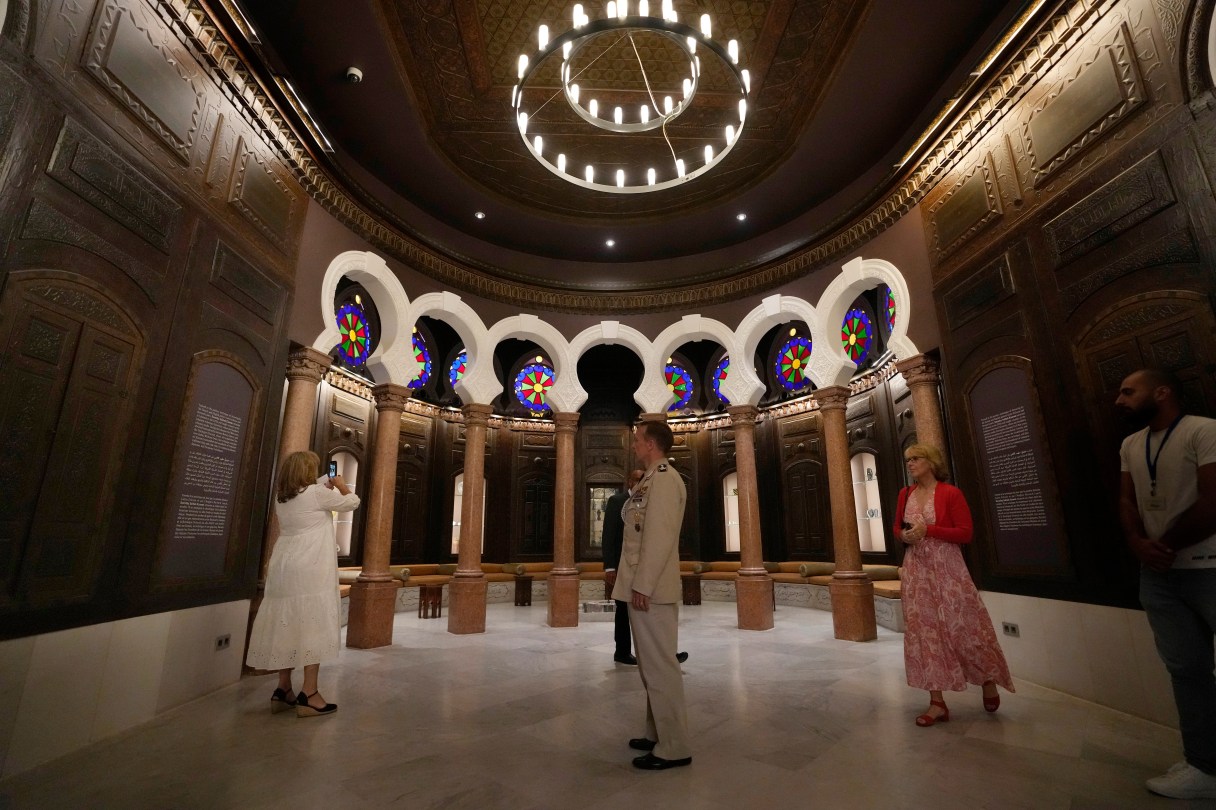
BEIRUT (AP) — Lebanon’s Sursock Museum has reopened to the public, three years after a deadly explosion in Beirut’s port — set off by tons of improperly stored chemicals — reduced many of its treasured paintings and collections to ashes.
The reopening Friday night offered Beirut residents a rare bright spot in a country reeling from a crippling economic crisis that has left around three-quarters of Lebanon’s population of 6 million in poverty.
Originally built as a private villa in 1912 on a hilltop overlooking the city’s Achrafieh neighborhood, the opulent residence integrated Venetian and Ottoman styles. Its owner, famed Lebanese art collector Nicolas Ibrahim Sursock, bequeathed his beloved home to his people, to be turned into a contemporary art museum upon his death in 1952.
The museum housed Lebanese art dating back from the late 1800s, including the work of distinguished painter Georges Corm and Fouad Debbas’ library of 30,000 photographs — one of the largest private photo collections. The photos are from across the Levant, a region encompassing countries along the eastern Mediterranean, from Turkey to Egypt, from 1830 until the 1960s. In 2008, a seven-year project renovated and expanded the museum, relaunching it in 2015.
But the Aug. 4, 2020 blast in Beirut’s port — only about 800 meters (875 yards) away — hit the museum fully front on. Its stained glass windows were shattered, doors were blown out, and almost half the artwork on display was damaged. The explosion ripped through much of Beirut, killing more than 200 people and injuring over 6,000.