
Monday, November 16, 2026Nov 16

As Supreme Court considers affirmative action, colleges see few other ways to diversity goals

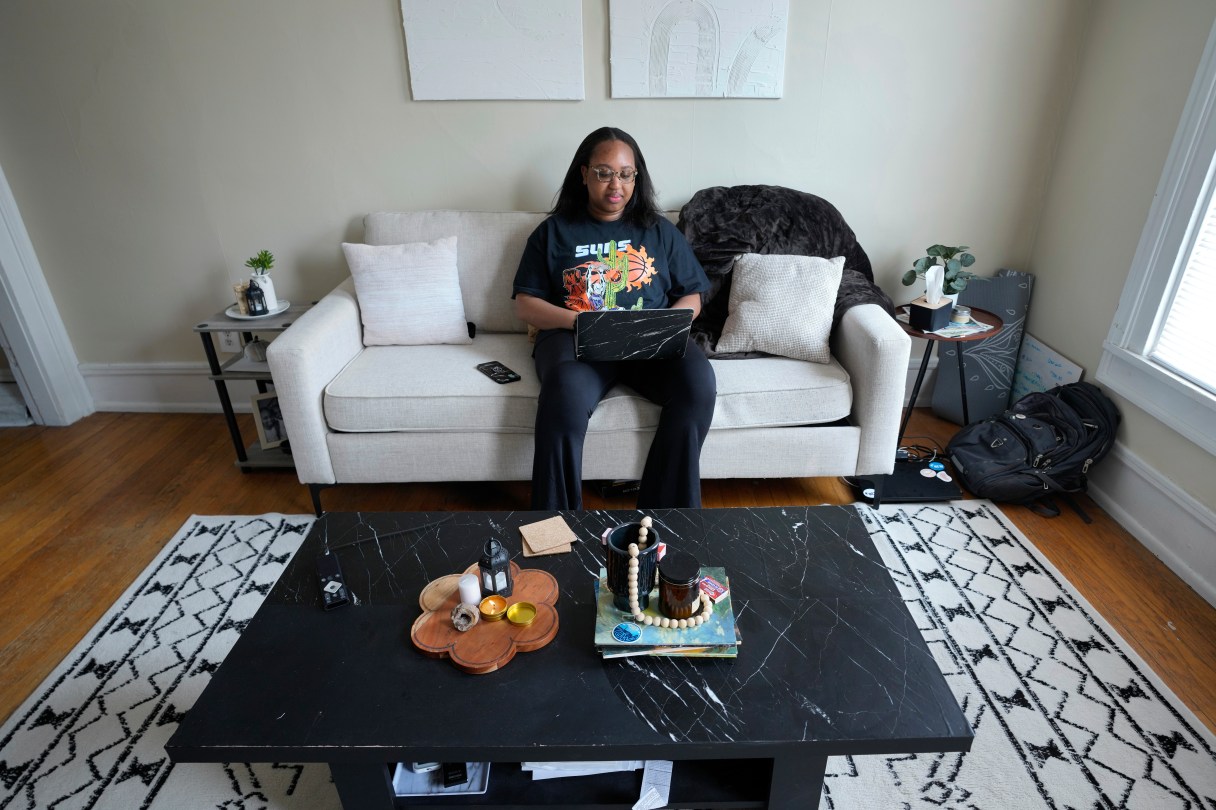
Odia Kaba works from home in Ypsilanti, Mich., Tuesday, May 23, 2023. Growing up in Ann Arbor, there was an expectation that Odia would attend the University of Michigan. When her application was deferred, she started at Eastern Michigan with plans to transfer to Ann Arbor her sophomore year. But she was getting daily texts from her sister, who attended U-M, describing the microaggressions she faced as a Black student on campus. Kaba stayed at Eastern Michigan and graduated with a degree in quantitative economics. Even though it's a mostly white campus, Kaba said she found pockets of diversity that helped make her comfortable.(AP Photo/Paul Sancya)


WASHINGTON (AP) — As an alternative to affirmative action, colleges from California to Florida have tried a range of strategies to achieve the diversity they say is essential to their campuses. Many have given greater preference to low-income families. Others started admitting top students from every community in their state.

But after years of experimentation — often prompted by state-level bans on considering race in admissions — there’s no clear solution. In states requiring race-neutral policies, many colleges have seen enrollment drops among Black and Hispanic students, especially at selective colleges that historically have been mostly white.

Now, as the Supreme Court decides the fate of affirmative action, colleges nationwide could soon face the same test, with some bracing for setbacks that could erase decades of progress on campus diversity. A ruling is expected by the end of June.

At Amherst College, officials have estimated that going entirely race-neutral would reduce Black, Hispanic and Indigenous populations by half.