
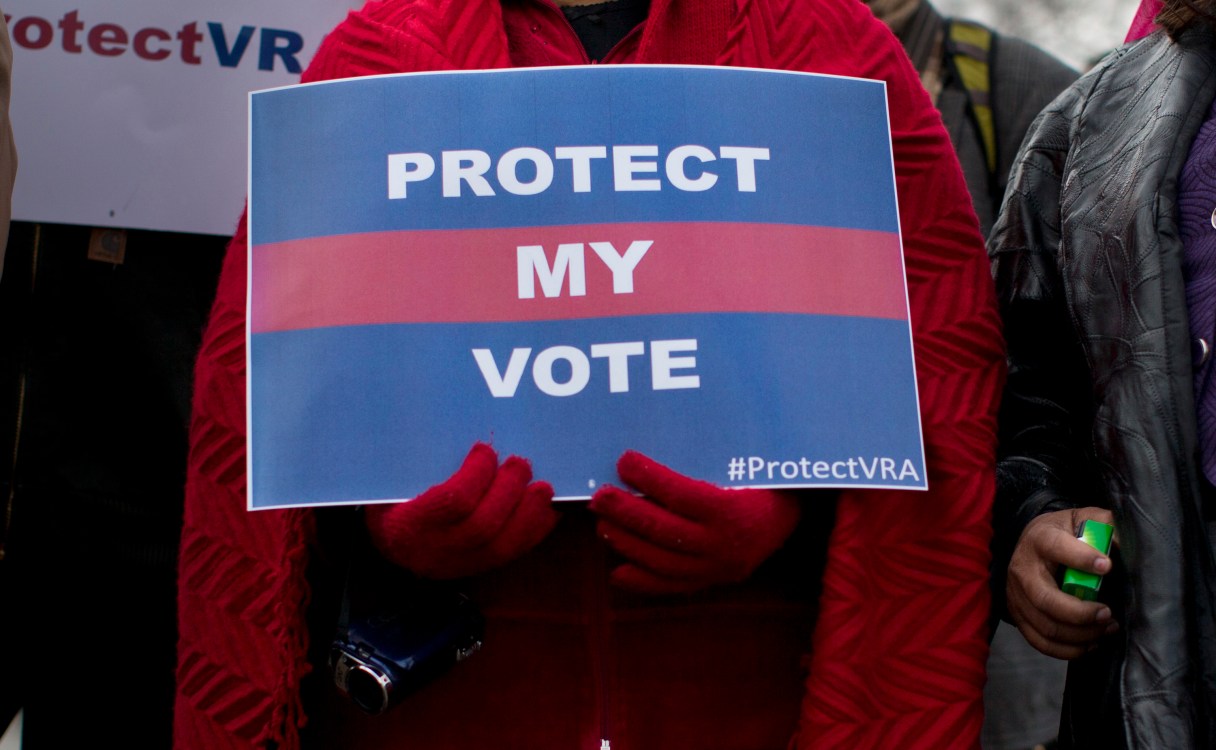
ATLANTA (AP) — Within hours of a U.S. Supreme Court decision dismantling a key provision of the Voting Rights Act, Texas lawmakers announced plans to implement a strict voter ID law that had been blocked by a federal court. Lawmakers in Alabama said they would press forward with a similar law that had been on hold.
The ruling a decade ago continues to reverberate across the country, as Republican-led states pass voting restrictions that, in several cases, would have been subject to federal review had the court left the provision intact. At the same time, the conservative-leaning court has continued to take other cases challenging elements of the landmark 1965 law.
The Supreme Court weakened another section of the Voting Rights Act two years ago with a ruling in a case from Arizona. And justices are expected to rule in the coming weeks in still another case out of Alabama that could make it much more difficult for minority groups to sue over gerrymandered political maps that dilute their representation.
“At that point, you have to ask yourself what’s left of the Voting Rights Act?” said Franita Tolson, a constitutional and election law expert and co-dean of the University of Southern California School of Law.