
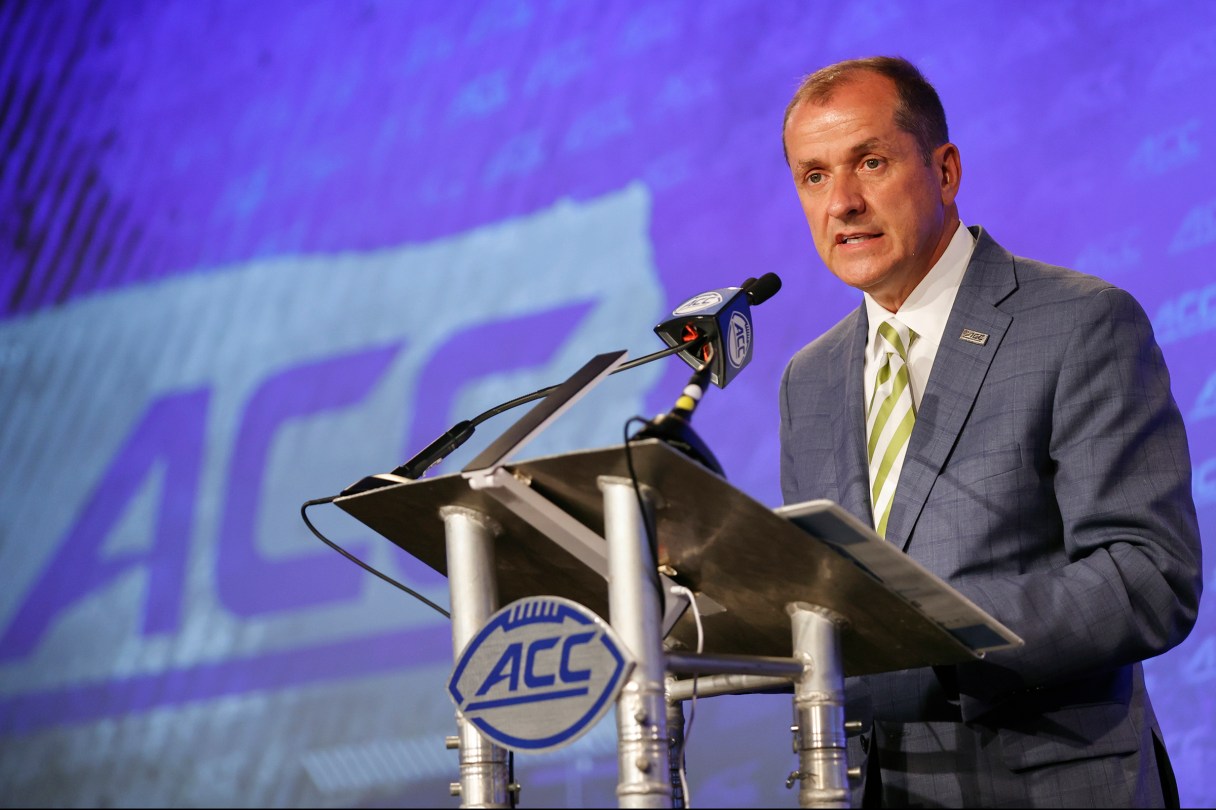
AMELIA ISLAND, Fla. — The Atlantic Coast Conference emerged from three days of spring meetings at a posh oceanside resort with one resolution: the formalization of tiebreaker rules for the league’s new no-division format in football.
Most everything else discussed behind closed doors remained secretive works in progress, most notably how the ACC plans to close the financial gap on college football’s preeminent powerhouse leagues: the Big Ten and the Southeastern Conference.
The ACC is a distant third in annual payouts to its members, a spot that was both chastised and celebrated at times during the meetings. It remains ahead of the Pac-12 and the Big 12, conferences that are losing flagship institutions in 2024, but far back of the Big Ten (which will gain the Pac-12’s UCLA and USC) and the SEC (which will gain the Big 12’s Oklahoma and Texas).
It’s a less than ideal position, and it prompted Florida State athletic director Michael Alford in February to make a public plea for change and float the idea of joining the growing list of schools that announced plans to change conferences in the past two years to increase their bottom line. Three months later, Alford softened his stance and insisted he’s “optimistic about the future.”
“I’m thrilled with the work and the direction that it’s going,” Alford said this week. “Step in the right direction. We’re not going to ever cover the entire gap, but it will allow you to be competitive.”