
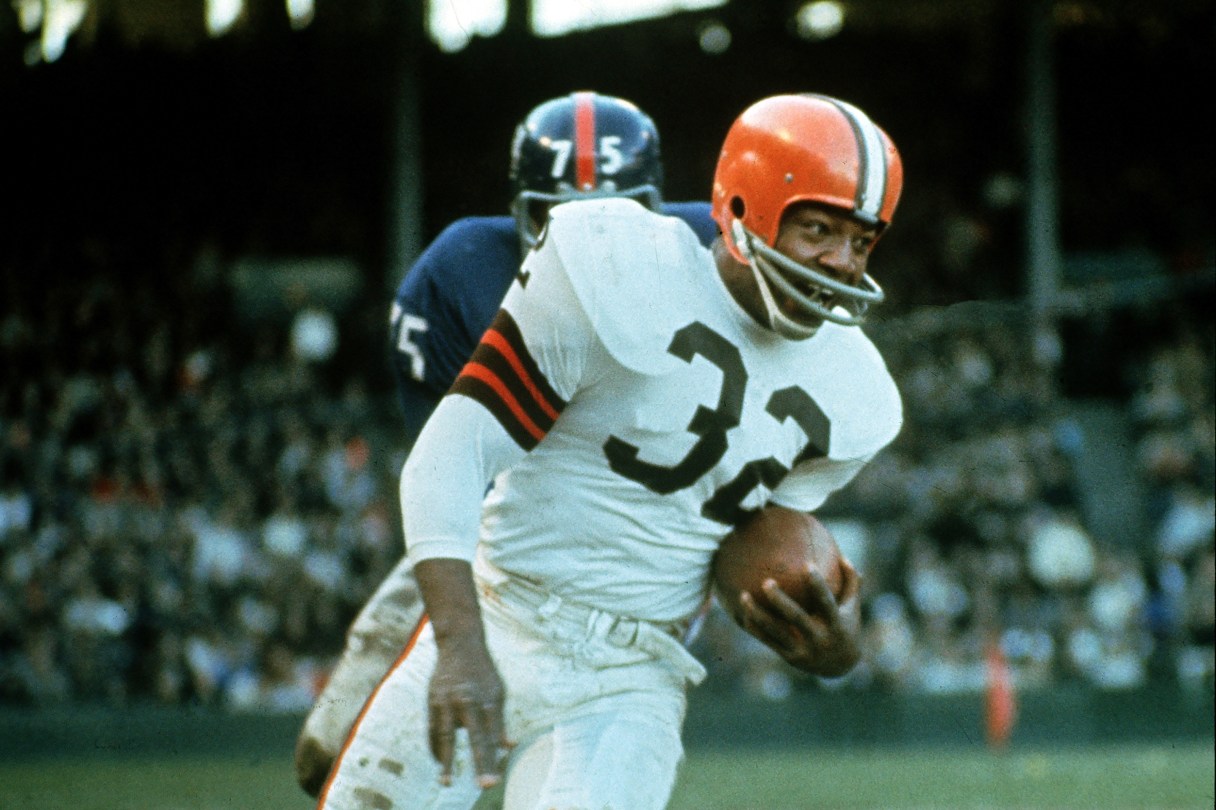
CLEVELAND — Jim Brown was virtually unstoppable in every arena he entered.
Whether on the football field, in Hollywood or the battle for civil rights, Brown was a force.
One of the greatest players in NFL history, Brown, who retired at the peak of his playing career to pursue acting and remained in the public spotlight as an activist — and due to off-field transgressions that included allegations of violence against women — has died. He was 87.
A spokeswoman for Brown’s family said he died peacefully in his Los Angeles home on Thursday night with his wife, Monique, by his side.
“To the world, he was an activist, actor, and football star,” Monique Brown wrote in an Instagram post. “To our family, he was a loving husband, father, and grandfather. Our hearts are broken.”
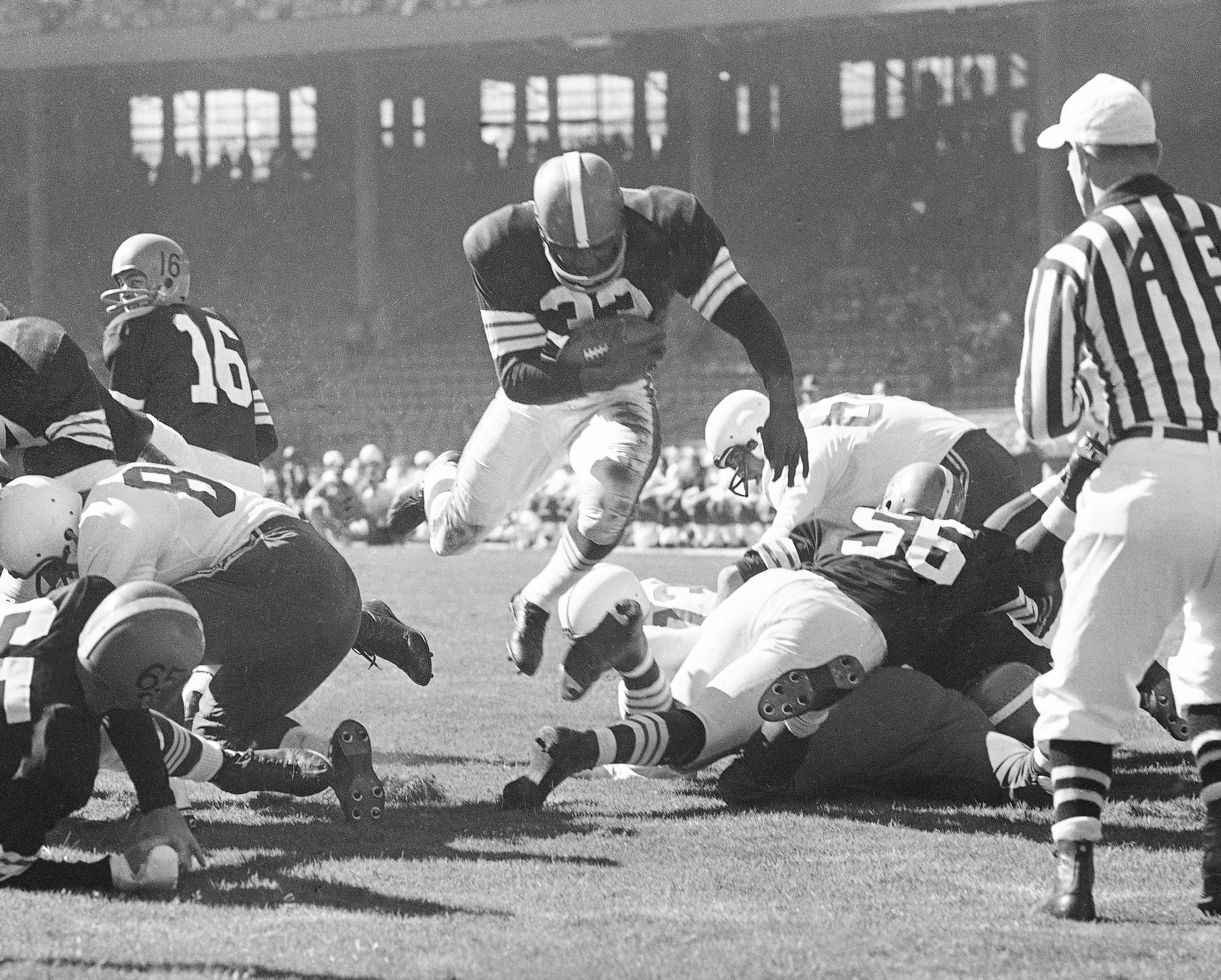
One of pro football’s first superstars, the 6-foot-2, 232-pound running back was a wrecking ball while leading the league in rushing for eight of his nine seasons with the Cleveland Browns. Brown never missed a game, playing in 118 straight before his sudden retirement in 1965 after being named league MVP.
Brown led the Browns to their most recent NFL championship in 1964 before quitting football in his prime at age 30 to make movies. He appeared in more than 30 films, including Oliver Stone’s pro football drama “Any Given Sunday.”
A powerful runner with speed and endurance, Brown’s arrival after an All-America career at Syracuse sparked the game’s burgeoning popularity on television, and he remained an indomitable figure well after his playing days ended.
Brown was also a champion for Black Americans and used his platform and voice to fight for equality.
“I hope every Black athlete takes the time to educate themselves about this incredible man and what he did to change all of our lives,” NBA star LeBron James wrote on Instagram. “We all stand on your shoulders Jim Brown. If you grew up in Northeast Ohio and were Black, Jim Brown was a God.”
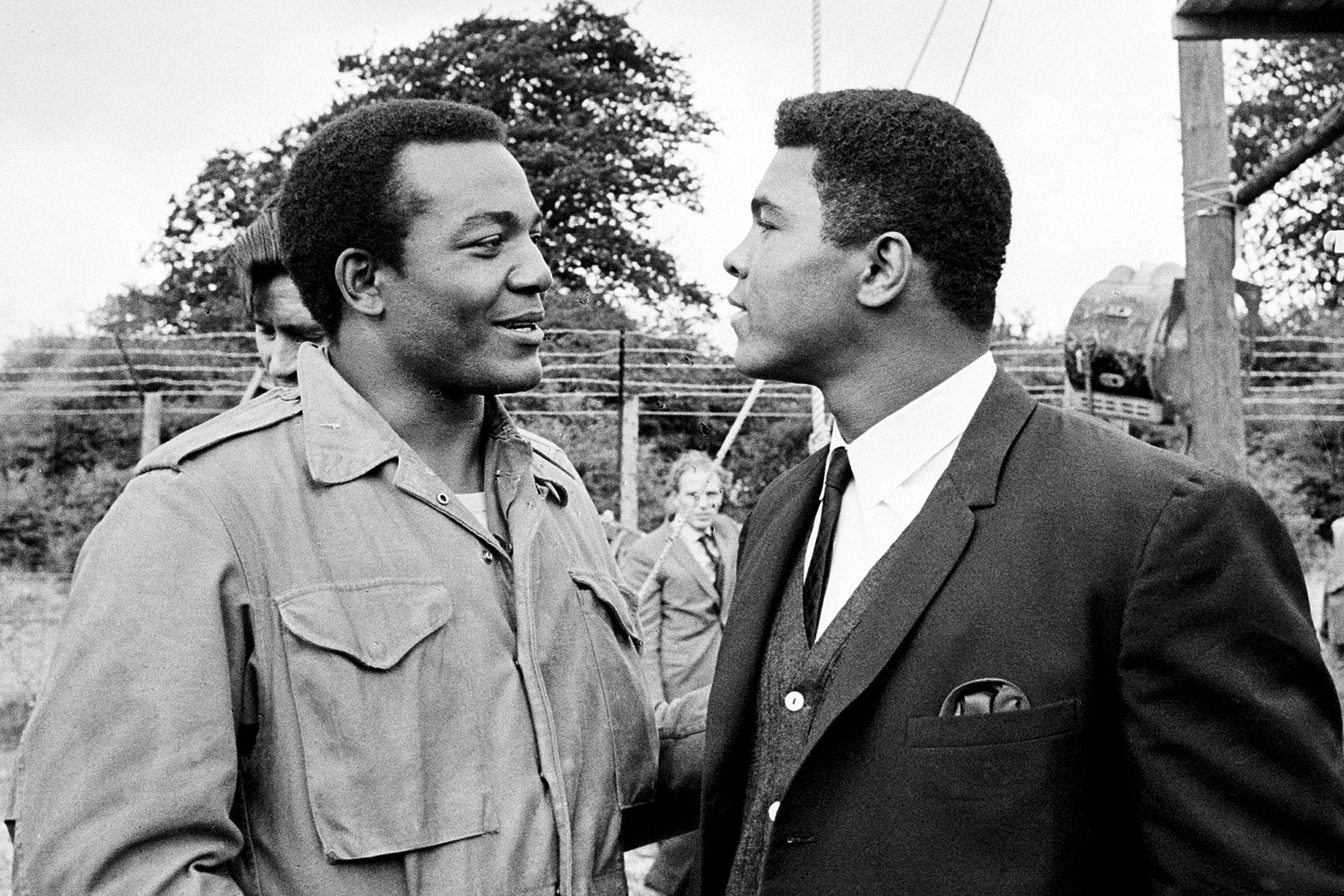
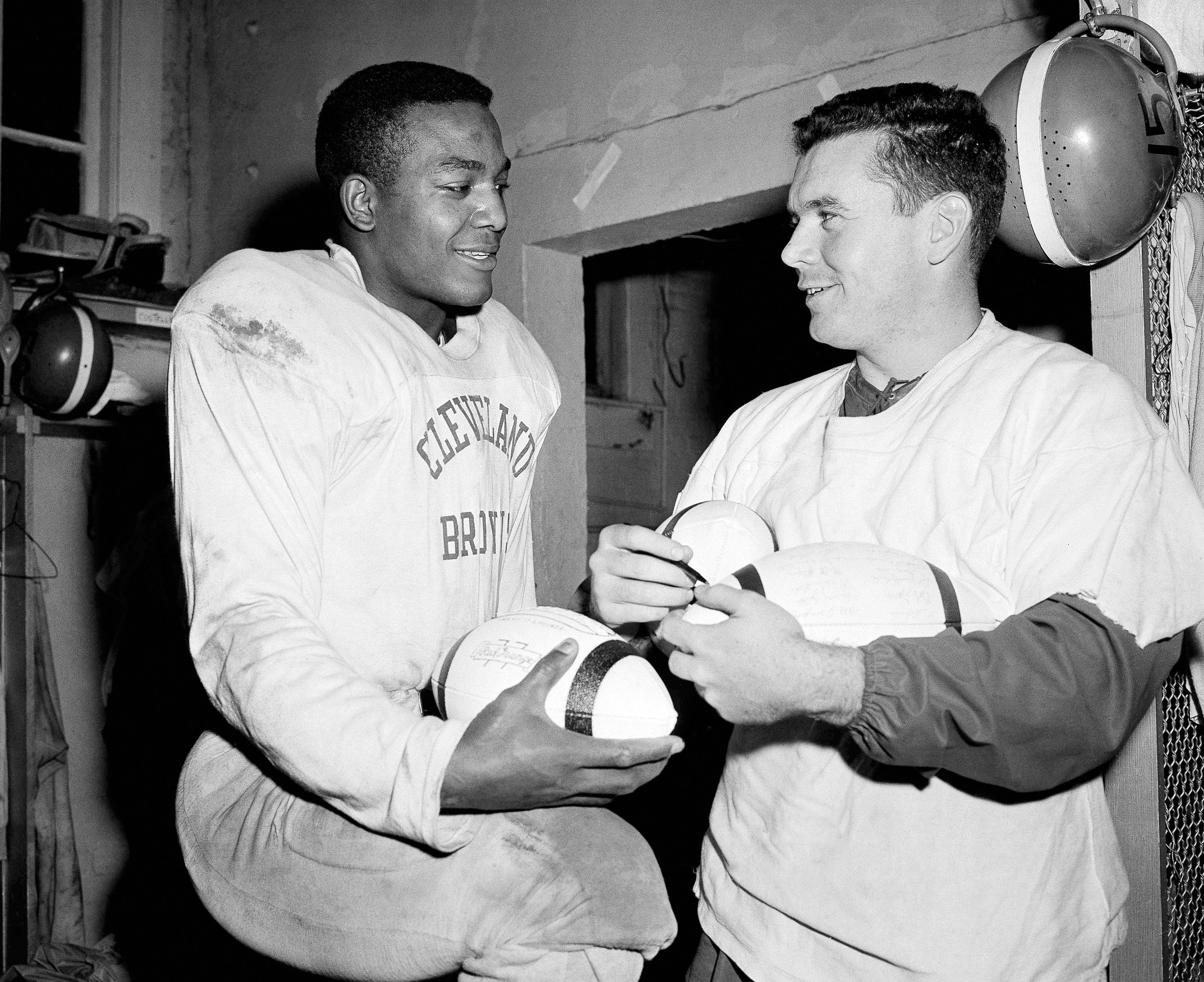
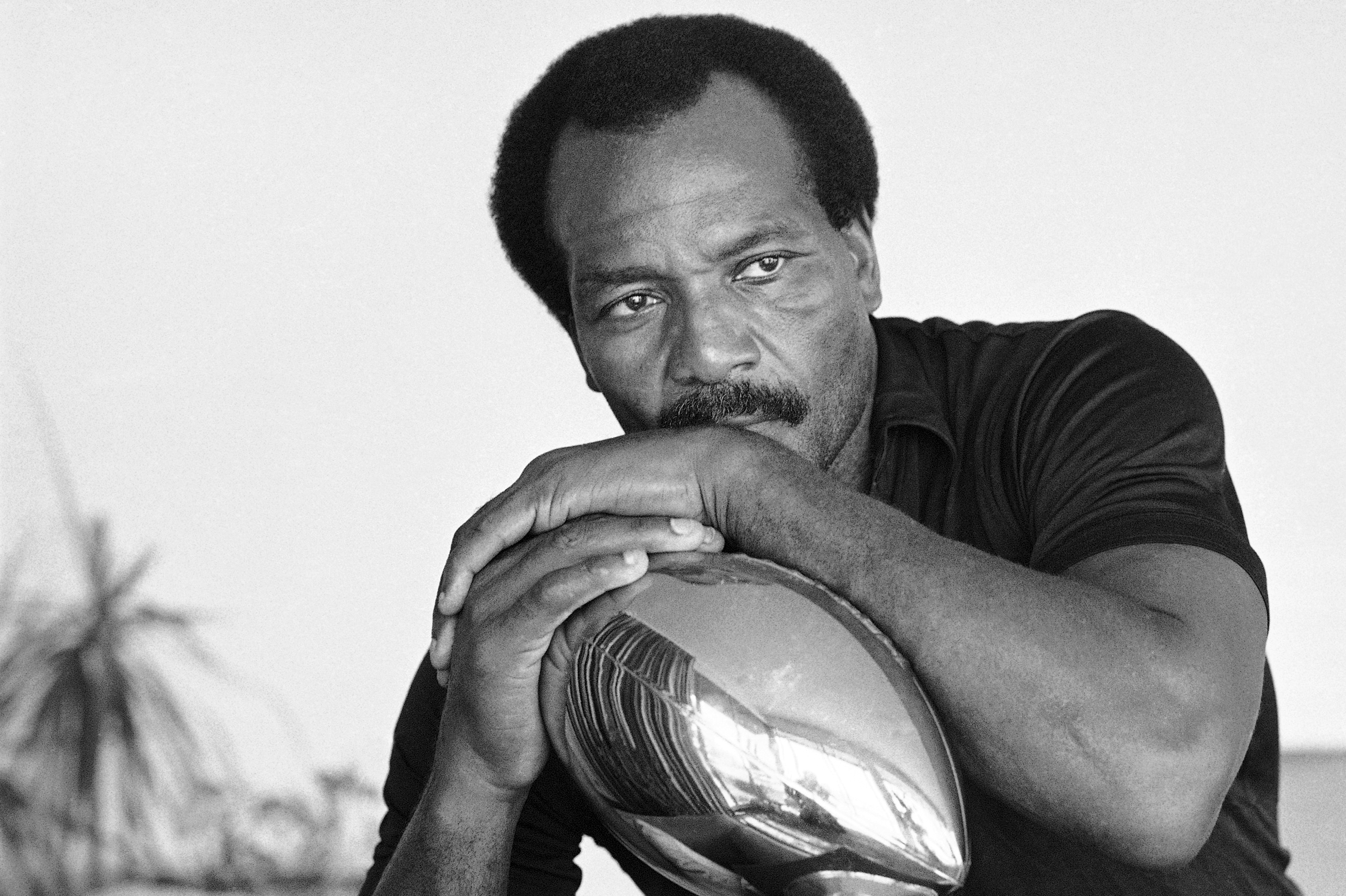
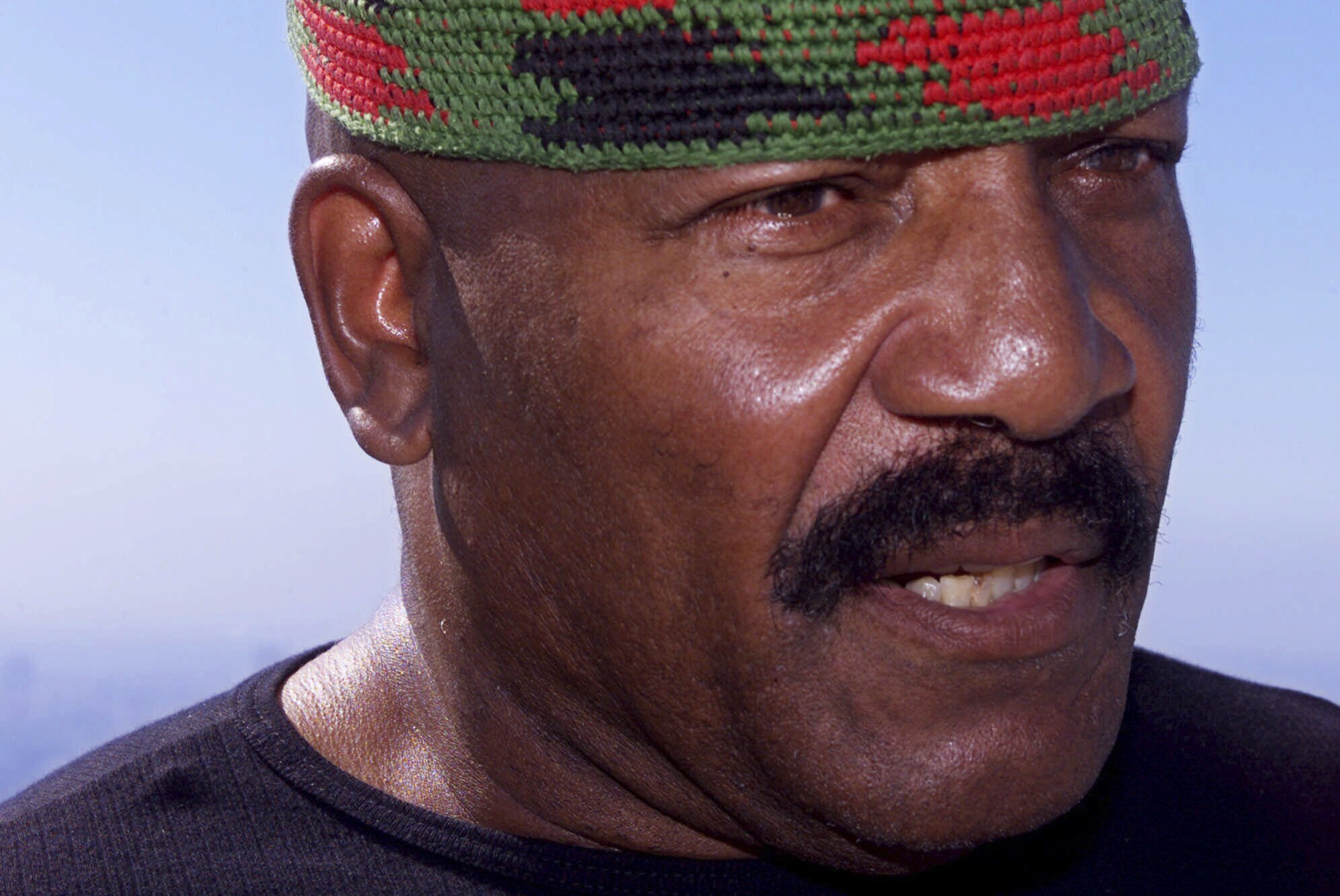
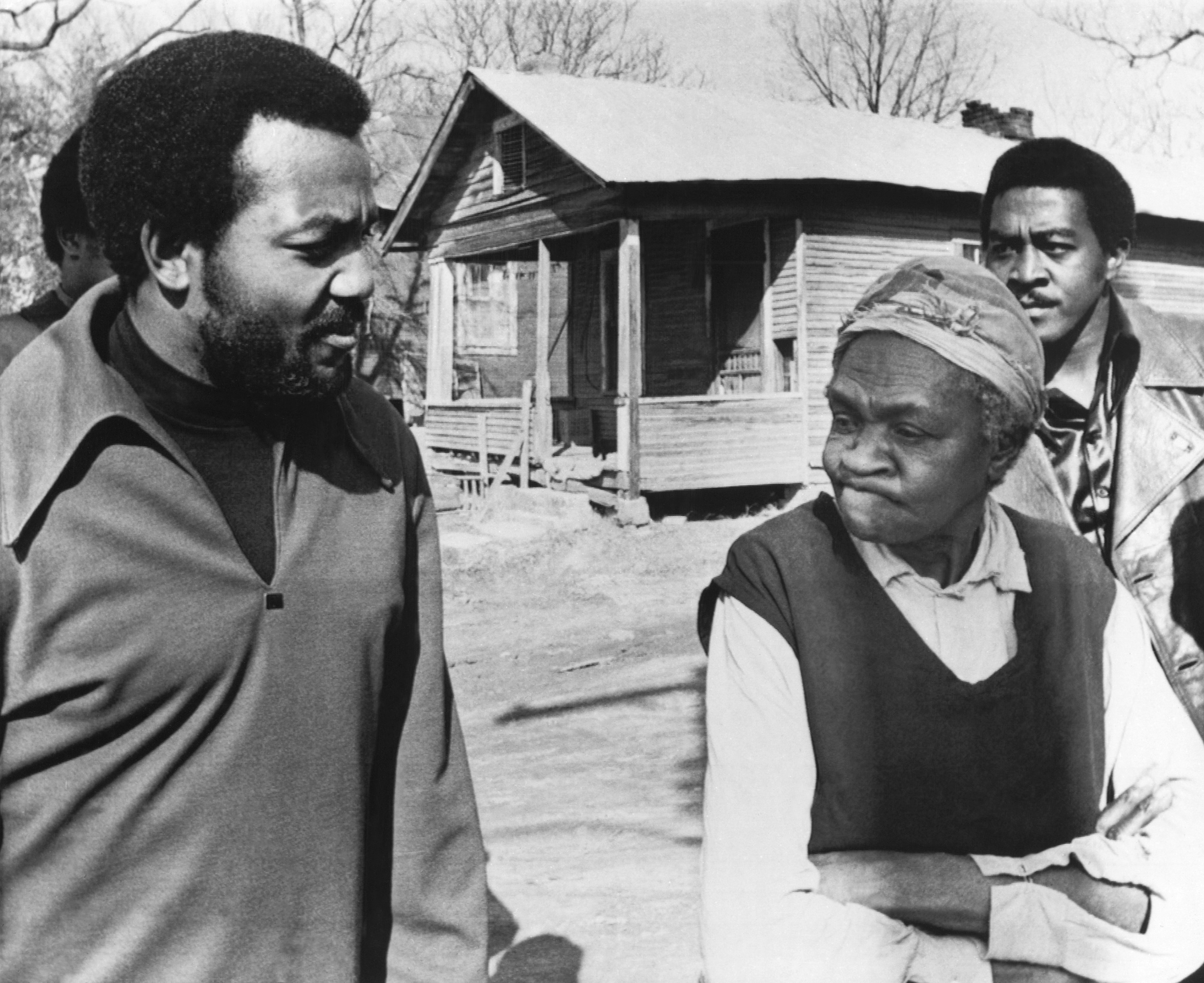
In June 1967, Brown organized “The Cleveland Summit,” a meeting of the nation’s top Black athletes, including basketball stars Bill Russell and Kareem Abdul-Jabbar (known at the time as Lew Alcindor) to support boxer Muhammad Ali’s fight against serving in Vietnam. In later years, Brown worked to curb gang violence in Los Angeles and in 1988 founded Amer-I-Can, a program to help disadvantaged inner-city youth and ex-convicts.
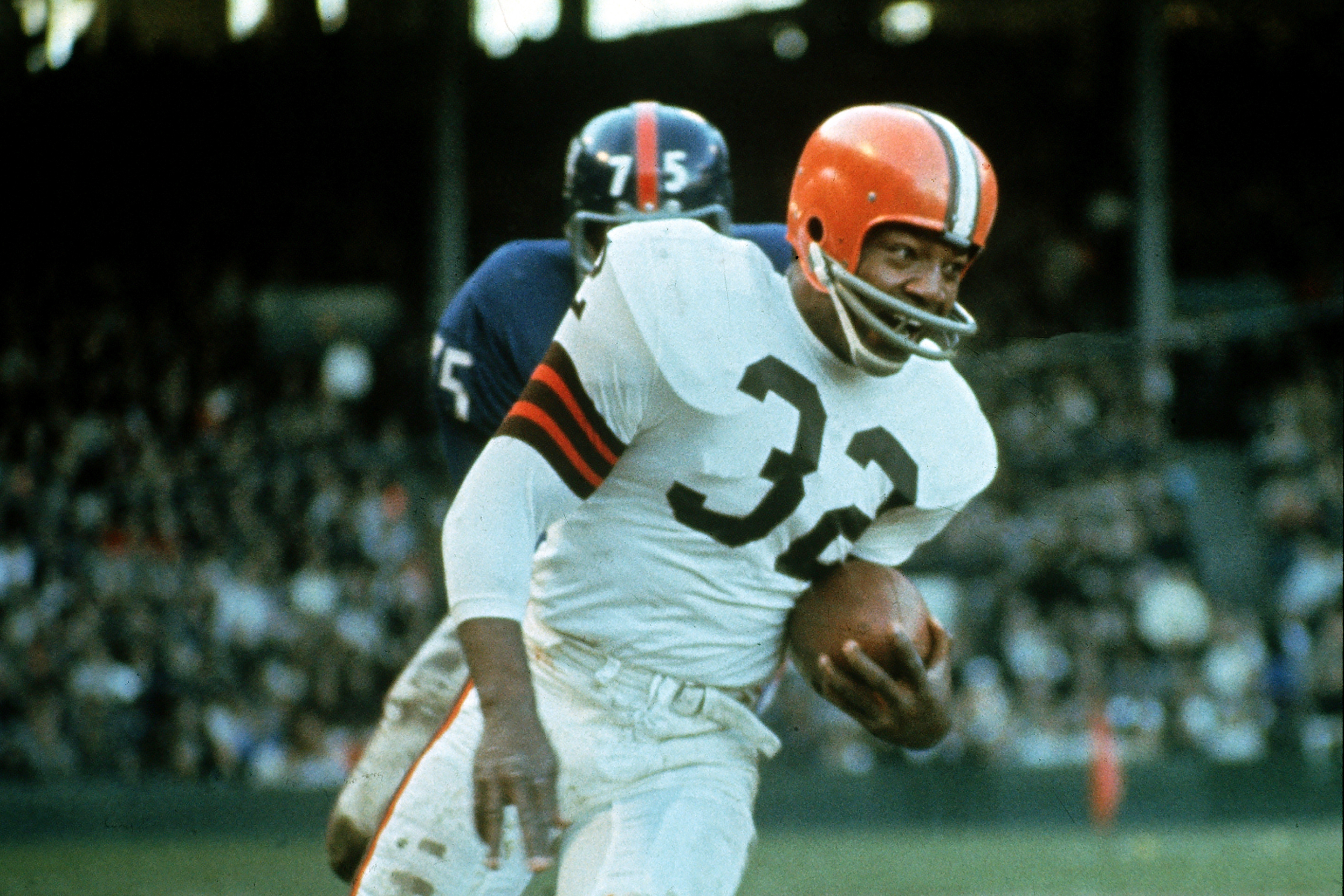
On the field, there was no one like Brown, who would blast through would-be tacklers, refusing to let one man take him down before sprinting away from linebackers and defensive backs. He was also famous for using a stiff arm to shed defenders in the open field or push them away like they were rag dolls.
Indeed, Brown was unlike any back before him, and some believe there has never been anyone better than Cleveland’s No. 32: relentless, fighting for every yard, dragging multiple defenders along or finding holes where none seemed to exist. After Brown was tackled, he’d slowly rise and walk even more slowly back to the huddle — then dominate the defense when he got the ball again.
Commissioner Roger Goodell offered his condolences on behalf of the NFL.
“Jim Brown was a gifted athlete — one of the most dominant players to ever step on any athletic field — but also a cultural figure who helped promote change,” Goodell said. “During his nine-year NFL career, which coincided with the civil rights movement here at home, he became a forerunner and role model for athletes being involved in social initiatives outside their sport.”
Off the field, Brown was a contentious, complicated figure. While he had a soft spot for those in need, he also was arrested a half-dozen times, mostly on charges of hitting women.
In June 1999, Brown’s wife called 911, saying Brown had smashed her car with a shovel and threatened to kill her. During the trial, Monique Brown recanted, and he was acquitted of a charge of domestic threats but convicted of misdemeanor vandalism. A Los Angeles judge sentenced Brown to six months in jail when he refused to attend domestic violence counseling.
He also feuded with Browns coach Paul Brown and later with the team’s management, although he played his entire career with Cleveland.
When his playing days ended, Brown set off for Hollywood and eventually settled there. Brown advised Cleveland coach Blanton Collier of his retirement while the team was in training camp and he was on the set of “The Dirty Dozen” in England.
Among his films were “100 Rifles,” “Mars Attacks!” and “I’m Gonna Git You Sucka,” which parodied the blaxploitation genre. In 2002, Brown was the subject of the HBO documentary “Jim Brown: All-American” by Spike Lee, whose basketball drama “He Got Game” also included Brown.
In recent years, Brown’s relationship with the Browns was inconsistent. He served as an adviser to owner Randy Lerner and was hired to counsel the team’s younger players. However, in 2010, Brown parted ways with the franchise after having his role reduced by incoming team president Mike Holmgren. Brown felt slighted by the perceived demotion, and when the club unveiled a “Ring of Honor” inside its downtown stadium, Brown didn’t attend the ceremony in protest.
The Browns erected a statue of Brown outside their stadium in 2016.
Brown made only a few public appearances in recent years. In February, he attended the NFL Honors ceremony when the league announced it had renamed its league rushing title as the Jim Brown Award.
Brown was a nine-time All-Pro, with all but one of those selections for the first time, and was chosen for the Pro Bowl in each of his nine years in the league. When he retired, he held the NFL’s records for rushing yards (12,312) and touchdowns (126).
“He told me, ‘Make sure when anyone tackles you he remembers how much it hurts,'” Hall of Fame tight end John Mackey recalled. “He lived by that philosophy, and I always followed that advice.”
Brown is survived by his wife and son, Aris; daughter, Morgan, son, Jim Jr.; daughter, Kimberly; son, Kevin; daughter, Shellee; and daughter, Kim. He was preceded in death by his daughter, Karen Ward.
Born on Feb. 17, 1936, in St. Simons Island, Georgia, Brown was a multisport prep star at Manhasset on Long Island. He averaged 14.9 yards per carry in high school and once scored 55 points in a game.
A two-sport star at Syracuse — some say he is the best lacrosse player in NCAA history — Brown endured countless racist taunts while playing was a virtually all-white school at the time. Still, he was an All-American in both sports and lettered in basketball.
Brown was the sixth overall pick of the 1957 NFL draft, joining a team that routinely played for the title and becoming the offensive rookie of the year that season.
Running behind an offensive line featuring eventual Hall of Fame tackles Lou Groza and Mike McCormack, Brown set a league mark with 1,527 yards and scored 17 touchdowns in 1958 on his way to winning the league’s most outstanding player award — a precursor to the MVP — for the second year in a row. Over the next three seasons, he never ran for less than 1,257 yards before finishing with 996 in 1962.
He led the NFL in rushing eight times, gaining a career-best 1,863 yards in 1963. He ran for 106 touchdowns in his career and had rushing averages of 104 yards per game and astounding 5.2 yards per carry. Also a capable target in the passing game, Brown finished with 262 catches for 2,499 yards and another 20 touchdowns.
“I’ve said many times, and I will always say, Jim Brown is the best,” Hall of Fame running back Gale Sayers once said, “and he will still be the best long after all his records are broken.”
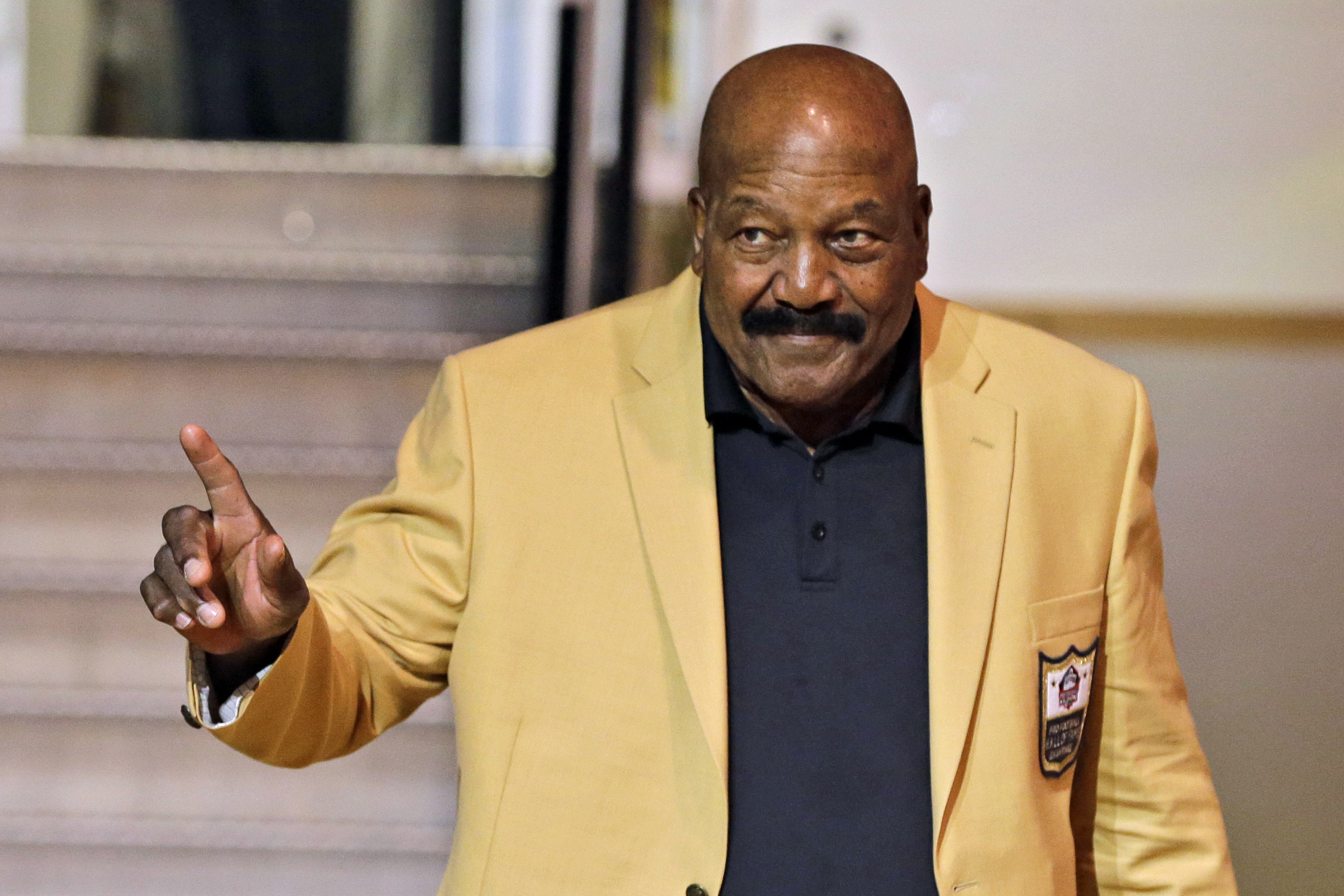
Brown’s No. 32 was retired by the Browns in 1971, the same year he entered the Pro Football Hall of Fame. But he rarely visited Cleveland during the 1970s or the following decade. He and team owner Art Modell were at odds over his sudden retirement; the two later patched up their differences and remained friends.
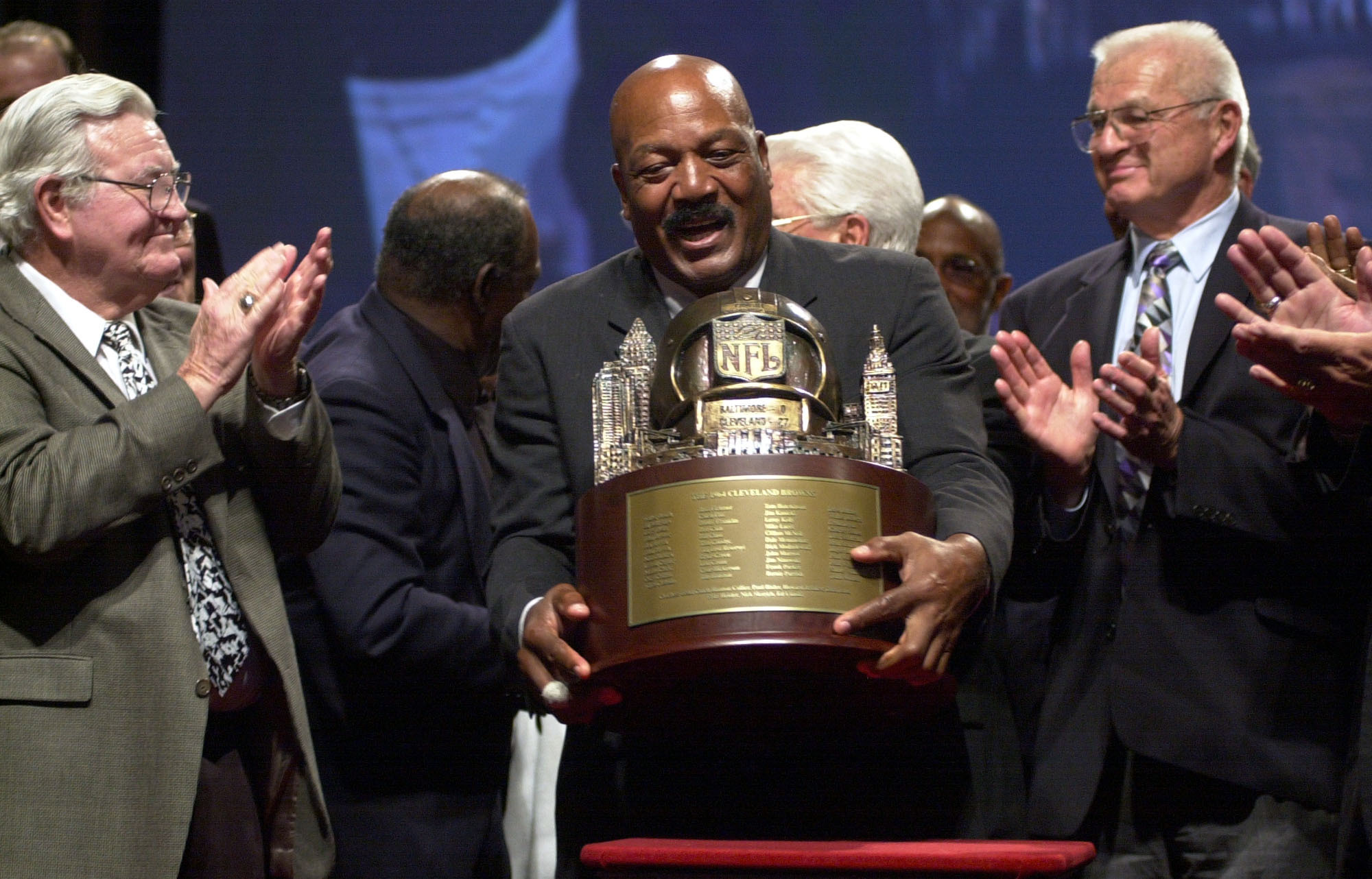
Brown supported Modell’s decision to move Cleveland’s franchise to Baltimore in 1995. It was both a reflection of his loyalty to Modell and another sign of his fierce independence. Brown was one of the few former Browns players not angry with Modell for moving the team.
Many modern players couldn’t appreciate Brown or his impact on American sports.
“They have grown up in a different era,” former Browns coach Romeo Crennel said. “He’s one of the greatest players in NFL history, and what he was able to accomplish in his time was tremendous. I don’t know that anybody could do what he did, the way he did it, under the circumstances that he had to operate and the things that he had to endure.
“And for him to go out on top, that’s something that not many guys are able to appreciate either.”