
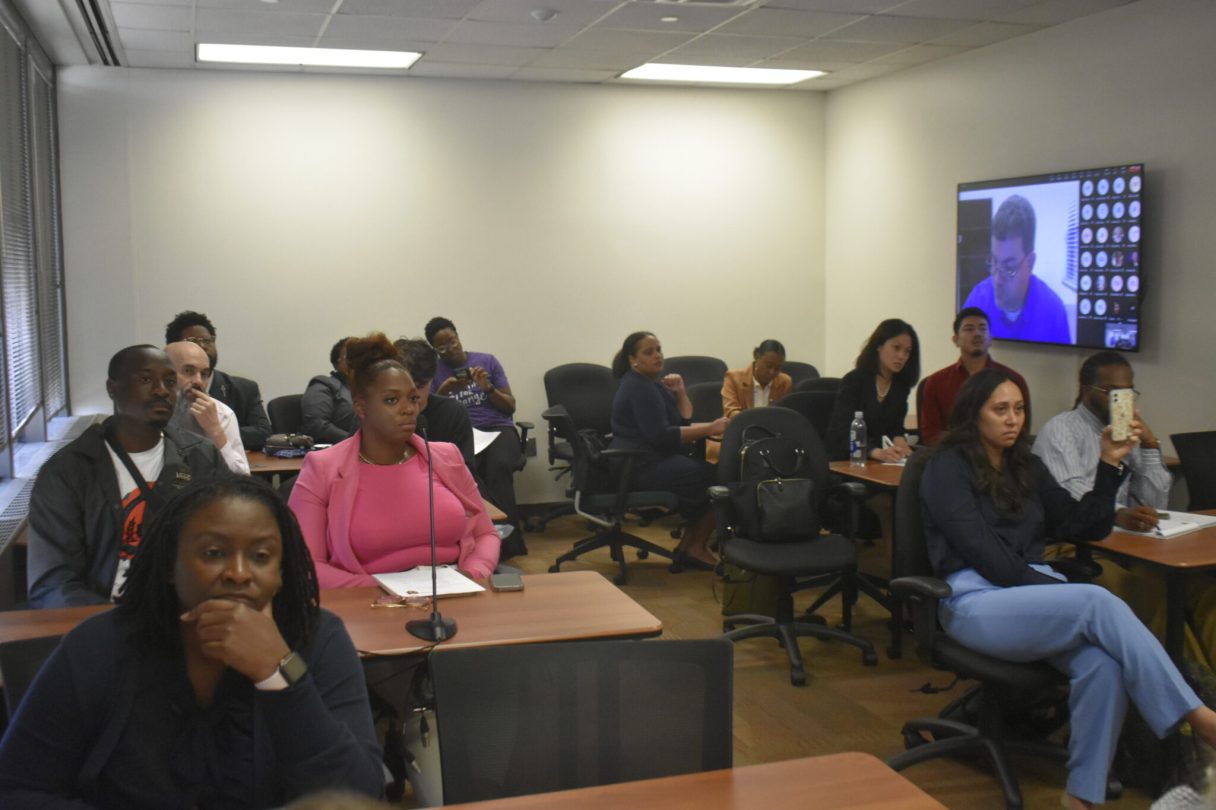
“Words matter” — that’s what several of the dozen or so educators and parents gathered in a downtown Atlanta boardroom had to say in a bid to persuade the Georgia Professional Standards Commission not to change the state’s rules for training K-12 teachers.
The commission had on its Thursday agenda a slew of proposed revisions, removing words like “diversity” in favor of less politically fraught verbiage like “differences.”
For example, one change for elementary school educators would call on them to get to know the “unique contexts of children and families,” rather than their “diverse cultural contexts” under the previous rules.
But the speakers’ words did not sway the commissioners, who voted unanimously to approve the changes without discussion.
“History remembers white supremacists,” shouted one speaker as the commissioners voted.
(READ MORE: Georgia K-12 panel could soon erase ‘woke’ words like ‘diverse’ from training rules)
The changes came at the request of the University System of Georgia and are intended to clarify language that had picked up unintended negative meanings over the years, Commission Chairman Brian Sirmans said.
The proposed rule amendments are not intended to redefine or remove the care preparation providers place on meeting students’ needs or prescribe the way education preparation providers choose to meet the program standards, he said.
“We still expect EPPs to prepare educators who are well equipped to address the learning needs of all students that they may encounter and who are well prepared to meet the students where they are within a positive and welcoming learning environment,” Sirmans said.
But speakers, including Sarah Hunt-Blackwell, First Amendment policy advocate with the American Civil Liberties Union of Georgia, said they view the changes as more than a mere swapping of words.
“I’d like to remind the commission, most of you educators, that words matter,” she said. “As such, we cannot be simplistic in believing that these amendments merely replace one word with another. Changing language does change intent. Replacing the word ‘diverse’ with words like ‘different’ and ‘unique’ implies that there is a norm, a sameness, which excludes those who do not fit in.”
(READ MORE: Hamilton County’s proposed $995 million budget aims for continuity, not disruption)
Christopher Andrews, a DeKalb County educator who has worked in social studies and science classrooms in middle and high schools, said his latest assignment was in Georgia’s most diverse middle school, and his diversity, equity and inclusion training came in handy to help him make connections with children from different religious and social backgrounds.
“A lack of intentional DEI training would have left me vastly unprepared to serve students from diverse backgrounds and ability levels, ultimately ignoring the essence of who they are and failing to equip them for the real world around them,” he said.
The changes, which are set to go into effect July 1, would apply to positions including elementary education and reading and literacy specialists, who teach up to grade 12, as well as educational leaders like principals and superintendents.
They follow another change in May that stripped the definition of diversity from teacher training rules.
(READ MORE: Georgia commission erases diversity references from teacher standards)
Some teachers complained not only about the changes, but also about what they described as a process that skipped over opportunities for them to weigh in. Commissioners said they received a record amount of emails about May’s changes but admitted to ignoring or filtering them.
Others said requiring in-person access to a mostly digital meeting in the middle of the afternoon on a weekday prevented many interested parties from weighing in.
Following the first wave of outcry, the Georgia Board of Education approved a resolution against a list of opinions members found unpopular, including that the United States is a racist country or that anyone ought to be made to feel bad for things people belonging to their race did in the past.
In 2022, Gov. Brian Kemp signed bills aimed at keeping ideas like critical race theory out of schools and strengthening parents’ rights to review classroom materials.
In May, the U.S. Department of Education ruled proposed book bans in Forsyth County may have created a hostile environment for some students and ordered the district to come up with a plan to fix things.
Read more at GeorgiaRecorder.com.